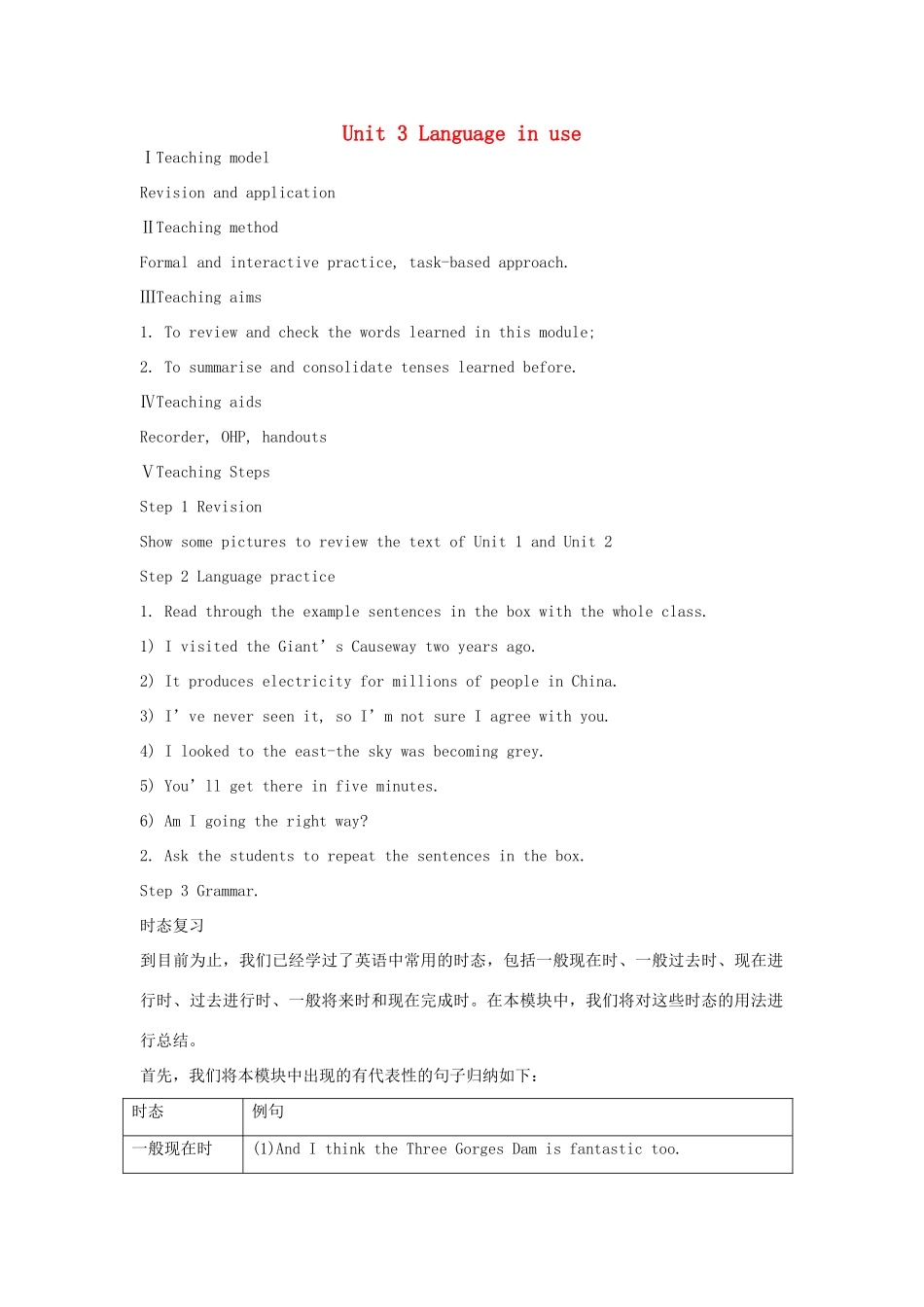
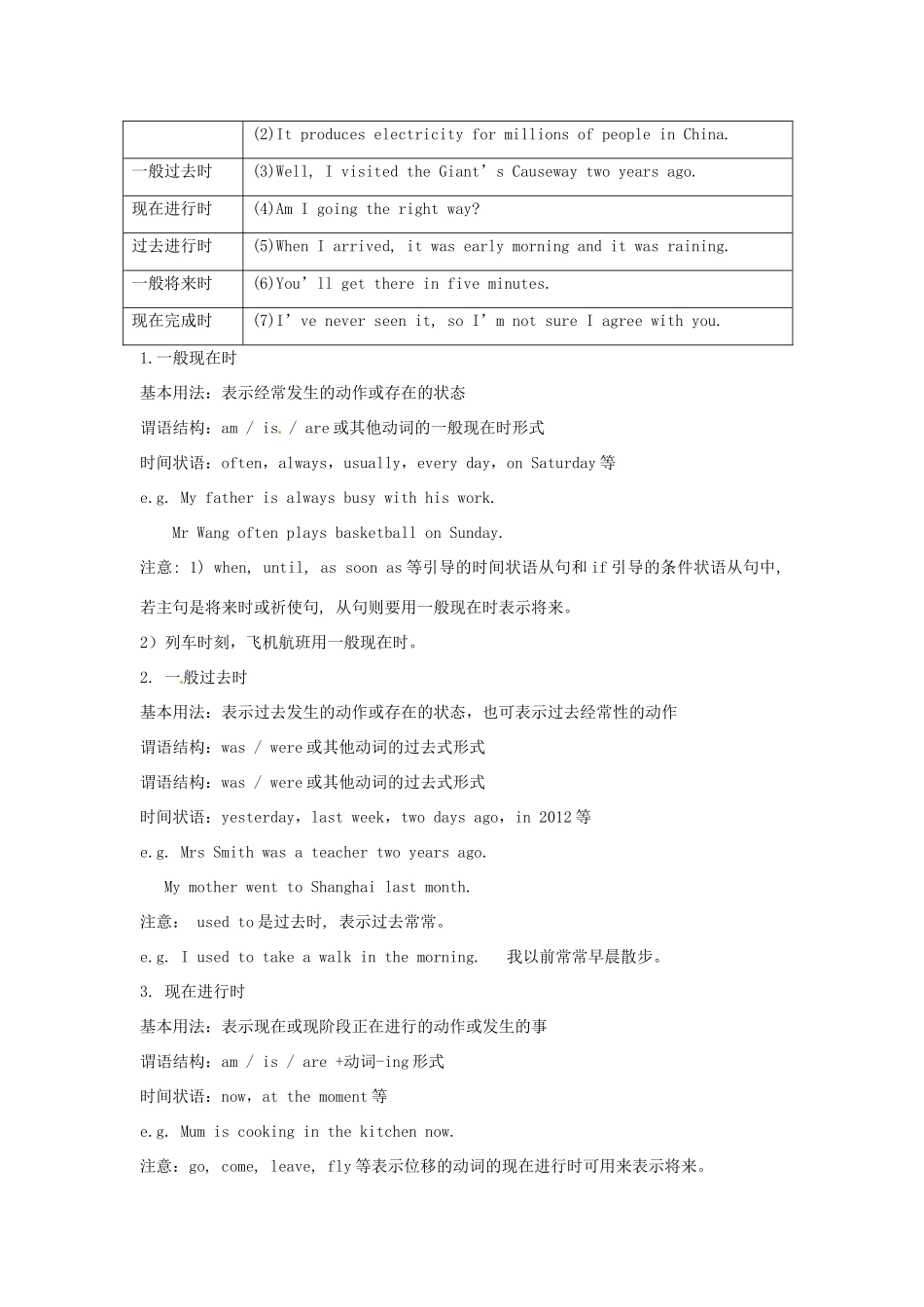
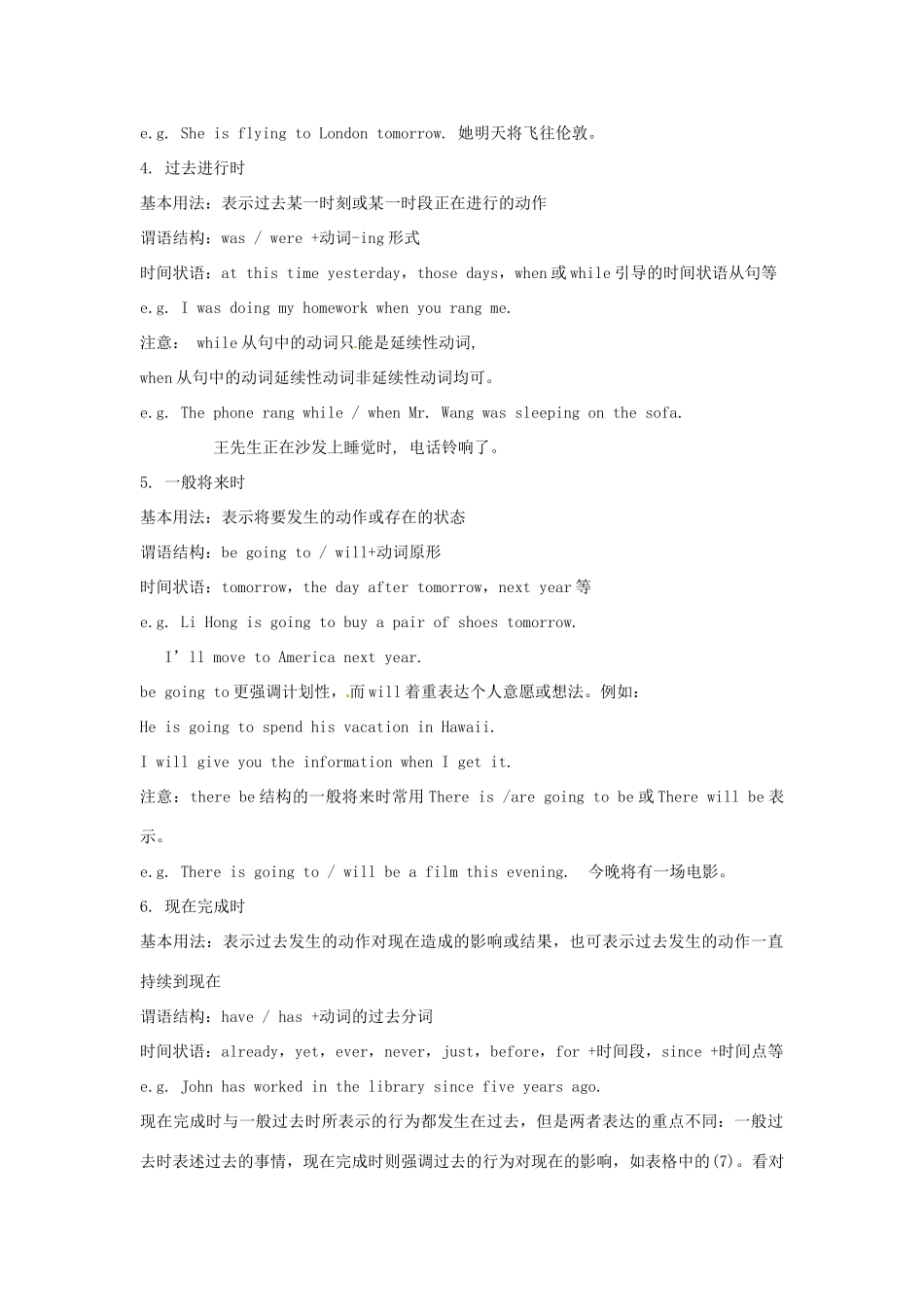
Unit3LanguageinuseⅠTeachingmodelRevisionandapplicationⅡTeachingmethodFormalandinteractivepractice,task-basedapproach.ⅢTeachingaims1.Toreviewandcheckthewordslearnedinthismodule;2.Tosummariseandconsolidatetenseslearnedbefore.ⅣTeachingaidsRecorder,OHP,handoutsⅤTeachingStepsStep1RevisionShowsomepicturestoreviewthetextofUnit1andUnit2Step2Languagepractice1.Readthroughtheexamplesentencesintheboxwiththewholeclass.1)IvisitedtheGiant’sCausewaytwoyearsago.2)ItproduceselectricityformillionsofpeopleinChina.3)I’veneverseenit,soI’mnotsureIagreewithyou.4)Ilookedtotheeast-theskywasbecominggrey.5)You’llgetthereinfiveminutes.6)AmIgoingtherightway?2.Askthestudentstorepeatthesentencesinthebox.Step3Grammar.时态复习到目前为止,我们已经学过了英语中常用的时态,包括一般现在时、一般过去时、现在进行时、过去进行时、一般将来时和现在完成时。在本模块中,我们将对这些时态的用法进行总结。首先,我们将本模块中出现的有代表性的句子归纳如下:时态例句一般现在时(1)AndIthinktheThreeGorgesDamisfantastictoo.(2)ItproduceselectricityformillionsofpeopleinChina.一般过去时(3)Well,IvisitedtheGiant’sCausewaytwoyearsago.现在进行时(4)AmIgoingtherightway?过去进行时(5)WhenIarrived,itwasearlymorninganditwasraining.一般将来时(6)You’llgetthereinfiveminutes.现在完成时(7)I’veneverseenit,soI’mnotsureIagreewithyou.1.一般现在时基本用法:表示经常发生的动作或存在的状态谓语结构:am/is/are或其他动词的一般现在时形式时间状语:often,always,usually,everyday,onSaturday等e.g.Myfatherisalwaysbusywithhiswork.MrWangoftenplaysbasketballonSunday.注意:1)when,until,assoonas等引导的时间状语从句和if引导的条件状语从句中,若主句是将来时或祈使句,从句则要用一般现在时表示将来。2)列车时刻,飞机航班用一般现在时。2.一般过去时基本用法:表示过去发生的动作或存在的状态,也可表示过去经常性的动作谓语结构:was/were或其他动词的过去式形式谓语结构:was/were或其他动词的过去式形式时间状语:yesterday,lastweek,twodaysago,in2012等e.g.MrsSmithwasateachertwoyearsago.MymotherwenttoShanghailastmonth.注意:usedto是过去时,表示过去常常。e.g.Iusedtotakeawalkinthemorning.我以前常常早晨散步。3.现在进行时基本用法:表示现在或现阶段正在进行的动作或发生的事谓语结构:am/is/are+动词-ing形式时间状语:now,atthemoment等e.g.Mumiscookinginthekitchennow.注意:go,come,leave,fly等表示位移的动词的现在进行时可用来表示将来。e.g.SheisflyingtoLondontomorrow.她明天将飞往伦敦。4.过去进行时基本用法:表示过去某一时刻或某一时段正在进行的动作谓语结构:was/were+动词-ing形式时间状语:atthistimeyesterday,thosedays,when或while引导的时间状语从句等e.g.Iwasdoingmyhomeworkwhenyourangme.注意:while从句中的动词只能是延续性动词,when从句中的动词延续性动词非延续性动词均可。e.g.Thephonerangwhile/whenMr.Wangwassleepingonthesofa.王先生正在沙发上睡觉时,电话铃响了。5.一般将来时基本用法:表示将要发生的动作或存在的状态谓语结构:begoingto/will+动词原形时间状语:tomorrow,thedayaftertomorrow,nextyear等e.g.LiHongisgoingtobuyapairofshoestomorrow.I’llmovetoAmericanextyear.begoingto更强调计划性,而will着重表达个人意愿或想法。例如:HeisgoingtospendhisvacationinHawaii.IwillgiveyoutheinformationwhenIgetit.注意:therebe结构的一般将来时常用Thereis/aregoingtobe或Therewillbe表示。e.g.Thereisgoingto/willbeafilmthisevening.今晚将有一场电影。6.现在完成时基本用法:表示过去发生的动作对现在造成的影响或结果,也可表示过去发生的动作一直持续到现在谓语结构:have/has+动词的过去分词时间状语:already,yet,ever,never,just,befo...