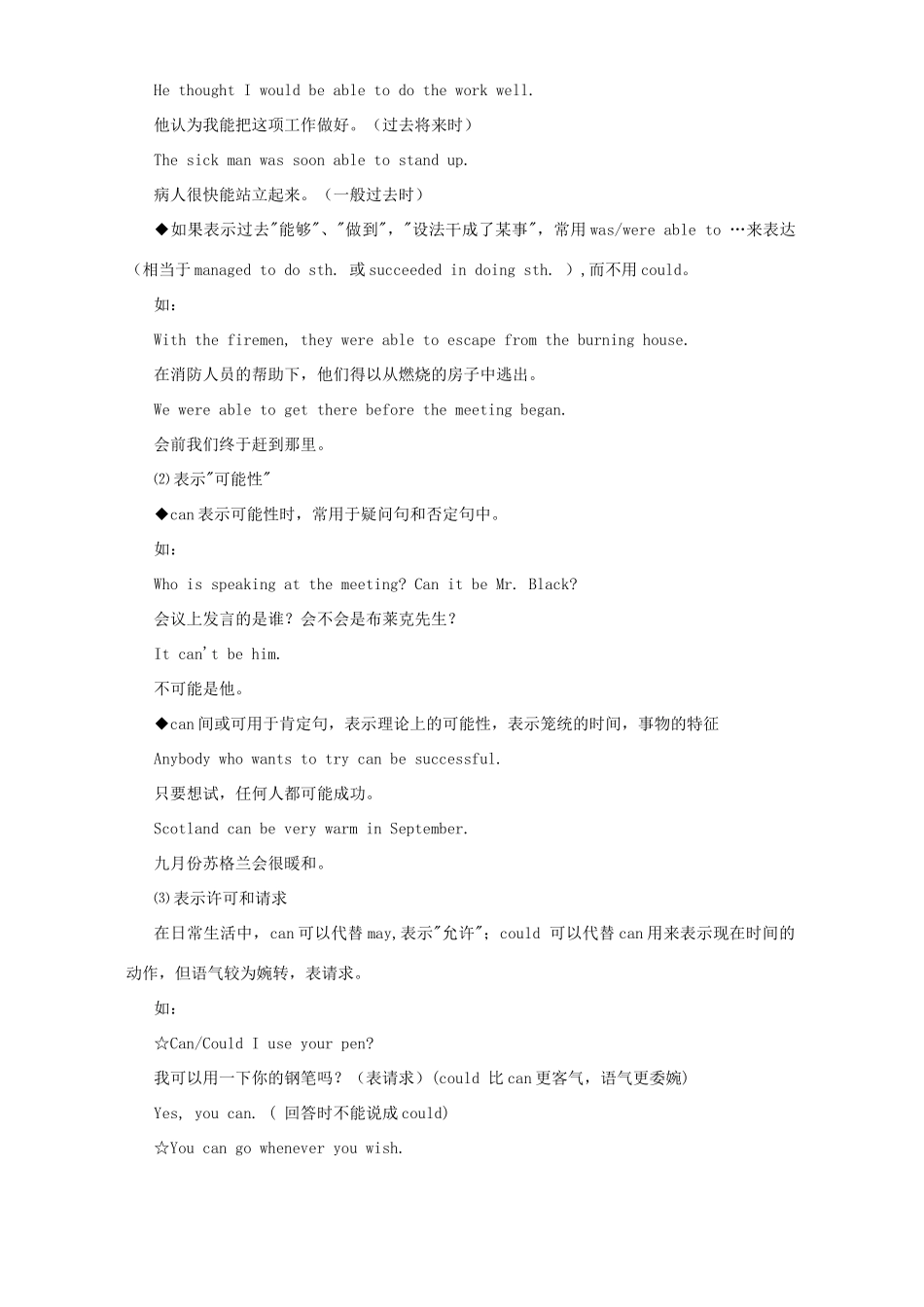
北京四中2006年考点透析情态动词情态动词也叫语气动词,有一定的词义,但本身不表示行为或状态,而只是表示说话人对所说动作的看法,认为它"可能"、"应当"、"必要"等
情态动词不能单独作谓语动词,只能和动词原形一起构成谓语动词
英语里的情态动词主要有:can(could),may(might),must,shall,will,would,need,dare,should,oughtto
情态动词在任何主语后没有人称和数的变化
除must,need,oughtto外,其他情态动词有表示过去时的形式变化:现在式过去式cancouldmaymightshallshouldwillwoulddaredared⒈can和could⑴表示能力can表示现在或未来的能力,could作为can的过去式,表示过去的"能力"如:Whalescannotliveonland
鲸不能生活在陆地上
Wecanskate
Acomputercan'tthinkforitself
计算机不会独立思考
Beforeliberationfewworkerscouldsupporttheirfamilies
解放前几乎没有工人能养得起家
*beableto与can、could的异同:◆beableto可用于多种时态,can和could只用于现在时和过去时
如:Hewillbeabletogowithusthisafternoon
他今天下午能和我们一起去
(一般将来时)Ihaven'tbeenabletoseethedifferenceyet
我还不能看出区别在哪
(现在完成时)HethoughtIwouldbeabletodotheworkwell
他认为我能把这项工作做好
(过去将来时)Thesickmanwassoonabletostandup
病人很快能站立起来