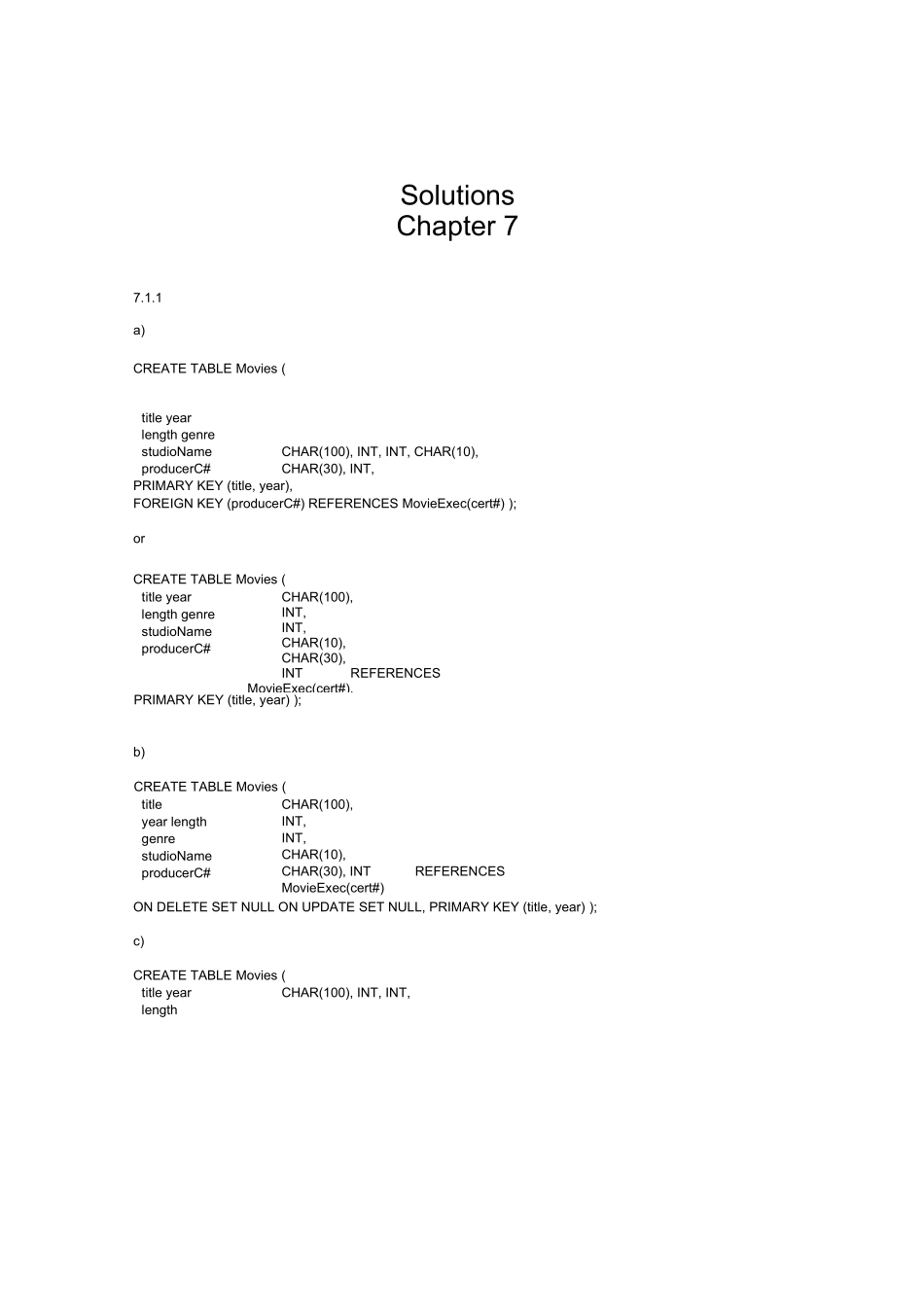
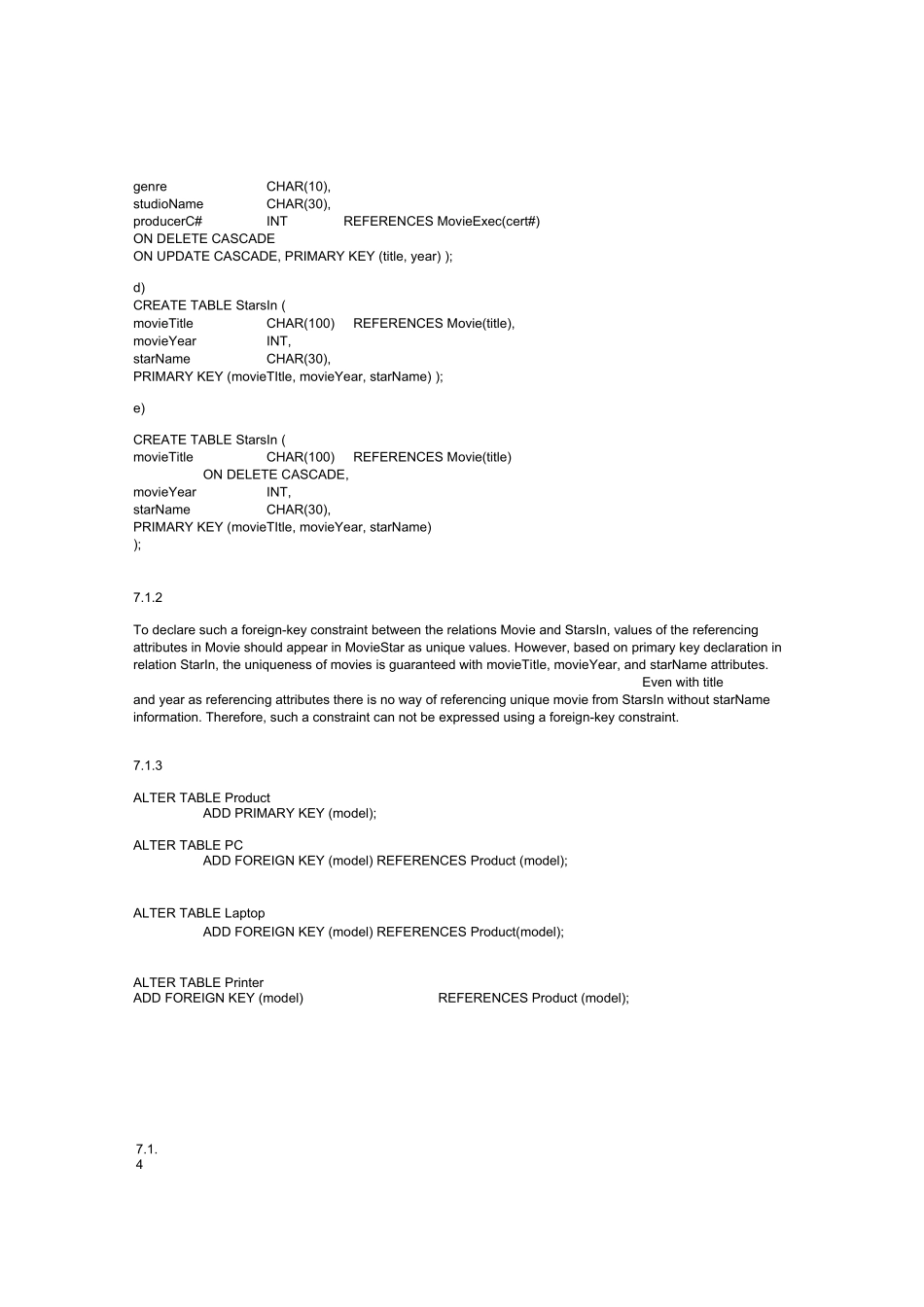
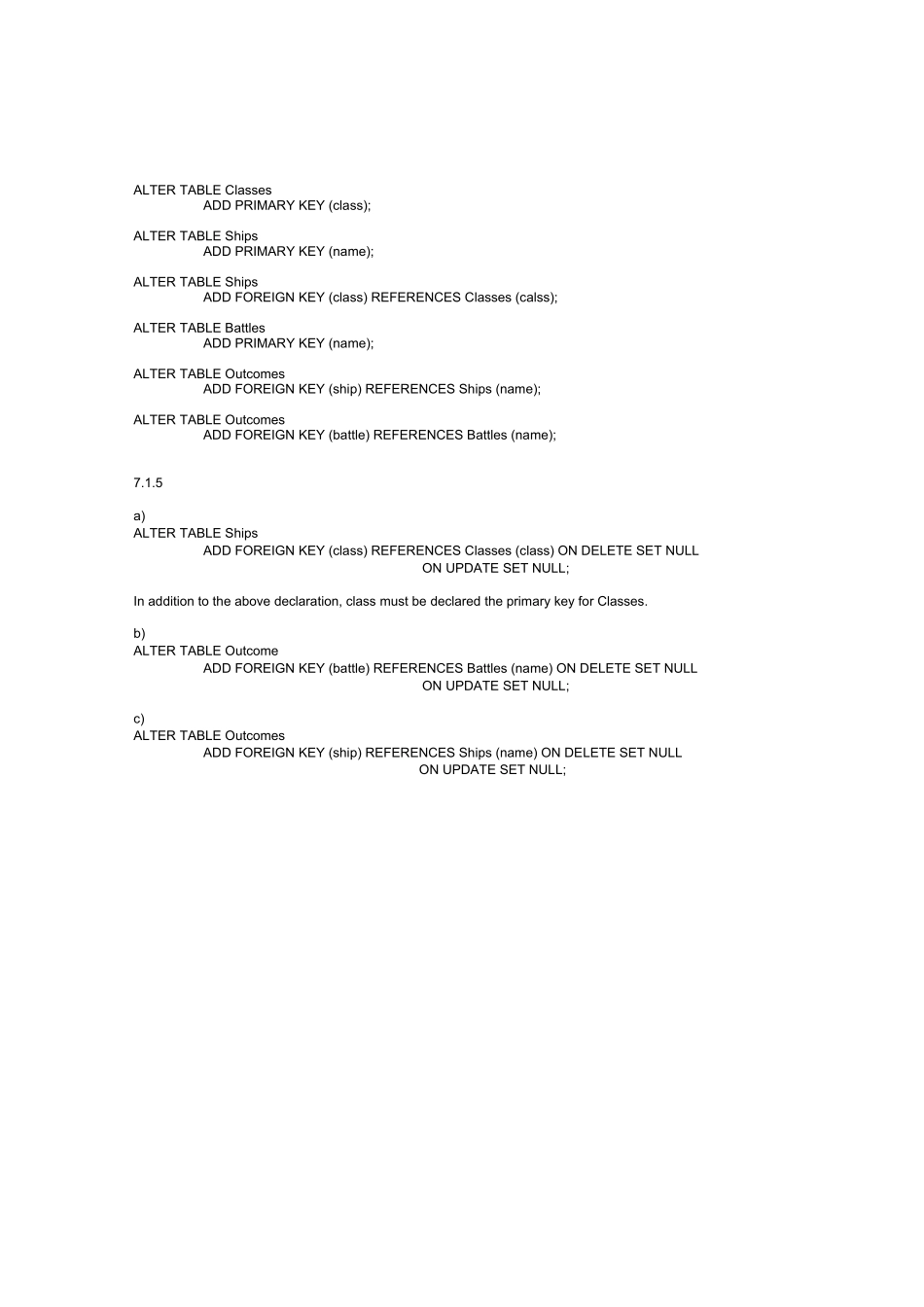
SolutionsChapter 77.1.1a)CREATE TABLE Movies (title year length genre studioName producerC#CHAR(100), INT, INT, CHAR(10), CHAR(30), INT,PRIMARY KEY (title, year),FOREIGN KEY (producerC#) REFERENCES MovieExec(cert#) );orCREATE TABLE Movies (title year length genre studioName producerC#CHAR(100),INT,INT,CHAR(10),CHAR(30),INTREFERENCES MovieExec(cert#),PRIMARY KEY (title, year) );b)CREATE TABLE Movies (titleyear length genre studioName producerC#CHAR(100),INT,INT,CHAR(10),CHAR(30), INTREFERENCES MovieExec(cert#)ON DELETE SET NULL ON UPDATE SET NULL, PRIMARY KEY (title, year) );c)CREATE TABLE Movies (title year lengthCHAR(100), INT, INT,7.1.4genreCHAR(10),studioNameCHAR(30),producerC#INTREFERENCES MovieExec(cert#)ON DELETE CASCADEON UPDATE CASCADE, PRIMARY KEY (title, year) );d)CREATE TABLE StarsIn (movieTitleCHAR(100)REFERENCES Movie(title),movieYearINT,starNameCHAR(30),PRIMARY KEY (movieTItle, movieYear, starName) );e)CREATE TABLE StarsIn (movieTitleCHAR(100)REFERENCES Movie(title)ON DELETE CASCADE,movieYearINT,starNameCHAR(30),PRIMARY KEY (movieTItle, movieYear, starName));7.1.2To declare such a foreign-key constraint between the relations Movie and StarsIn, values of the referencing attributes in Movie should appear in MovieStar as unique values. However, based on primary key declaration in relation StarIn, the uniqueness of movies is guaranteed with movieTitle, movieYear, and starName attributes.Even with titleand year as referencing attributes there is no way of referencing unique movie from StarsIn without starName information. Therefore, such a constraint can not be expressed using a foreign-key constraint.7.1.3ALTER TABLE ProductADD PRIMARY KEY (model);ALTER TABLE PCADD FOREIGN KEY (model) REFERENCES Product (model);ADD FOREIGN KEY (model) REFERENCES Product(model);ALTER TA...