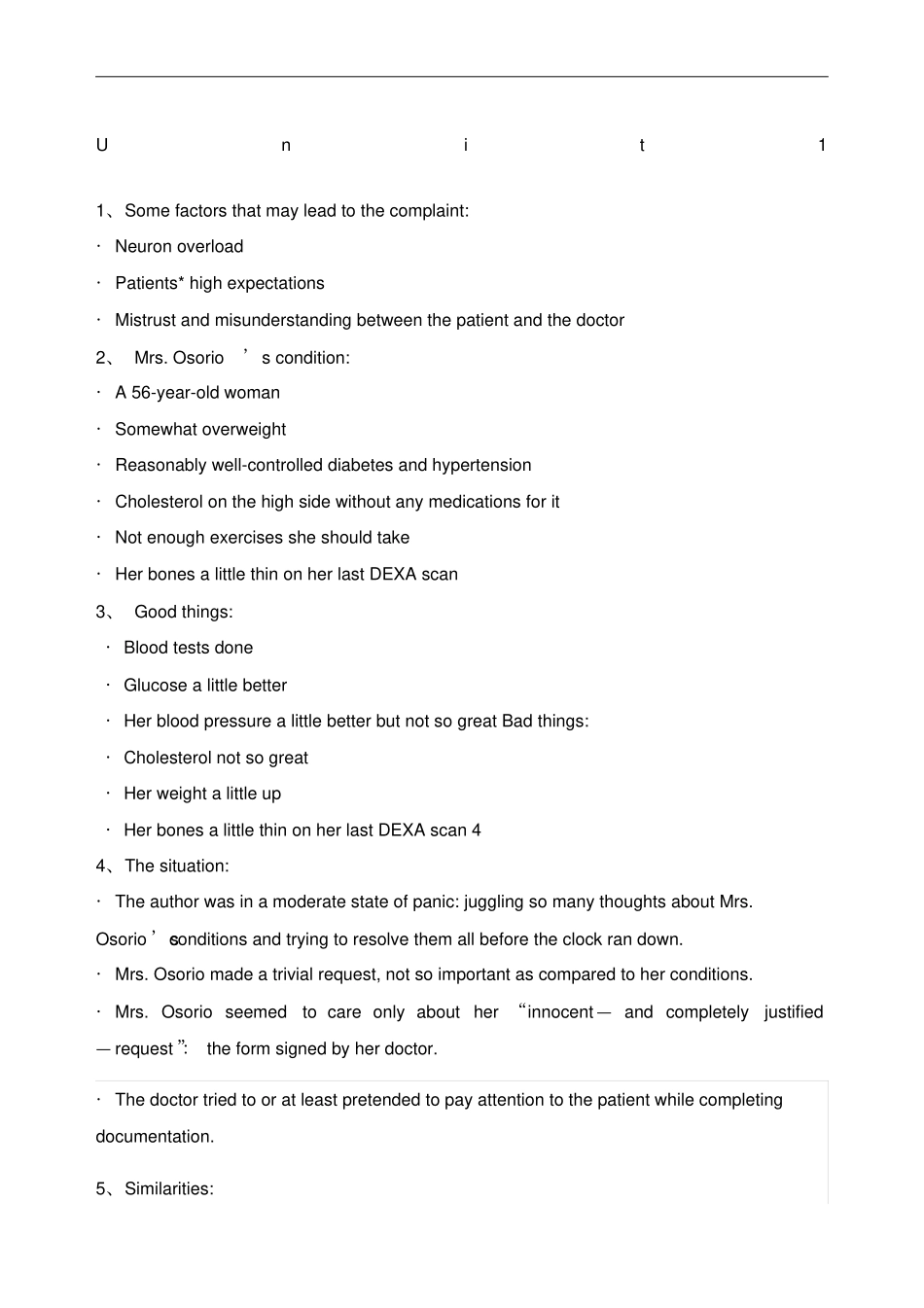
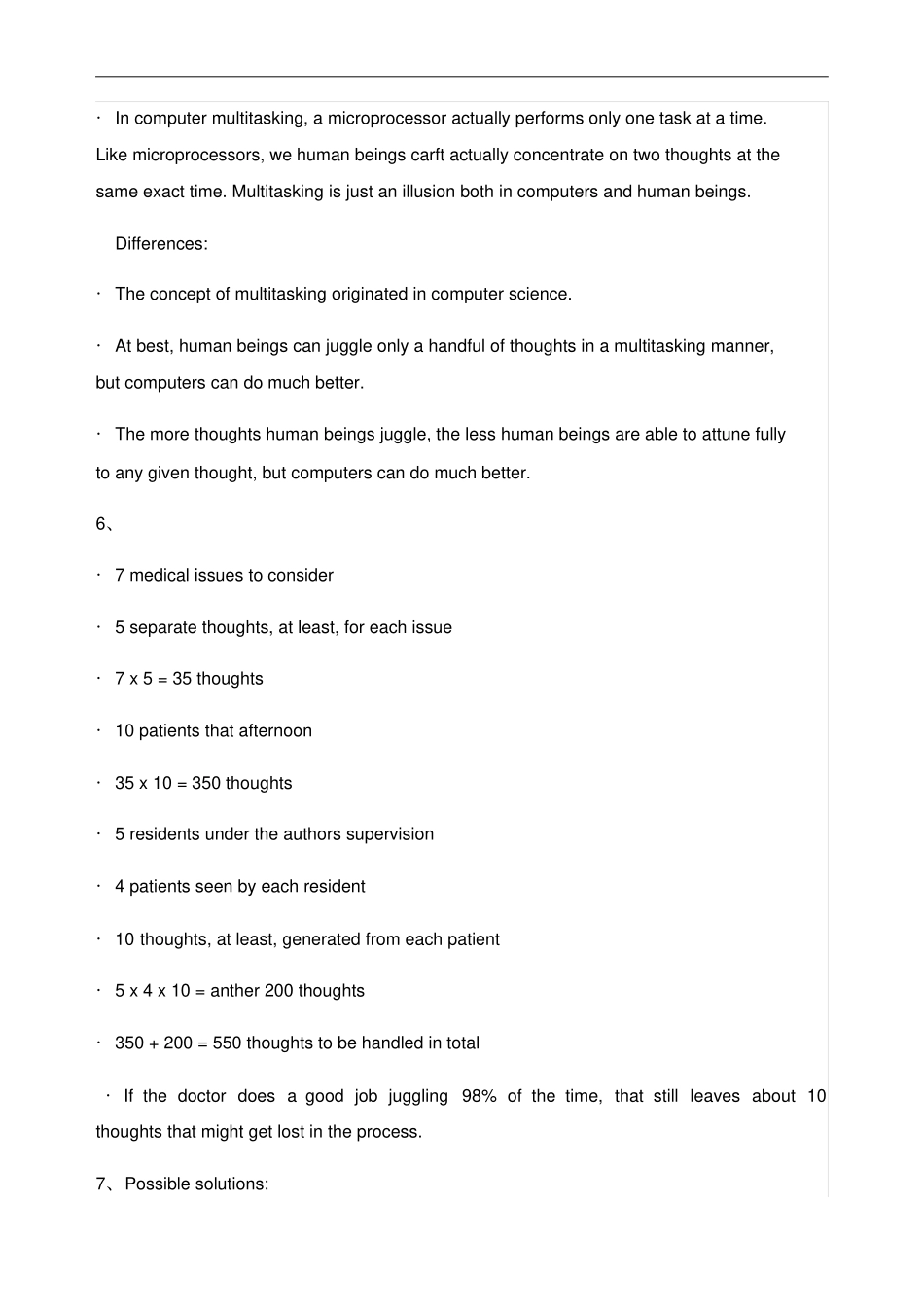
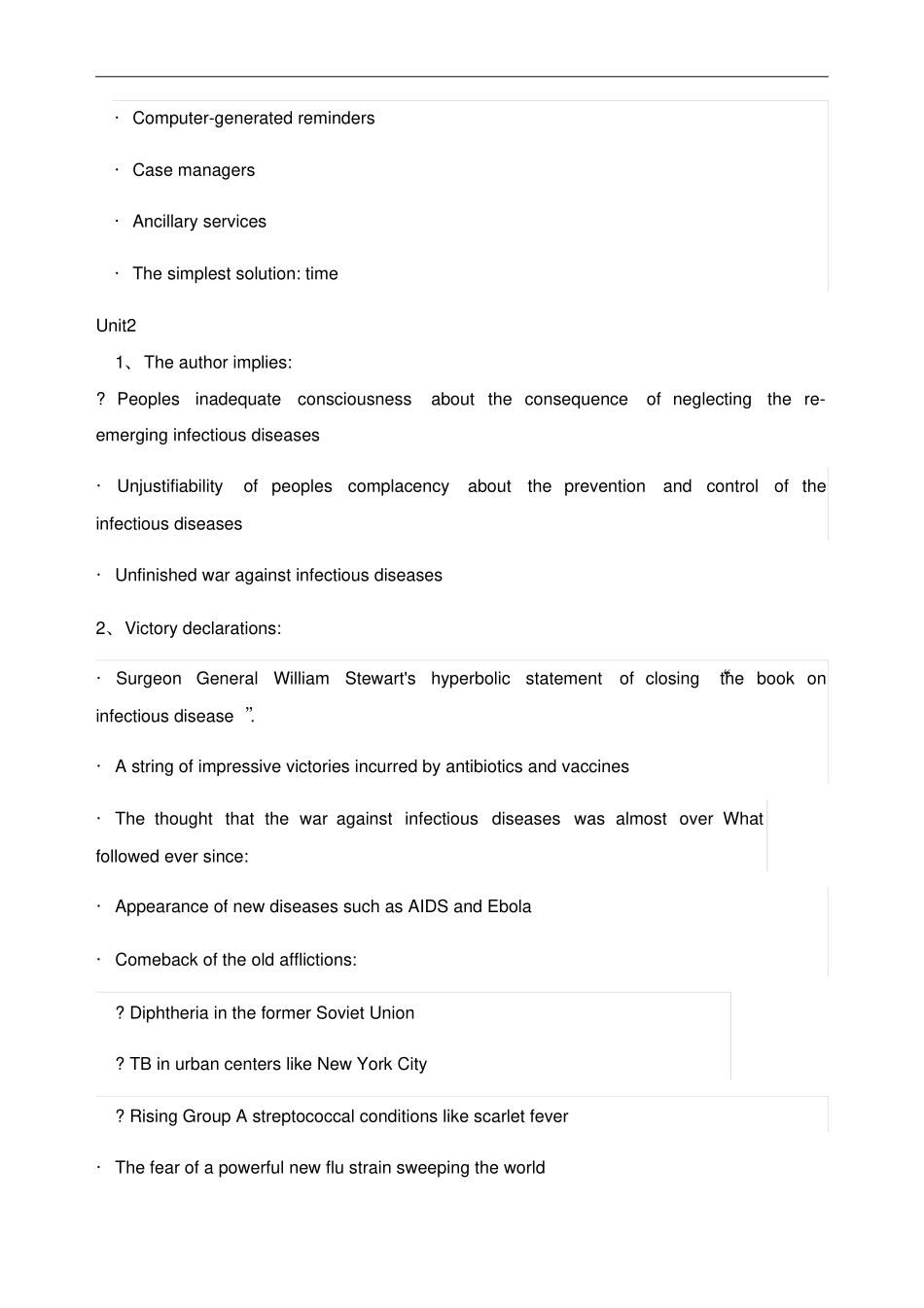
Unit1 1、Some factors that may lead to the complaint: · Neuron overload · Patients* high expectations · Mistrust and misunderstanding between the patient and the doctor 2、 Mrs. Osorio’s condition:· A 56-year-old woman · Somewhat overweight · Reasonably well-controlled diabetes and hypertension · Cholesterol on the high side without any medications for it · Not enough exercises she should take · Her bones a little thin on her last DEXA scan 3、 Good things: · Blood tests done · Glucose a little better · Her blood pressure a little better but not so great Bad things: · Cholesterol not so great · Her weight a little up · Her bones a little thin on her last DEXA scan 4 4、The situation: · The author was in a moderate state of panic: juggling so many thoughts about Mrs. Osorio ’s conditions and trying to resolve them all before the clock ran down. · Mrs. Osorio made a trivial request, not so important as compared to her conditions. · Mrs. Osorio seemed to care only about her “innocent — and completely justified — request ”: the form signed by her doctor. · The doctor tried to or at least pretended to pay attention to the patient while completing documentation. 5、Similarities: · In computer multitasking, a microprocessor actually performs only one task at a time. Like microprocessors, we human beings carft actually concentrate on two thoughts at the same exact time. Multitasking is just an illusion both in computers and human beings. Differences: · The concept of multitasking originated in computer science. · At best, human beings can juggle only a handful of thoughts in a multitasking manner, but computers can do much better. · The more thoughts human bein...