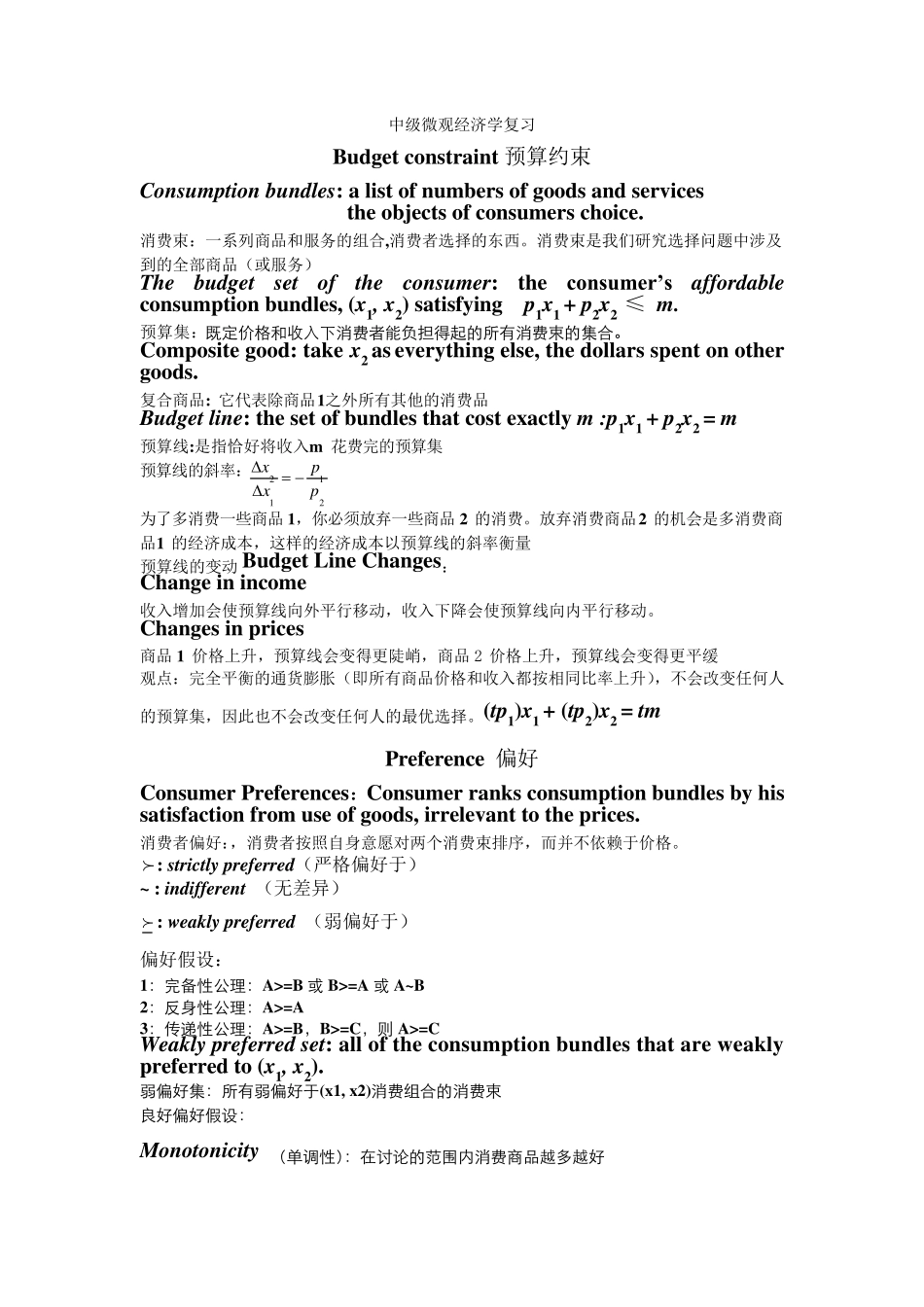
中级微观经济学复习 Budget constraint 预算约束 Consumption bundles: a list of numbers of goods and services the objects of consumers choice
消费束:一系列商品和服务的组合,消费者选择的东西
消费束是我们研究选择问题中涉及到的全部商品(或服务) The budget set of the consumer: the consumer’s affordable consumption bundles, (x1, x2) satisfying p1x1 + p2x2 ≤ m
预算集:既 定 价 格 和 收 入 下 消 费 者 能 负 担 得 起 的 所 有 消 费 束 的 集 合
Composite good: take x2 as everything else, the dollars spent on other goods
复合商品: 它代表除商品1之外所有其他的消费品 Budget line: the set of bundles that cost exactly m :p1x1 + p2x2 = m 预算线:是指恰好将收入m 花费完的预算集 预算线的斜率: 为了多消费一些商品1,你必须放弃一些商品2 的消费
放弃消费商品2 的机会是多消费商品1 的经济成本,这样的经济成本以预算线的斜率衡量 预算线的变动 Budget Line Changes: Change in income 收入增加会使预算线向外平行移动,收入下降会使预算线向内平行移动
Changes in prices 商品1 价格上升,预算线会变得更陡峭,商品2 价格上升,预算线会变得更平缓 观点:完全平衡的通货膨胀(即所有商品价格和收入都按相同比率上升),不会改变任何人的预算集,因此