学习好资料欢迎下载时态讲解:现在完成时(1)构成:现在完成时由助动词have + 过去分词构成,助动词have 有人称和数的变化
第三人称单数用 has,其余用 have
现在完成时的否定式直接在助动词后面加上not、疑问式是把助动词提到主语之前
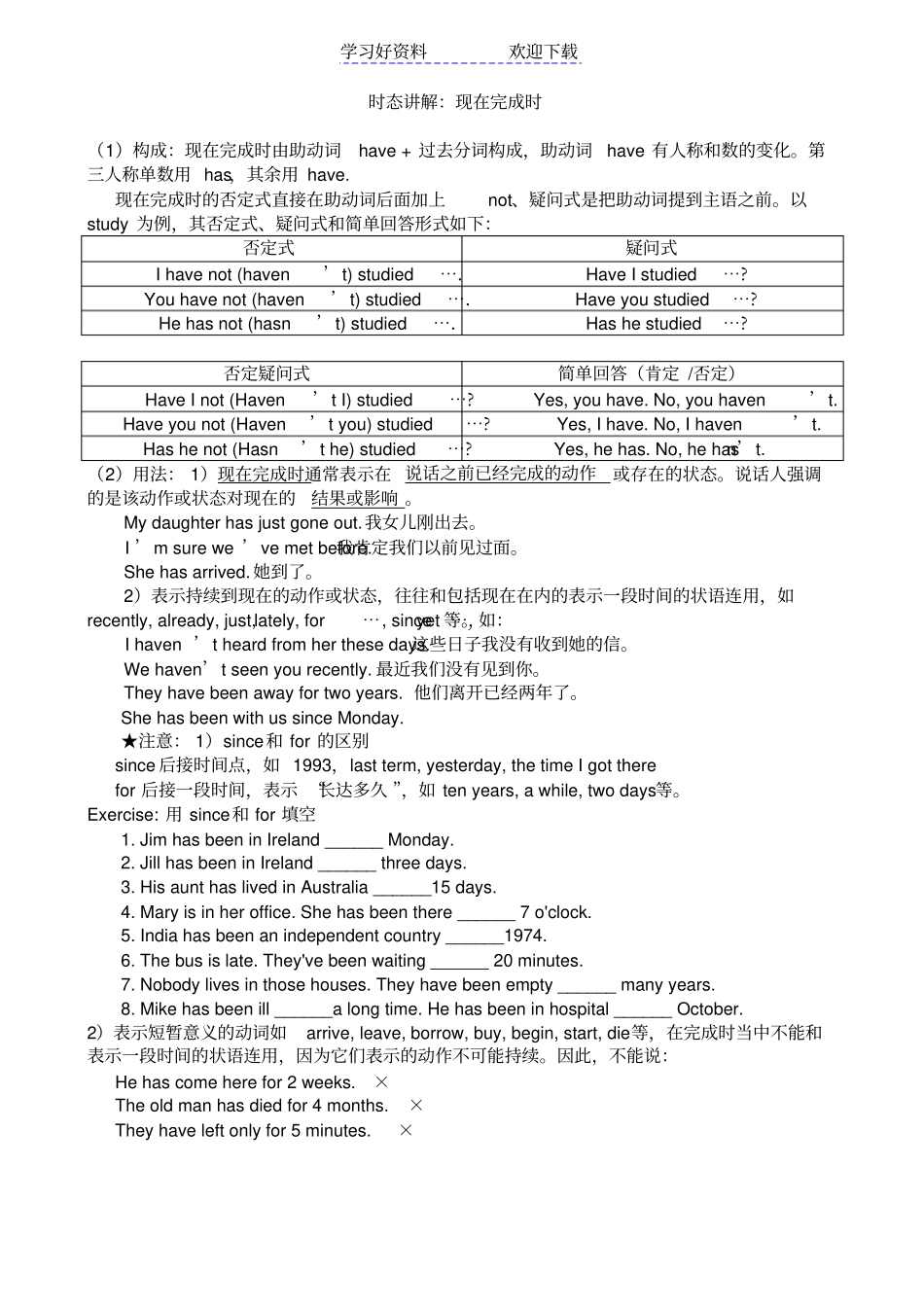
以study 为例,其否定式、疑问式和简单回答形式如下:否定式疑问式I have not (haven’t) studied⋯
Have I studied⋯
You have not (haven’t) studied⋯
Have you studied⋯
He has not (hasn’t) studied⋯
Has he studied⋯
否定疑问式简单回答(肯定 /否定)Have I not (Haven’t I) studied⋯
Yes, you have
No, you haven’t
Have you not (Haven’t you) studied⋯
Yes, I have
No, I haven’t
Has he not (Hasn’t he) studied⋯
Yes, he has
No, he hasn’t
(2)用法: 1)现在完成时通常表示在 说话之前已经完成的动作或存在的状态
说话人强调的是该动作或状态对现在的结果或影响
My daughter has just gone out
我女儿刚出去
I ’m sure we ’ve met before
我肯定我们以前见过面
She has arrived
2)表示持续到现在的动作或状态,往往和包括现在在内的表示一段时间的状语连用,如recently, already, just, lately, for⋯, since⋯,yet 等
如:I haven ’t heard from her these days
这些日子我没