下面代码的输出结果是: public class Main { public static void main(String[] args) { int n = 100; int m = 200; System
println(f(n,m)); System
println(n); } public static int f(int m, int n) { n = m+n; return n; } } A
300 300 B
100 100 C
300 100 D
100 300 2
程序执行的结果是: public class Test { public static void main(String[] args) { int x = 6; Test p = new Test(); p
doStuff(x); System
println(" main: x = " + x); } void doStuff(int x) { System
println(" doStuff:x =" + x++); } } A
doStuff:x =7 main: x = 7 B
doStuff:x =7 main: x = 6 C
doStuff:x =6 main: x = 7 D
doStuff:x =6 main: x = 6 3
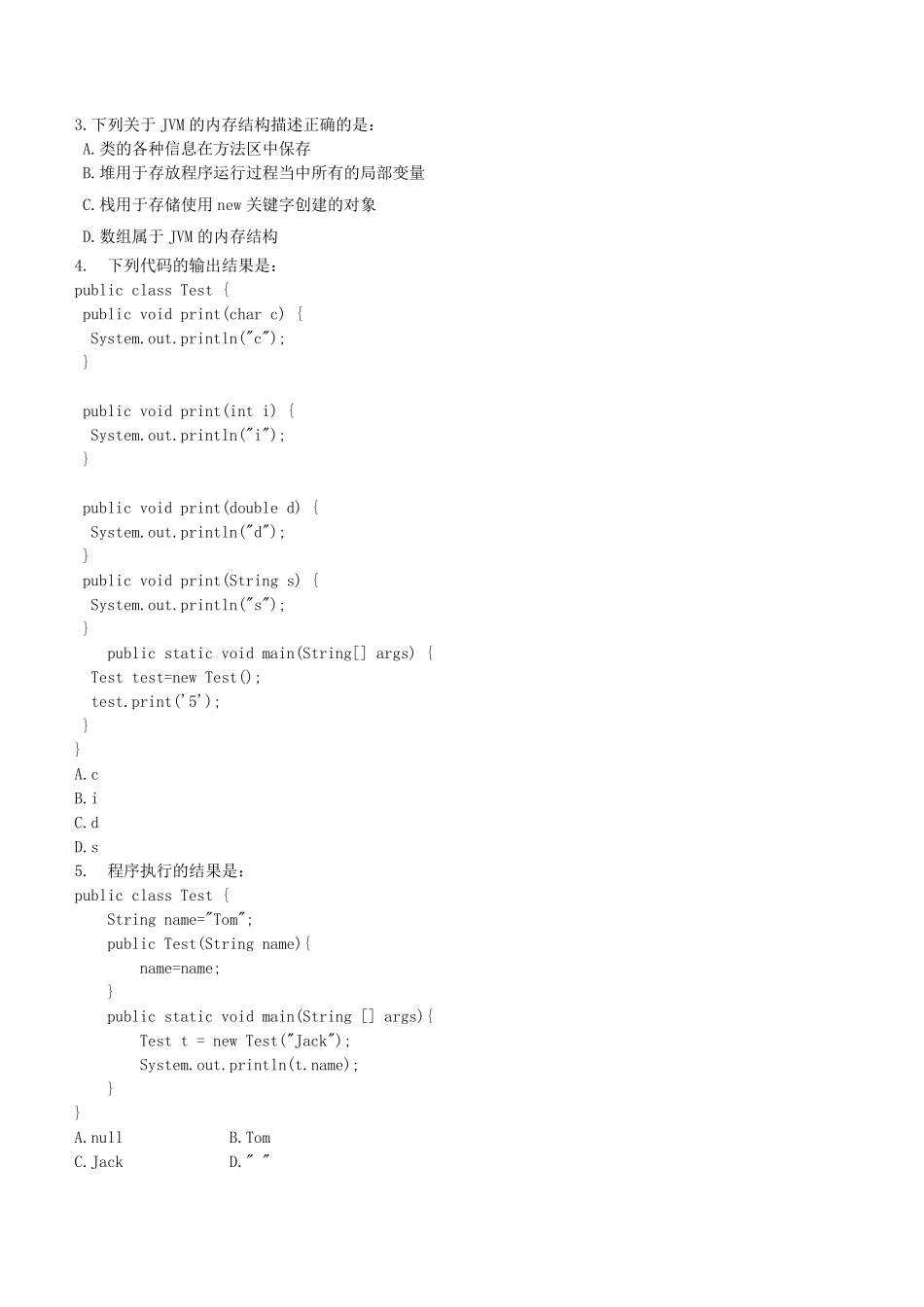
下列关于 JVM 的内存结构描述正确的是: A
类的各种信息在方法区中保存 B
堆用于存放程序运行过程当中所有的局部变量 C
栈用于存储使用 new 关键字创建的对象 D
数组属于 JVM 的内存结构 4
下列代码的输出结果是: public class Test { public void print(char c) { System
println("c"); } public void pri