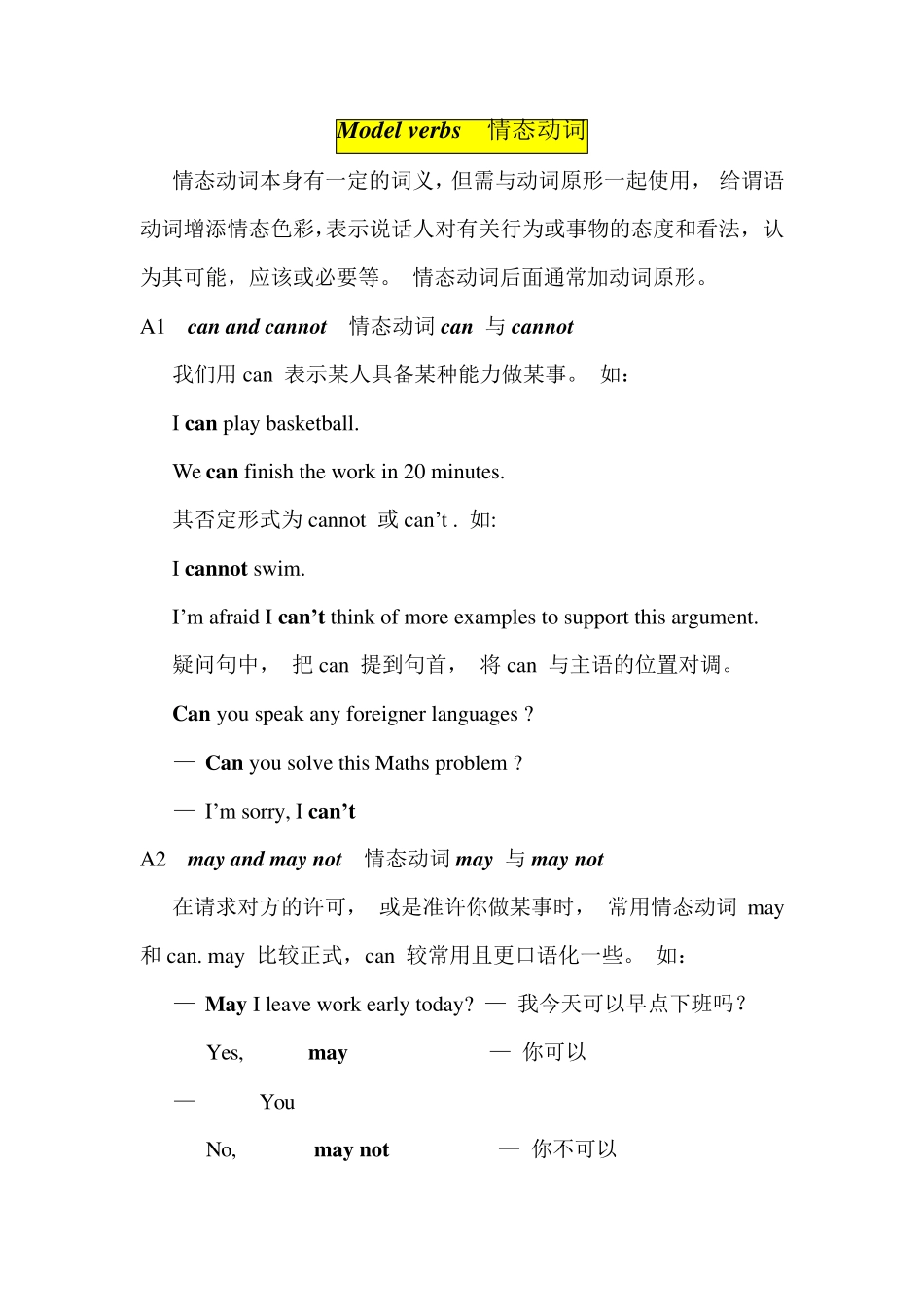
Model v erbs 情态动词 情态动词本身有一定的词义,但需与动词原形一起使用, 给谓语动词增添情态色彩,表示说话人对有关行为或事物的态度和看法, 认为其可能,应该或必要等
情态动词后面通常加动词原形
A1 can and cannot 情态动词can 与cannot 我们用can 表示某人具备某种能力做某事
如: I can play basketball
We can finish the work in 20 minutes
其否定形式为cannot 或can’t
如: I cannot swim
I’m afraid I can’t think of more examples to support this argument
疑问句中, 把can 提到句首, 将can 与主语的位置对调
Can you speak any foreigner languages
— Can you solve this Maths problem
— I’m sorry, I can’t A2 may and may not 情态动词may 与may not 在请求对方的许可, 或是准许你做某事时, 常用情态动词may 和can
may 比较正式,can 较常用且更口语化一些
如: — May I leave work early today
— 我今天可以早点下班吗
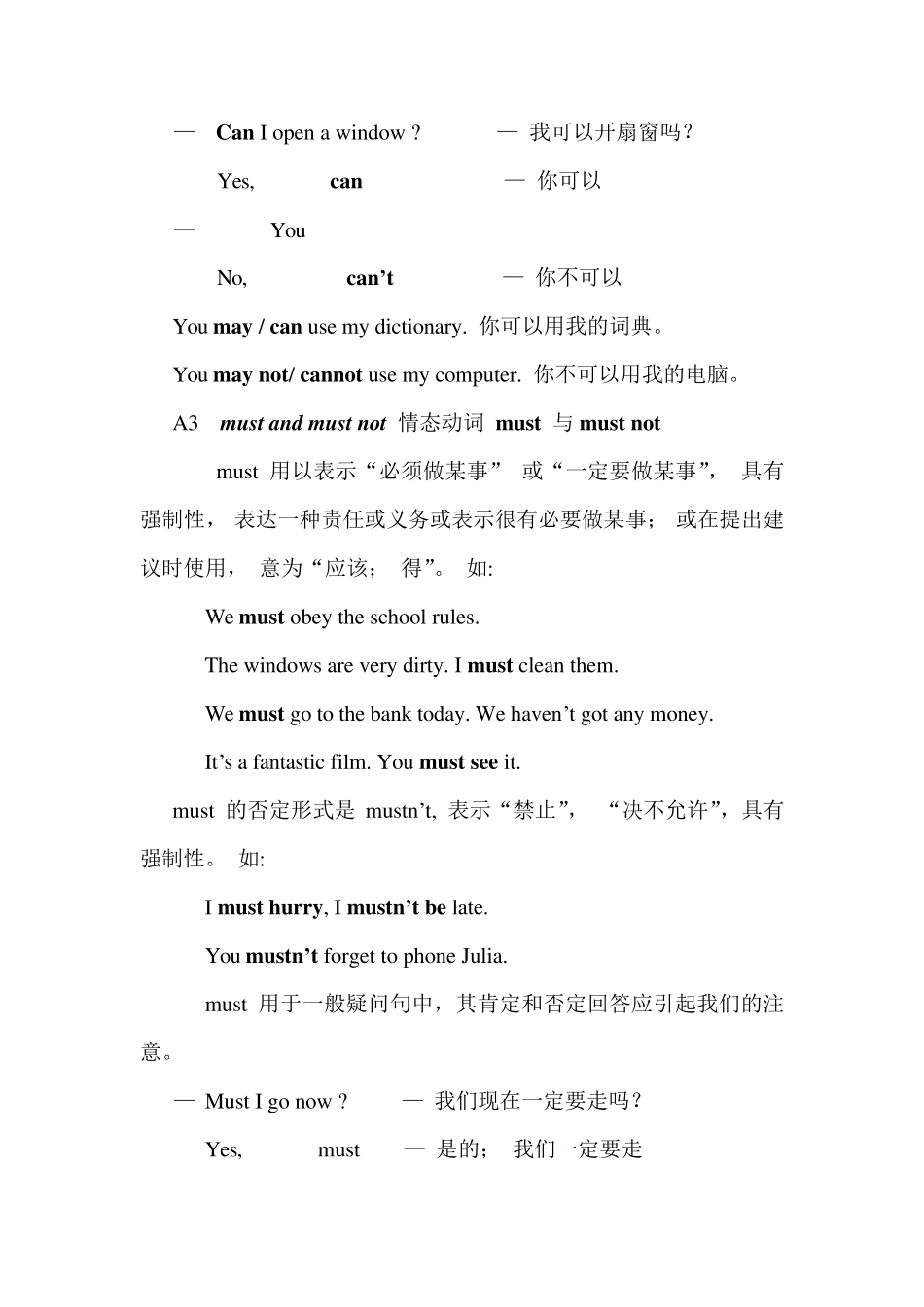
Yes, may — 你可以 — You No, may not — 你不可以 — Can I open a window
— 我可以开扇窗吗
Yes, can — 你可以 — You No, can’t — 你不可以 You may / can use my dictionary
你可以用我的词典
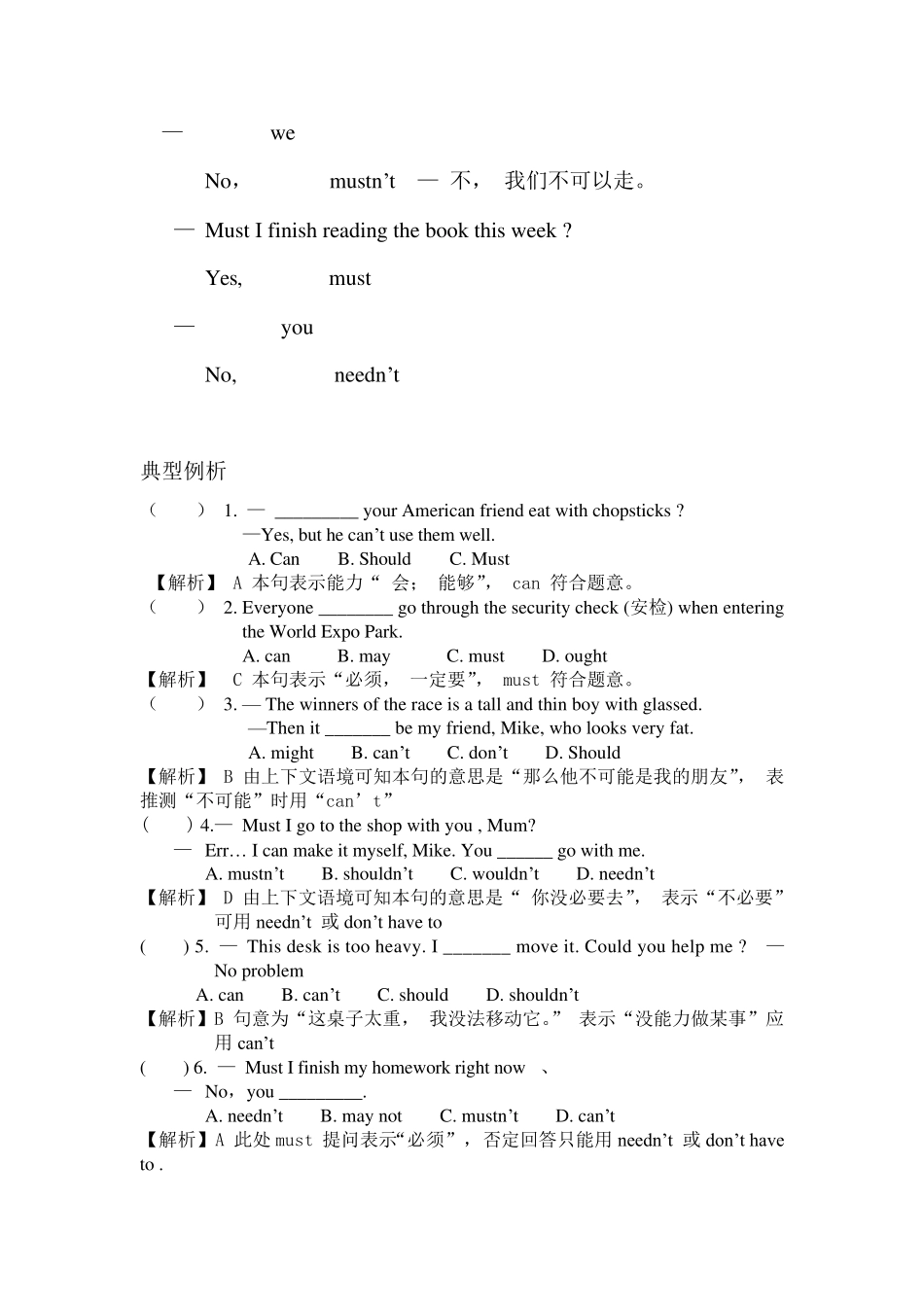
You may not/ cannot use my comput