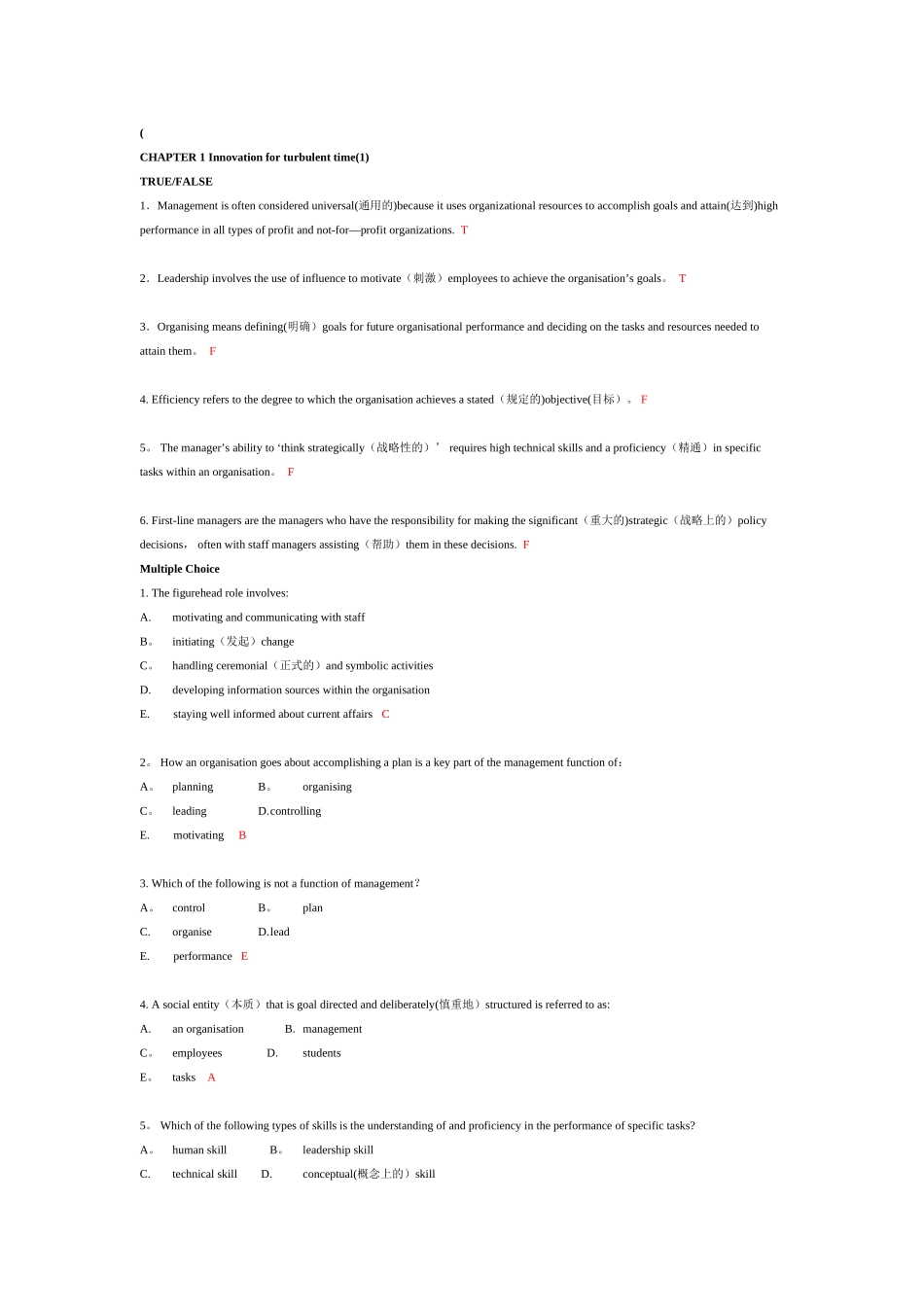
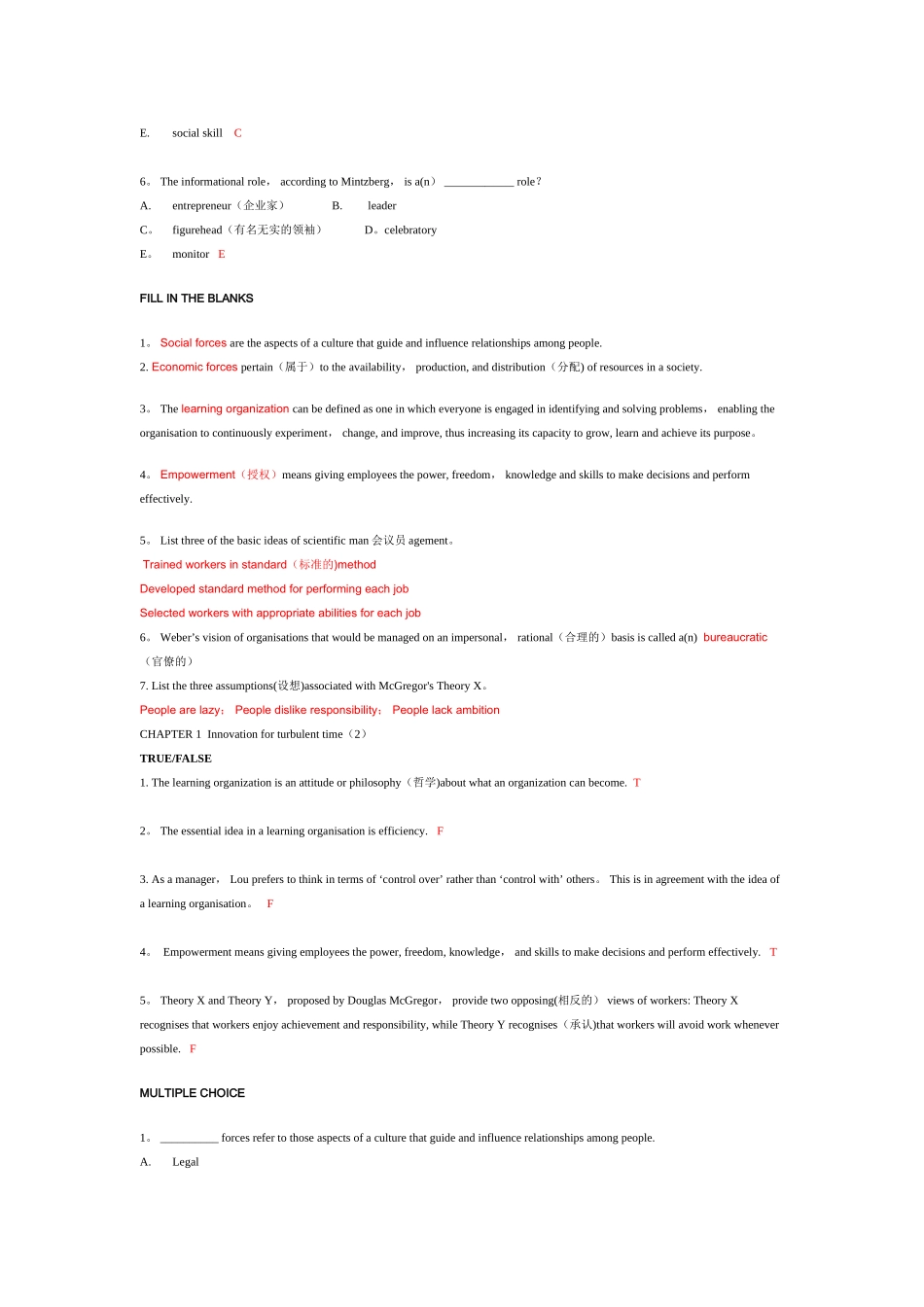
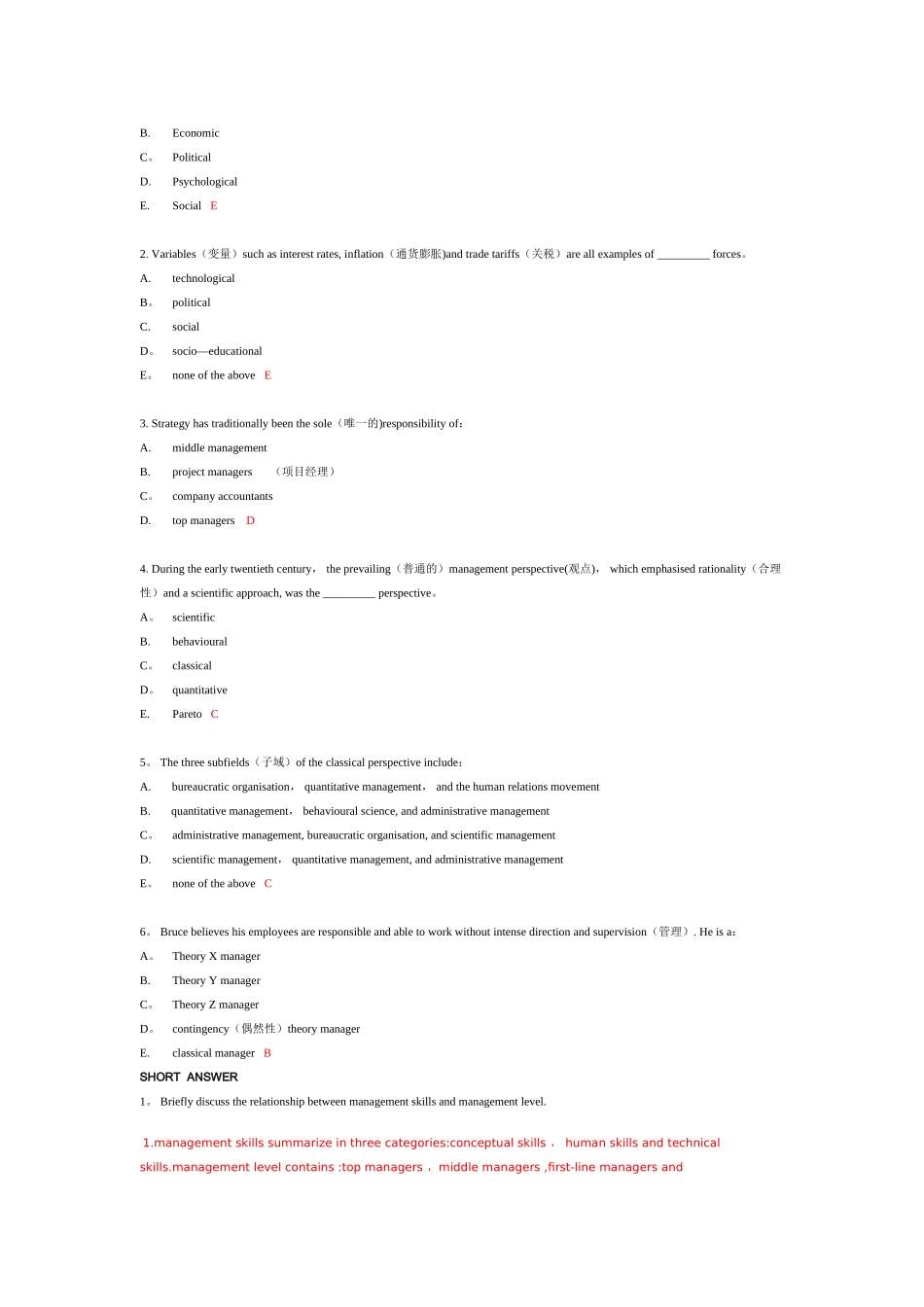
(CHAPTER 1 Innovation for turbulent time(1)TRUE/FALSE 1.Management is often considered universal(通用的)because it uses organizational resources to accomplish goals and attain(达到)high performance in all types of profit and not-for—profit organizations. T 2.Leadership involves the use of influence to motivate(刺激)employees to achieve the organisation’s goals。 T 3.Organising means defining(明确)goals for future organisational performance and deciding on the tasks and resources needed to attain them。 F 4. Efficiency refers to the degree to which the organisation achieves a stated(规定的)objective(目标)。 F 5。 The manager’s ability to ‘think strategically(战略性的)’ requires high technical skills and a proficiency(精通)in specific tasks within an organisation。 F 6. First-line managers are the managers who have the responsibility for making the significant(重大的)strategic(战略上的)policy decisions, often with staff managers assisting(帮助)them in these decisions. FMultiple Choice1. The figurehead role involves: A.motivating and communicating with staffB。initiating(发起)changeC。handling ceremonial(正式的)and symbolic activitiesD.developing information sources within the organisationE. staying well informed about current affairs C 2。 How an organisation goes about accomplishing a plan is a key part of the management function of: A。planning B。organisingC。leading D.controllingE. motivating B 3. Which of the following is not a function of management? A。control B。planC.organise D.leadE. performance E 4. A social entity(本质)that is goal directed and deliberately(慎重地)structured is referred to as: A.an organisation B. managementC。employees D.studentsE。tasks A 5。 Which of the following types of skills is the under...