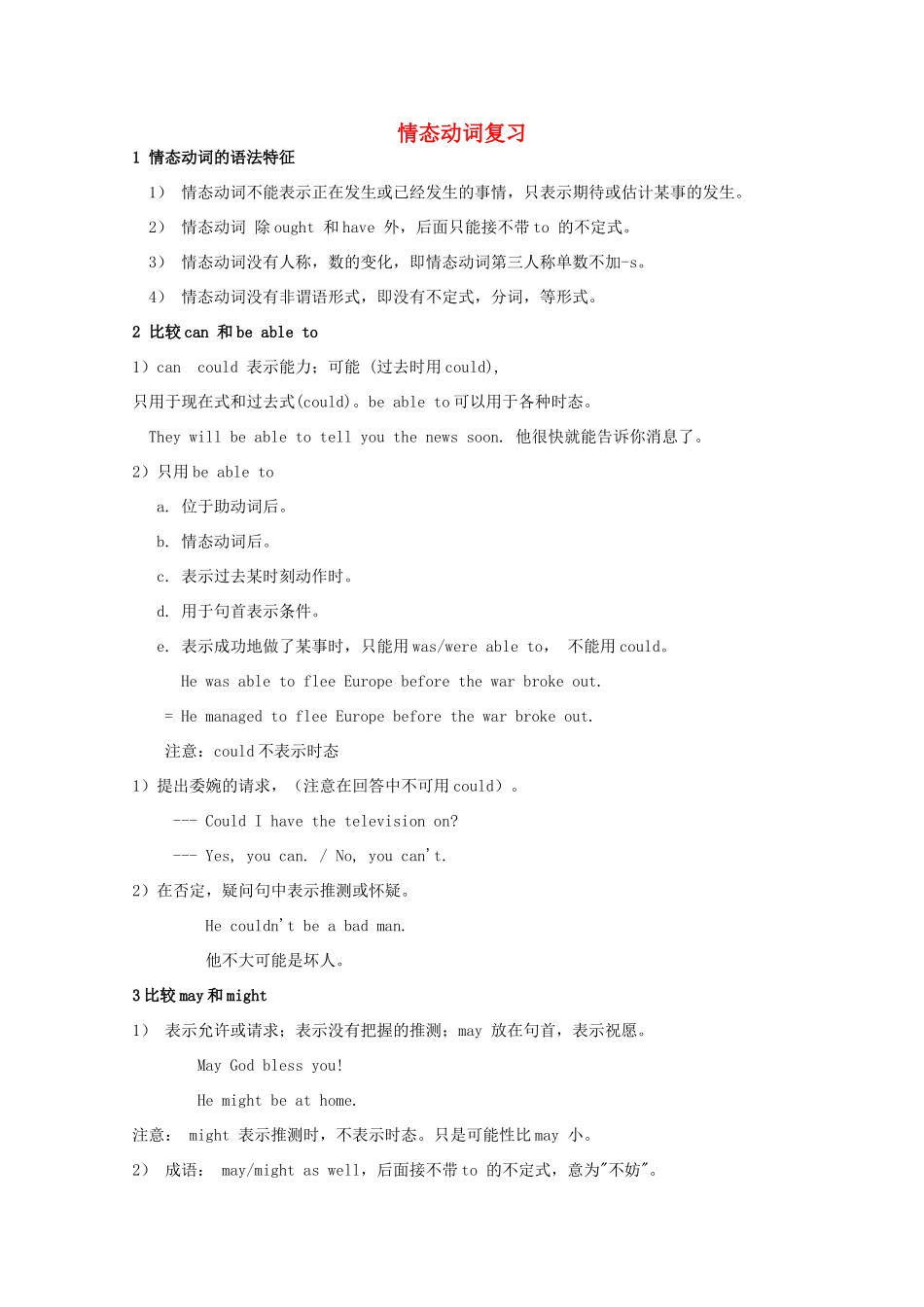
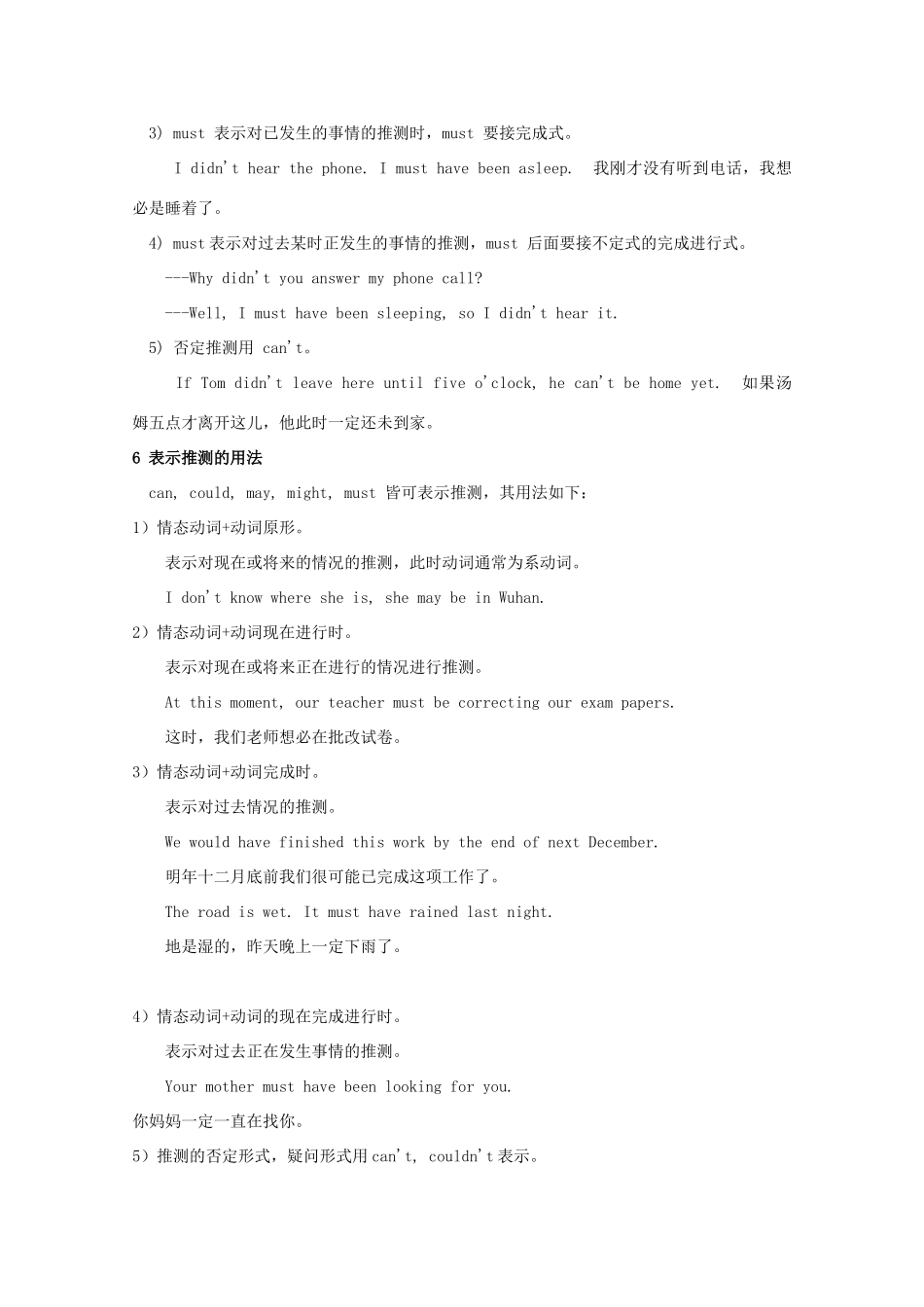
情态动词复习1 情态动词的语法特征 1) 情态动词不能表示正在发生或已经发生的事情,只表示期待或估计某事的发生
2) 情态动词 除 ought 和 have 外,后面只能接不带 to 的不定式
3) 情态动词没有人称,数的变化,即情态动词第三人称单数不加-s
4) 情态动词没有非谓语形式,即没有不定式,分词,等形式
2 比较 can 和 be able to 1)can could 表示能力;可能 (过去时用 could), 只用于现在式和过去式(could)
be able to 可以用于各种时态
They will be able to tell you the news soon
他很快就能告诉你消息了
2)只用 be able to a
位于助动词后
表示过去某时刻动作时
用于句首表示条件
表示成功地做了某事时,只能用 was/were able to, 不能用 could
He was able to flee Europe before the war broke out
= He managed to flee Europe before the war broke out
注意:could 不表示时态1)提出委婉的请求,(注意在回答中不可用 could)
--- Could I have the television on
--- Yes, you can
/ No, you can't
2)在否定,疑问句中表示推测或怀疑
He couldn't be a bad man
他不大可能是坏人
3 比较 may 和 might 1) 表示允许或请求;表示没有把握的推测;may 放在句首,表示祝愿
May God bless you
He might be at hom