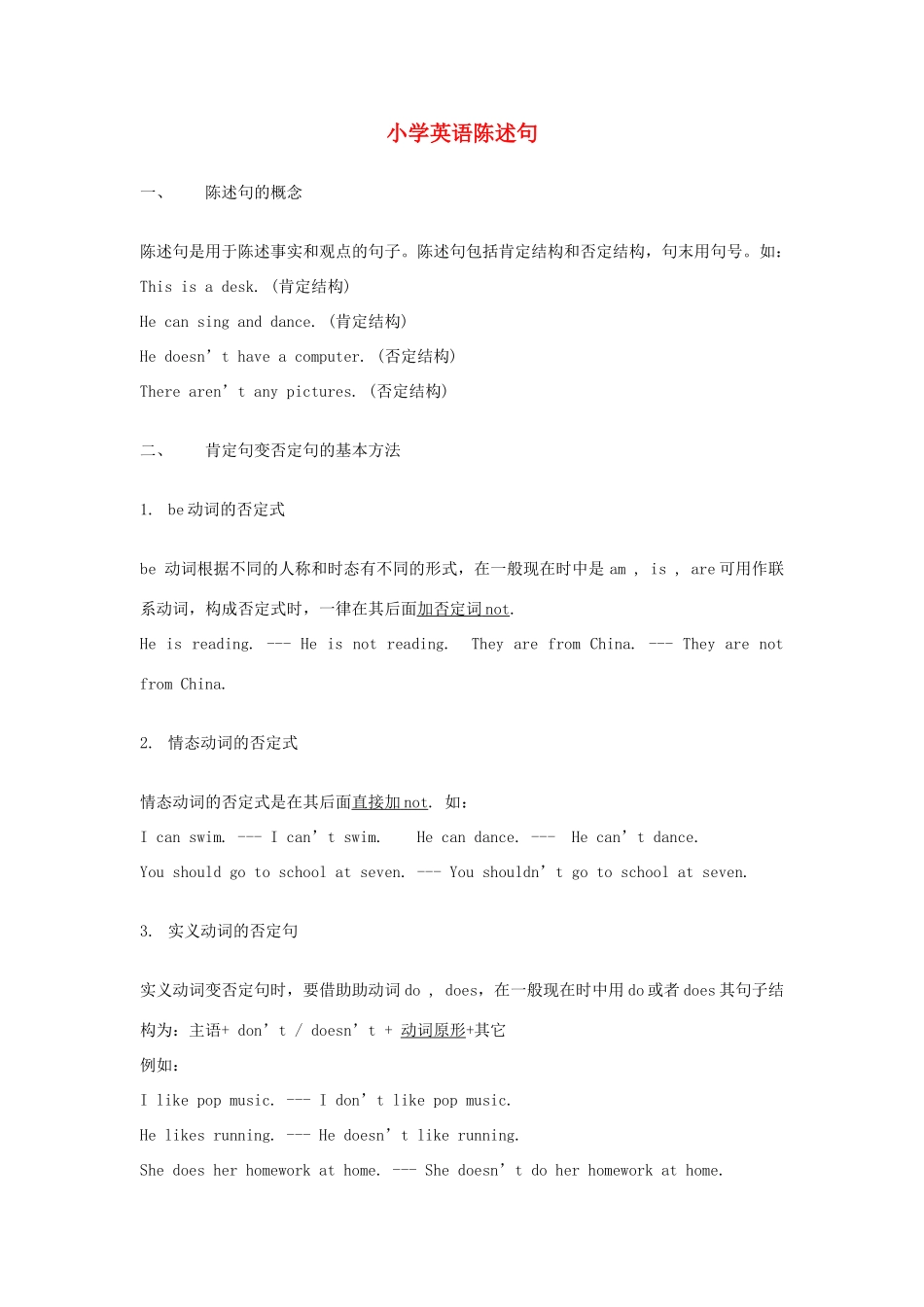
小学英语陈述句一、陈述句的概念陈述句是用于陈述事实和观点的句子
陈述句包括肯定结构和否定结构,句末用句号
如:This is a desk
(肯定结构)He can sing and dance
(肯定结构)He doesn’t have a computer
(否定结构)There aren’t any pictures
(否定结构)二、肯定句变否定句的基本方法1
be 动词的否定式be 动词根据不同的人称和时态有不同的形式,在一般现在时中是 am , is , are 可用作联系动词,构成否定式时,一律在其后面加否定词 not
He is reading
--- He is not reading
They are from China
--- They are not from China
情态动词的否定式情态动词的否定式是在其后面直接加 not
如:I can swim
--- I can’t swim
He can dance
--- He can’t dance
You should go to school at seven
--- You shouldn’t go to school at seven
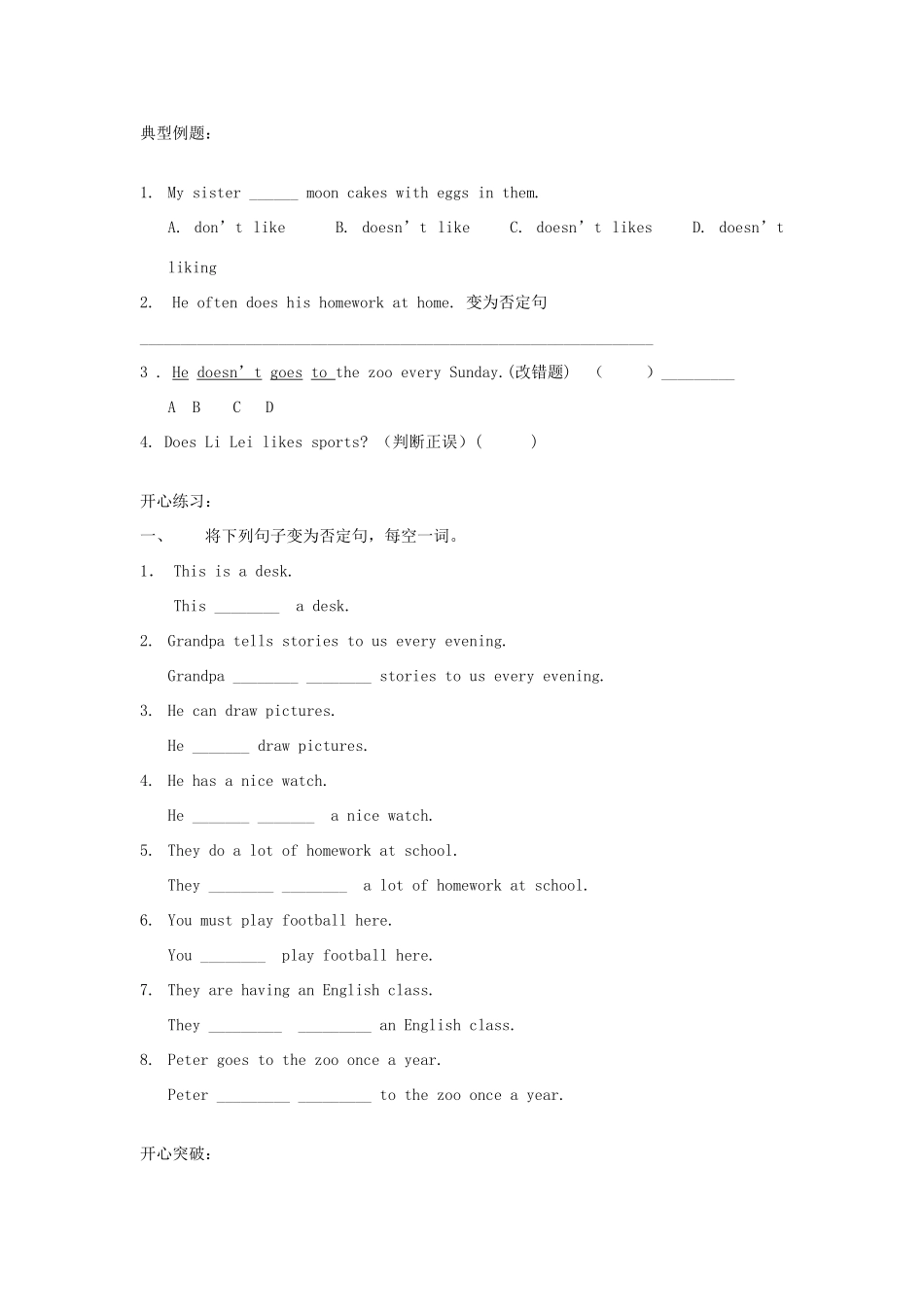
实义动词的否定句实义动词变否定句时,要借助助动词 do , does,在一般现在时中用 do 或者 does 其句子结构为:主语+ don’t / doesn’t + 动词原形+其它例如: I like pop music
--- I don’t like pop music
He likes running
--- He doesn’t like running
She does her homework at home
--- She doesn’t do her homework at home