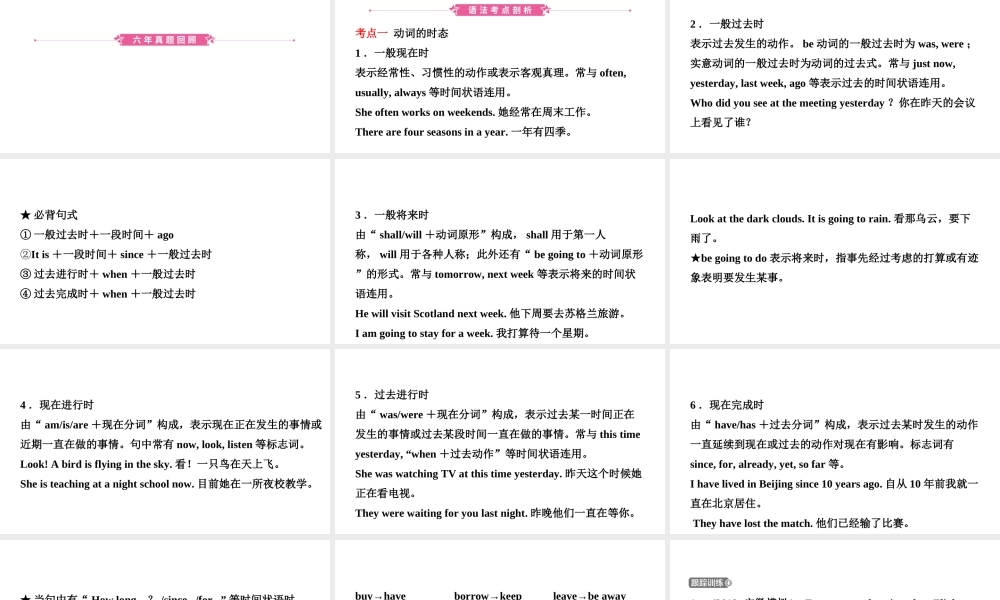
安徽语法十一 动词的时态与语态考点一 动词的时态1 .一般现在时表示经常性、习惯性的动作或表示客观真理
常与 often, usually, always 等时间状语连用
She often works on weekends
她经常在周末工作
There are four seasons in a year
2 .一般过去时表示过去发生的动作
be 动词的一般过去时为 was, were ;实意动词的一般过去时为动词的过去式
常与 just now, yesterday, last week, ago 等表示过去的时间状语连用
Who did you see at the meeting yesterday
你在昨天的会议上看见了谁
★ 必背句式① 一般过去时+一段时间+ ago②It is +一段时间+ since +一般过去时③ 过去进行时+ when +一般过去时④ 过去完成时+ when +一般过去时3 .一般将来时由“ shall/will +动词原形”构成, shall 用于第一人称, will 用于各种人称;此外还有“ be going to +动词原形”的形式
常与 tomorrow, next week 等表示将来的时间状语连用
He will visit Scotland next week
他下周要去苏格兰旅游
I am going to stay for a week
我打算待一个星期
Look at the dark clouds
It is going to rain
看那乌云,要下雨了
★be going to do 表示将来时,指事先经过考虑的打算或有迹象表明要发生某事
4 .现在进行时由“ am/is/are +现在分词”构成,表示现在正在发生的事情或近期一直在做的事情
句中常有 now, look, list