形容词和副词的比较级和最高级
大多数形容词和副词有三个等级:原级、比较级、最高级
Grammar:一、原级:1
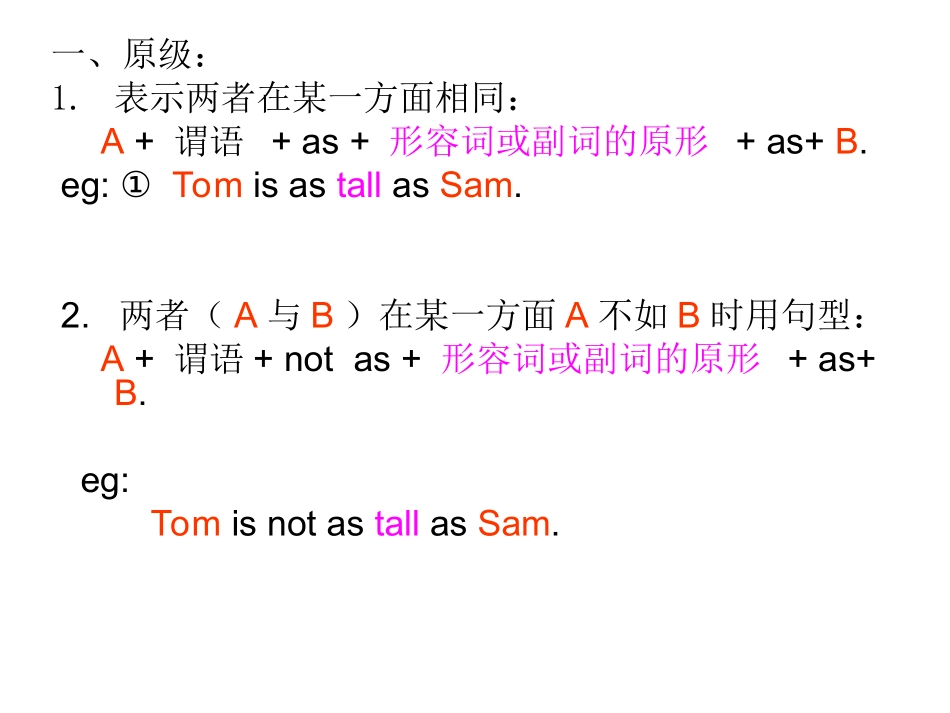
表示两者在某一方面相同:A+谓语+as+形容词或副词的原形+as+B
eg:①TomisastallasSam
两者(A与B)在某一方面A不如B时用句型:A+谓语+notas+形容词或副词的原形+as+B
eg:TomisnotastallasSam
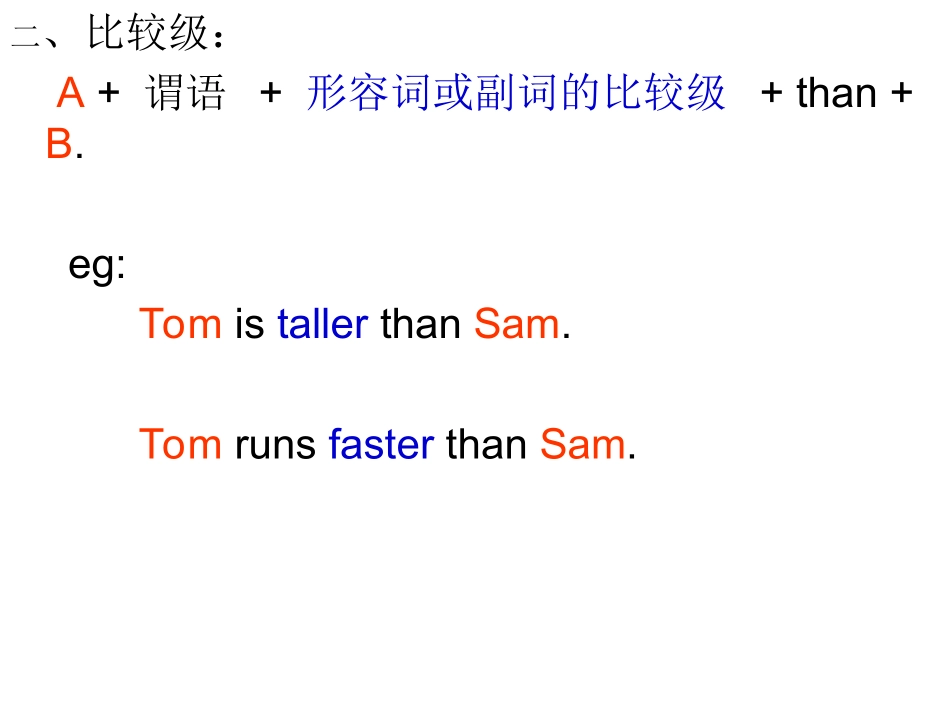
二、比较级:A+谓语+形容词或副词的比较级+than+B
eg:TomistallerthanSam
TomrunsfasterthanSam
1、形容词和副词的比较级的规则变化:①一般直接在词尾加er或esttall—taller--tallestlight—lighter--lightest②以字母e结尾的直接加r或stnice—nicer—nicestfine—finer—finest③以辅音字母加y结尾的形容词,要变y为i再加er或estheavy—heavier—heaviestbusy—busier--busiest④以重读闭音节结尾且末尾只有一个辅音字母的形容词,要双写末尾的辅音字母再加er或estthin—thinner—thinnesthot—hotter—hottest⑤多音节词或部分双音节词的比较级和最高级在其前面加more或most
beautiful—morebeautiful—mostbeautifulimportant—moreimportant—mostimportantInteresting–moreinteresting–mostinterestingquickly–morequickly–mostquicklytired–moretired–mosttired2、不规则形容词的比较级最高级原级比较级最高级good/wellmany/muchlittleill/bad/badl