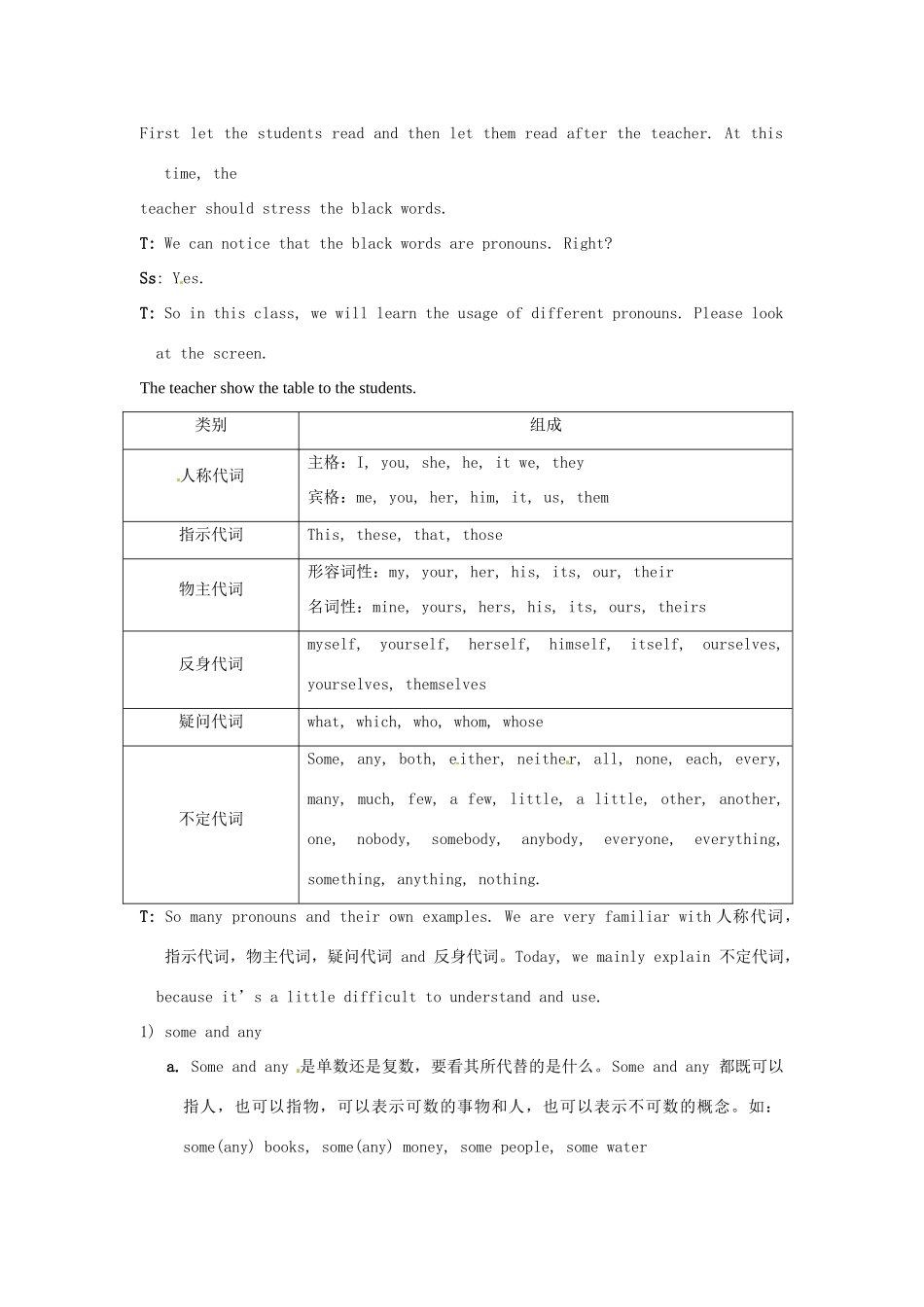
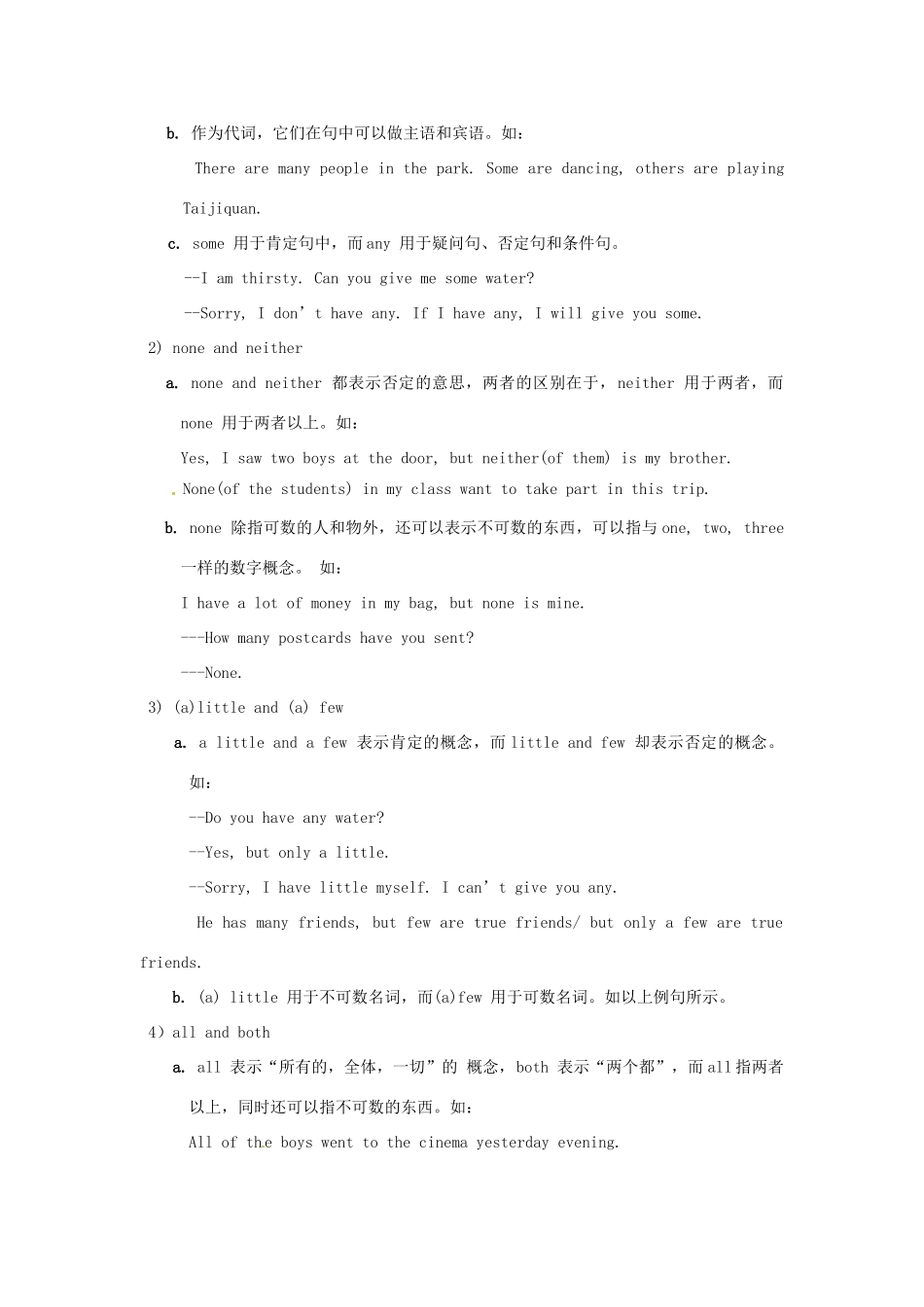
七年级英语下册《Unit3Languageinuse》教案Teachinggoals教学目标1.Languagegoals语言目标a.Keywords&phrases重点生词和短语either…or…,neither,none,afew,few,every,each,atthebeginningoftheday,b.Grammarpoints:Theusageofpronouns.2.Abilitygoals能力目标Enablestudentstomastertheusageofpronounsandwriteaboutaleafletabouttheirschool.3.Learningabilitygoals学能目标Helpthestudentslearnhowtousedifferentpronounscorrectlyandwriteaboutaleafletabouttheirschool.Teachingimportant/difficultpoints教学重难点Learntowriteaboutschoolsandmastertheusageofdifferentpronouns.Teachingmethods教学方法Writingandspeaking.Teachingaids教具准备Acomputerandaprojector.Teachingproceduresandways教学过程与方式Step1GreetingStep2RevisionAsksomestudentstoretellthestoryinUnit2.T:Whocanretellthestoryinfrontoftheclass?Bebrave!Ss:…T:Youareexcellent!Step3LanguagepracticeT:Pleaseturntopage14andreadthesentencesinLanguagePractice.Whileyouarereading,payattentiontotheblackwords.Firstletthestudentsreadandthenletthemreadaftertheteacher.Atthistime,theteachershouldstresstheblackwords.T:Wecannoticethattheblackwordsarepronouns.Right?Ss:Yes.T:Sointhisclass,wewilllearntheusageofdifferentpronouns.Pleaselookatthescreen.Theteachershowthetabletothestudents.类别组成人称代词主格:I,you,she,he,itwe,they宾格:me,you,her,him,it,us,them指示代词This,these,that,those物主代词形容词性:my,your,her,his,its,our,their名词性:mine,yours,hers,his,its,ours,theirs反身代词myself,yourself,herself,himself,itself,ourselves,yourselves,themselves疑问代词what,which,who,whom,whose不定代词Some,any,both,either,neither,all,none,each,every,many,much,few,afew,little,alittle,other,another,one,nobody,somebody,anybody,everyone,everything,something,anything,nothing.T:Somanypronounsandtheirownexamples.Weareveryfamiliarwith人称代词,指示代词,物主代词,疑问代词and反身代词。Today,wemainlyexplain不定代词,becauseit’salittledifficulttounderstandanduse.1)someandanya.Someandany是单数还是复数,要看其所代替的是什么。Someandany都既可以指人,也可以指物,可以表示可数的事物和人,也可以表示不可数的概念。如:some(any)books,some(any)money,somepeople,somewaterb.作为代词,它们在句中可以做主语和宾语。如:Therearemanypeopleinthepark.Somearedancing,othersareplayingTaijiquan.c.some用于肯定句中,而any用于疑问句、否定句和条件句。--Iamthirsty.Canyougivemesomewater?--Sorry,Idon’thaveany.IfIhaveany,Iwillgiveyousome.2)noneandneithera.noneandneither都表示否定的意思,两者的区别在于,neither用于两者,而none用于两者以上。如:Yes,Isawtwoboysatthedoor,butneither(ofthem)ismybrother.None(ofthestudents)inmyclasswanttotakepartinthistrip.b.none除指可数的人和物外,还可以表示不可数的东西,可以指与one,two,three一样的数字概念。如:Ihavealotofmoneyinmybag,butnoneismine.---Howmanypostcardshaveyousent?---None.3)(a)littleand(a)fewa.alittleandafew表示肯定的概念,而littleandfew却表示否定的概念。如:--Doyouhaveanywater?--Yes,butonlyalittle.--Sorry,Ihavelittlemyself.Ican’tgiveyouany.Hehasmanyfriends,butfewaretruefriends/butonlyafewaretruefriends.b.(a)little用于不可数名词,而(a)few用于可数名词。如以上例句所示。4)allandbotha.all表示“所有的,全体,一切”的概念,both表示“两个都”,而all指两者以上,同时还可以指不可数的东西。如:Alloftheboyswenttothecinemayesterdayevening.Allofthemoneyismine.--Whichofthetwoshirtsdoyoulike?--Ilikeboth.b.allandboth可用于主语之后,如:Weall/bothpassedtheexam.5)eachandeitherEachandeither都可以表...