表示推测的情态动词一
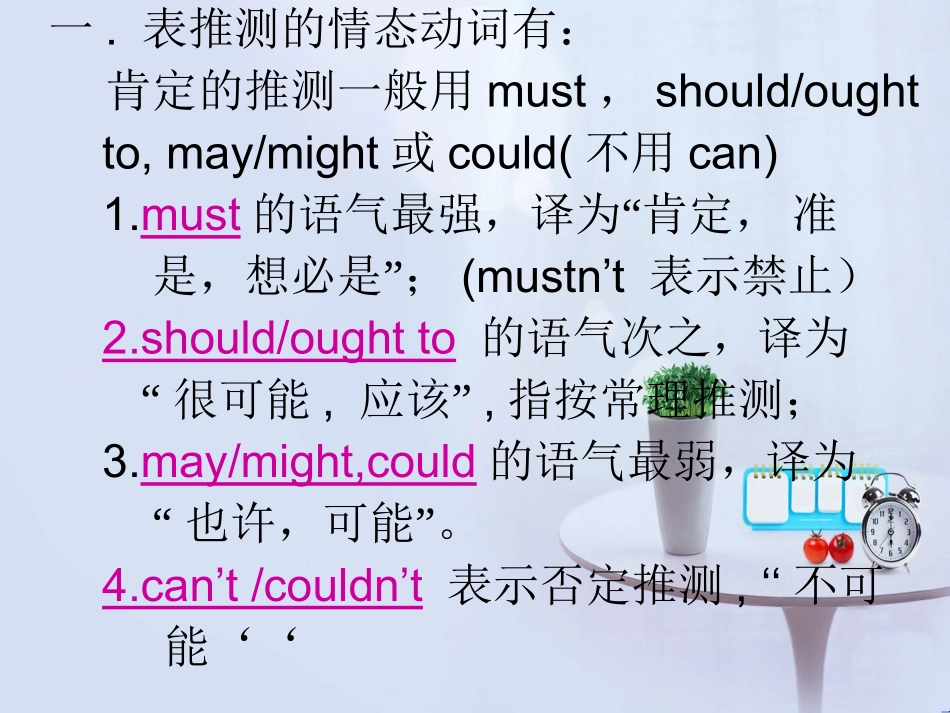
表推测的情态动词有:肯定的推测一般用must,should/oughtto,may/might或could(不用can)1
must“的语气最强,译为肯定,准”是,想必是;(mustn’t表示禁止)2
should/oughtto的语气次之,译为“很可能,”应该,指按常理推测;3
may/might,could的语气最弱,译为“”也许,可能
can’t/couldn’t表示否定推测,‘‘不可能‘‘eg
Youhavebeenworkinghardallday,youmustbetired
Hemustbeworkingintheofficenow
Heshouldcomeheretoday
Canthisbedonebyhim
Shemaybestillwaitingforus
Thismaynotbedonebyhim
Thiscannotbedonebyhim
“情态动词+havedone”的用法
musthavedone“过去一定做了某事”表示对过去的一种肯定性推测
Shemusthavegonebybus
Itmusthaverainedlastnight,fortheroadisquitemuddy
can/couldhave+done“过去可能”做了某事,“couldhave+done”也可表示‘‘过去本可以做某事但实际上却没有做”eg
Hewasnotathomelastnight,hecouldhavegonetothecinema
Icouldhavefinishedmyhomeworklastnight,butIwastoosleepy
“can/couldnot+have+done”“过去不可能做了某事”她不可能去你家,她不知道你的地址
Shecannothavebeentoyourhouse;sh