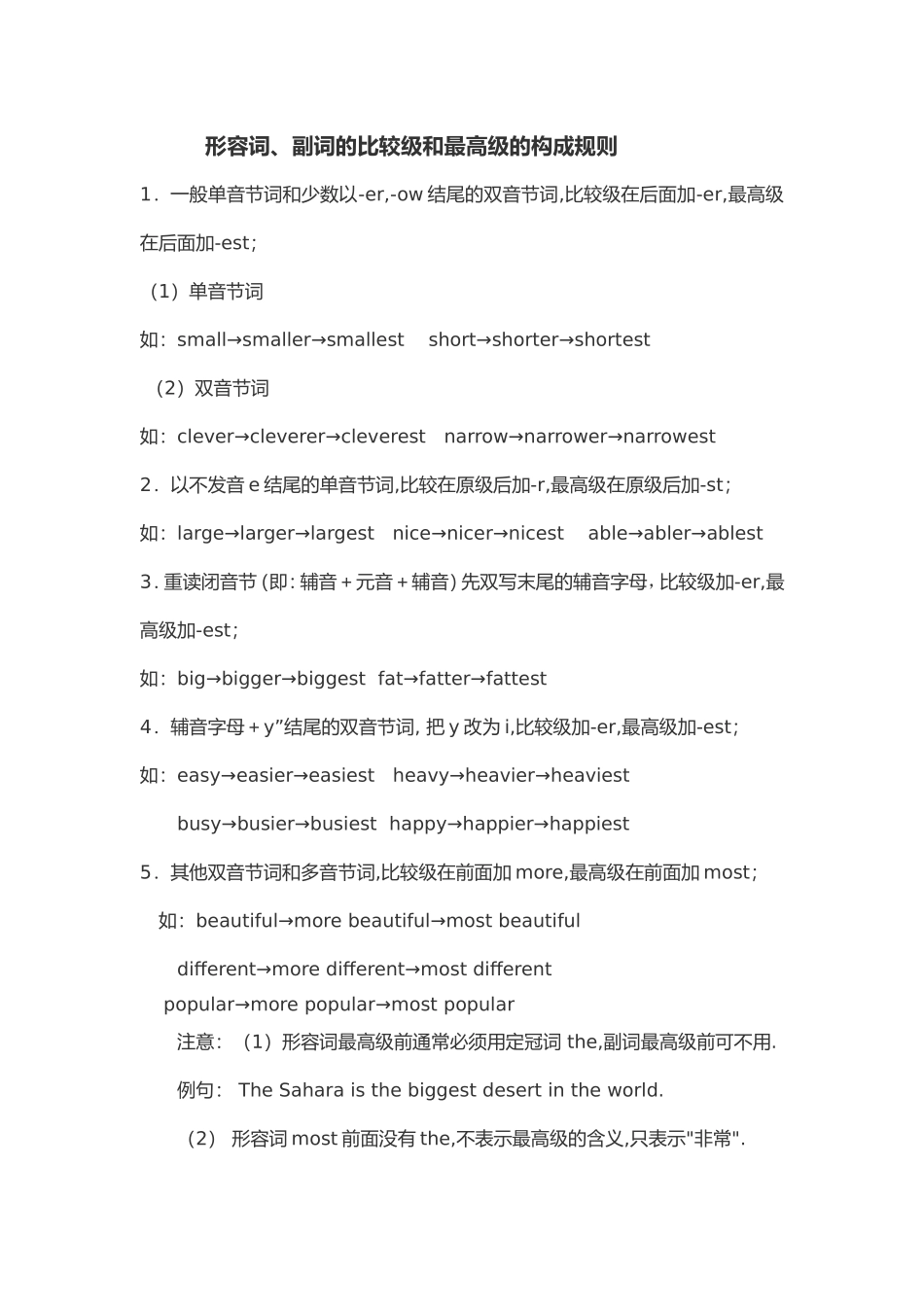
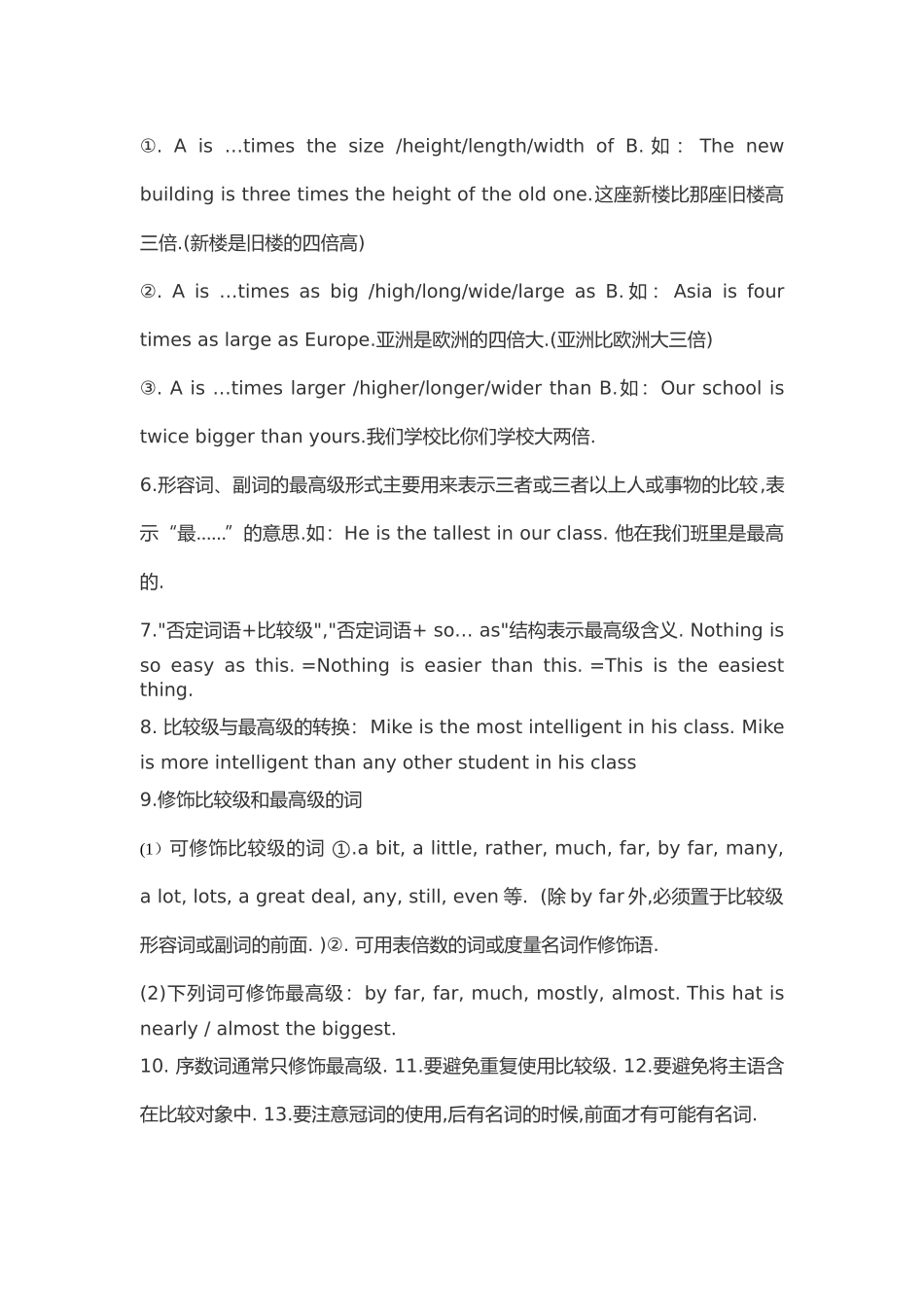
形容词、副词的比较级和最高级的构成规则1.一般单音节词和少数以-er,-ow结尾的双音节词,比较级在后面加-er,最高级在后面加-est;(1)单音节词如:small→smaller→smallestshort→shorter→shortest(2)双音节词如:clever→cleverer→cleverestnarrow→narrower→narrowest2.以不发音e结尾的单音节词,比较在原级后加-r,最高级在原级后加-st;如:large→larger→largestnice→nicer→nicestable→abler→ablest3.重读闭音节(即:辅音+元音+辅音)先双写末尾的辅音字母,比较级加-er,最高级加-est;如:big→bigger→biggestfat→fatter→fattest4.辅音字母+y”结尾的双音节词,把y改为i,比较级加-er,最高级加-est;如:easy→easier→easiestheavy→heavier→heaviestbusy→busier→busiesthappy→happier→happiest5.其他双音节词和多音节词,比较级在前面加more,最高级在前面加most;如:beautiful→morebeautiful→mostbeautifuldifferent→moredifferent→mostdifferentpopular→morepopular→mostpopular注意:(1)形容词最高级前通常必须用定冠词the,副词最高级前可不用
例句:TheSaharaisthebiggestdesertintheworld
(2)形容词most前面没有the,不表示最高级的含义,只表示"非常"
Itisamostimportantproblem
=Itisaveryimportantproblem
6.有少数形容