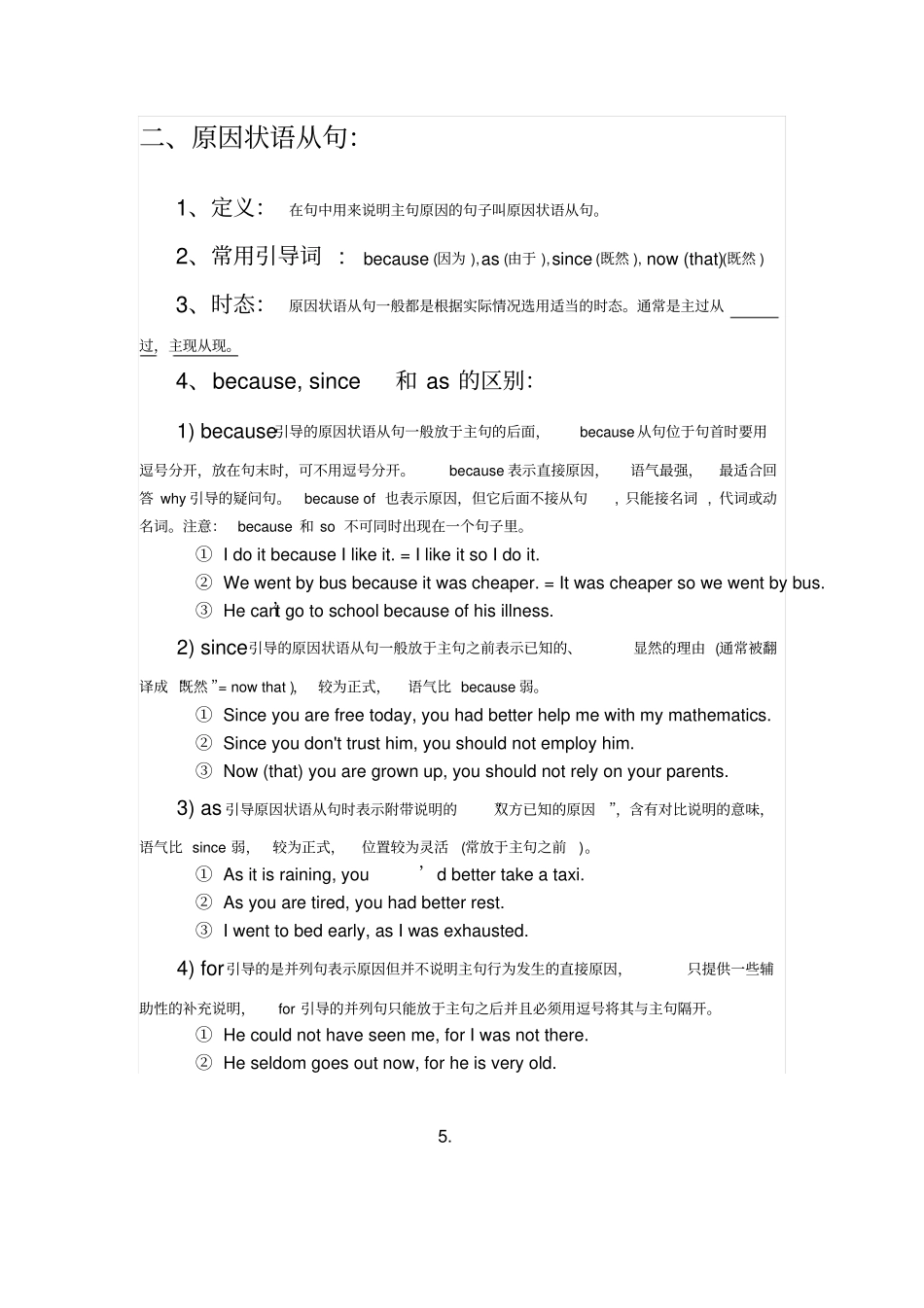
二、原因状语从句:1、定义: 在句中用来说明主句原因的句子叫原因状语从句
2、常用引导词 : because (因为 ), as (由于 ), since (既然 ), now (that) (既然 ) 3、时态: 原因状语从句一般都是根据实际情况选用适当的时态
通常是主过从过,主现从现
4、because, since和 as 的区别:1) because引导的原因状语从句一般放于主句的后面,because 从句位于句首时要用逗号分开,放在句末时,可不用逗号分开
because 表示直接原因,语气最强,最适合回答 why 引导的疑问句
because of 也表示原因,但它后面不接从句, 只能接名词 , 代词或动名词
注意: because 和 so 不可同时出现在一个句子里
① I do it because I like it
= I like it so I do it
② We went by bus because it was cheaper
= It was cheaper so we went by bus
③ He can’t go to school because of his illness
2) since引导的原因状语从句一般放于主句之前表示已知的、显然的理由 (通常被翻译成 “既然 ”= now that ), 较为正式,语气比 because 弱
① Since you are free today, you had better help me with my mathematics
② Since you don't trust him, you should not employ him
③ Now (that) you are grown up, you should not rely on your parents