- 1 - 关于直接引语和间接引语的语法总结 一、 定义: 直接引语:原封不动地引述别人的话
间接引语:说话人站在自己立场上来转述别人的话
二、 特点: 直接引语:在直接引语之前后要加上引号(‘ ’或“ ”)
例如:1、She said,’ I have lived in London for years’
2、Bill said,’ I’m hungry
’ 间接引语:由于时间和空间的立脚点不同,在转述时要把别人的原话作某些改动
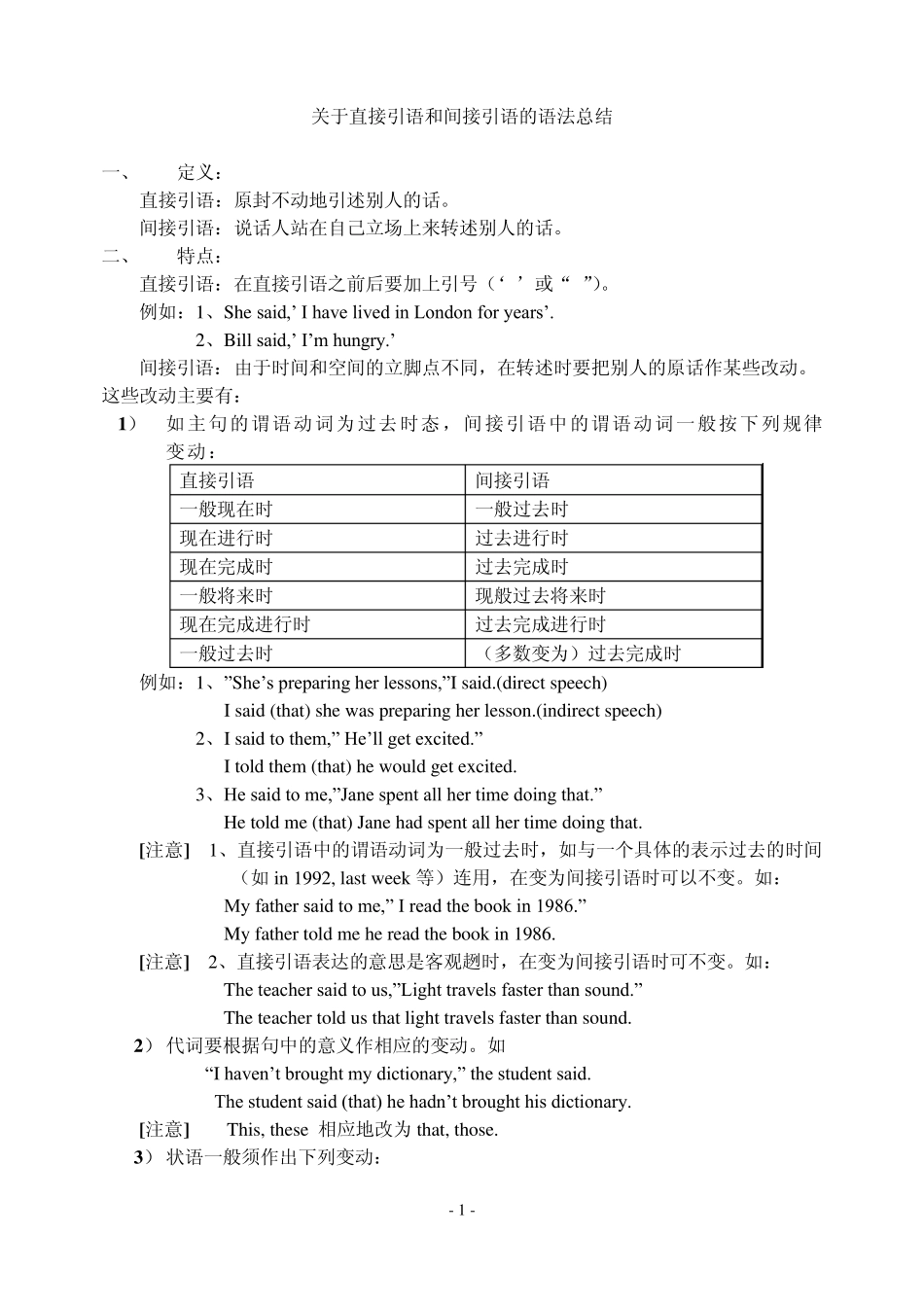
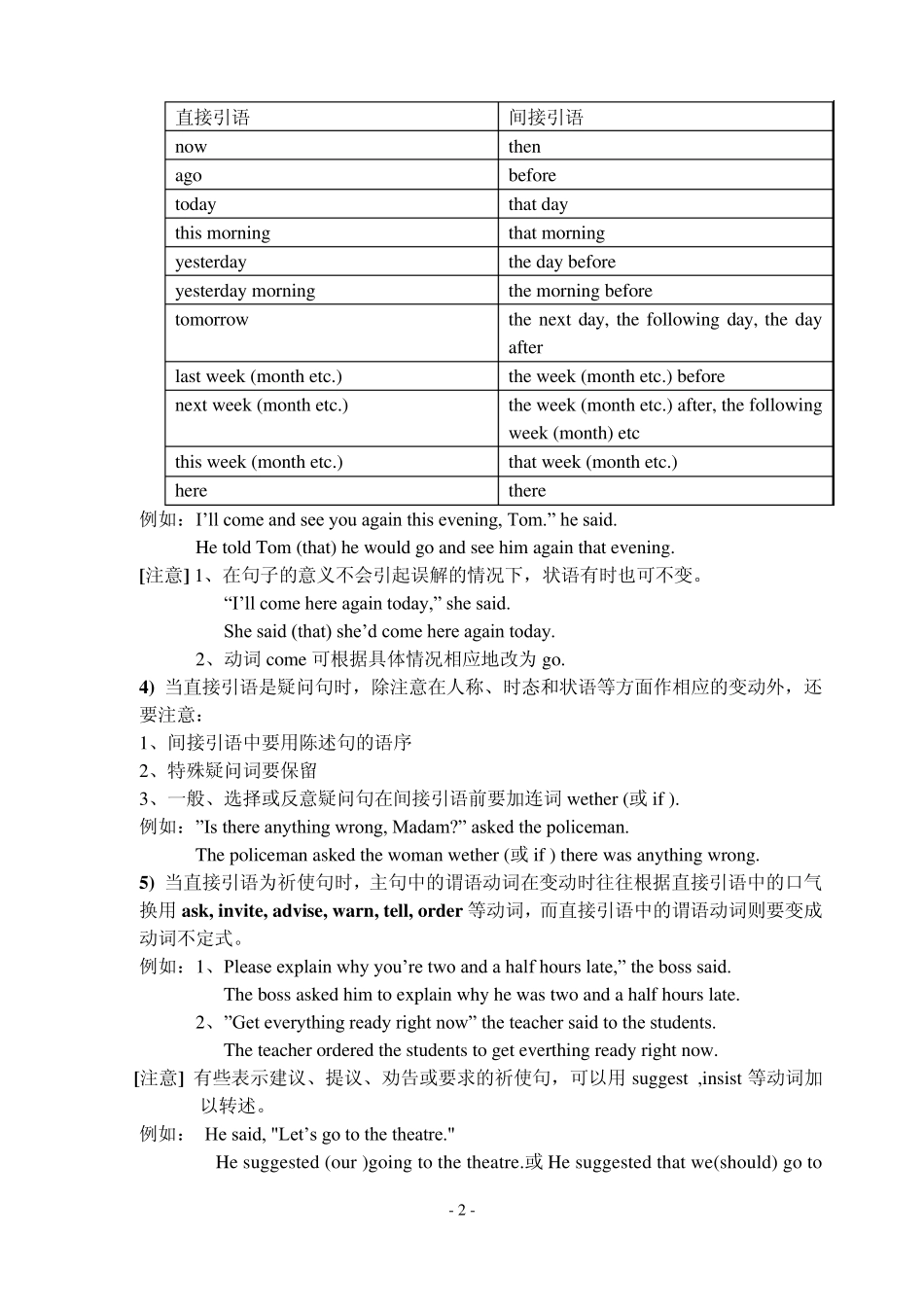
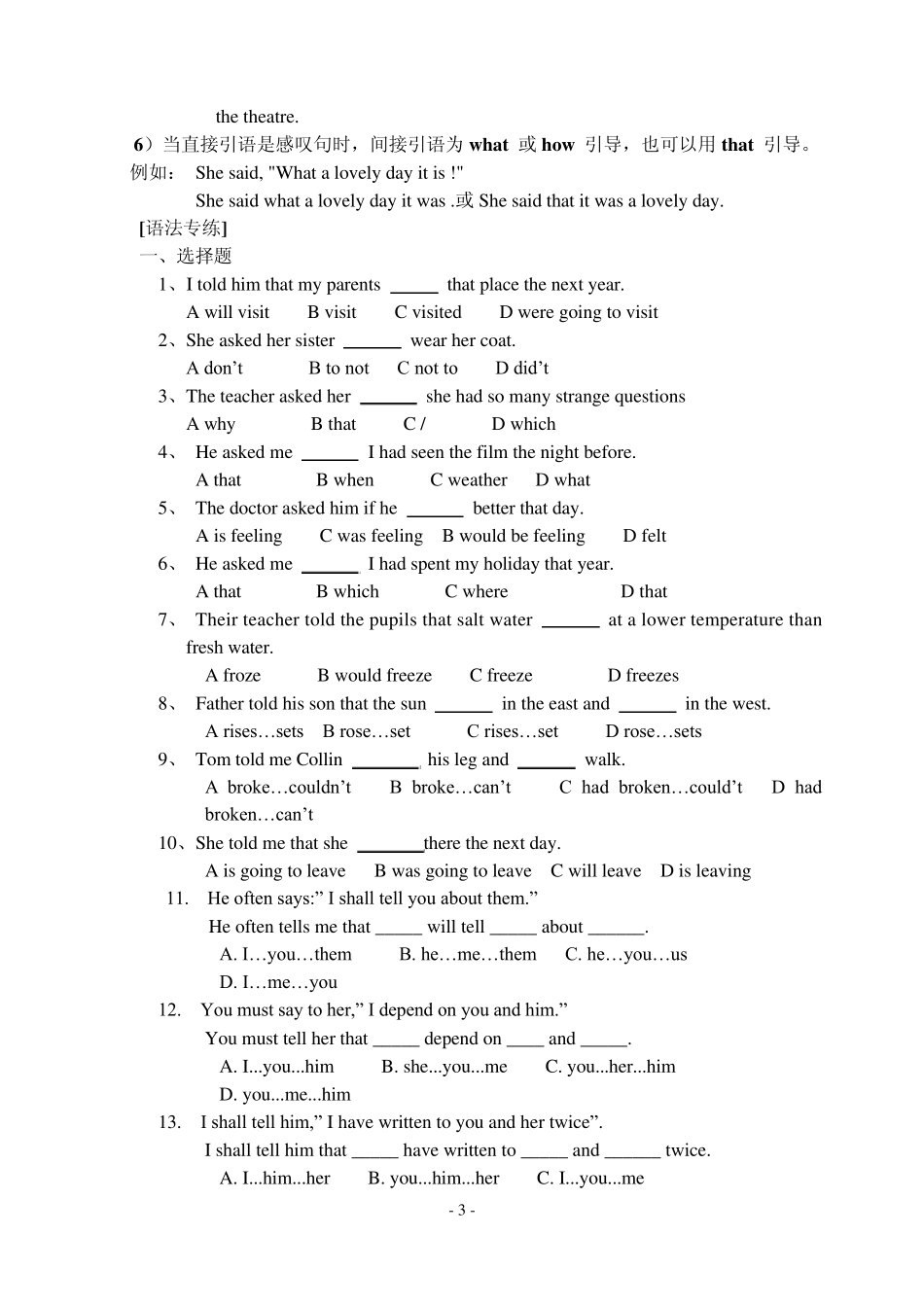
这些改动主要有: 1) 如主句的谓语动词为过去时态,间接引语中的谓语动词一般按下列规律 变动: 直接引语 间接引语 一般现在时 一般过去时 现在进行时 过去进行时 现在完成时 过去完成时 一般将来时 现般过去将来时 现在完成进行时 过去完成进行时 一般过去时 (多数变为)过去完成时 例如:1、” She’s preparing her lessons,” I said
(direct speech) I said (that) she was preparing her lesson
(indirect speech) 2、I said to them,” He’ll get excited
” I told them (that) he would get excited
3、He said to me,” Jane spent all her time doing that
” He told me (that) Jane had spent all her time doing that
[注意] 1、直接引语中的谓语动词为一般过去时,如与一个具体的表示过去的时间(如 in 1992, last week 等)连用,在变为间接引语时可以不变
如: My father said to me,” I read the book i