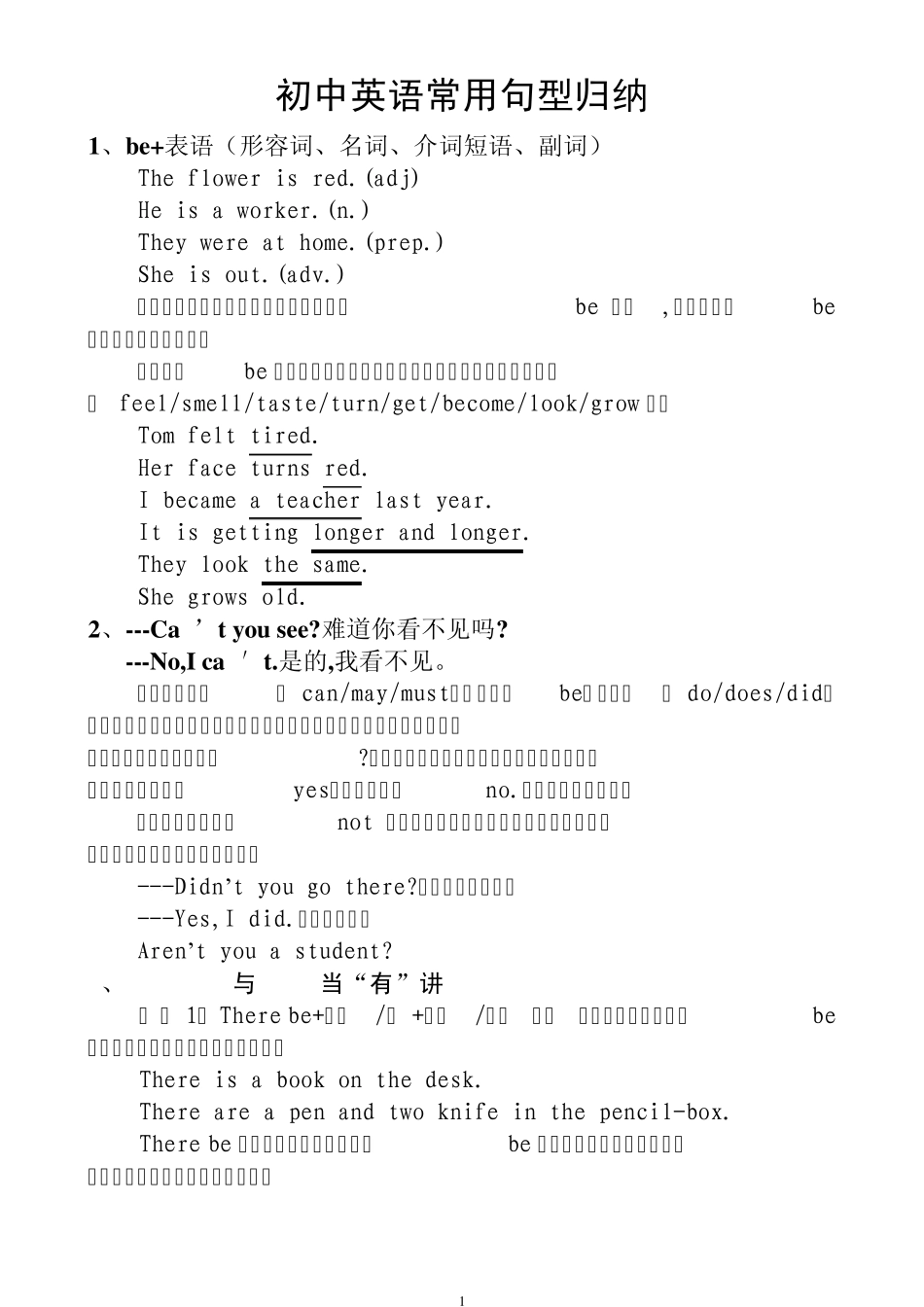
1 初中英语常用句型归纳 1、be+表语(形容词、名词、介词短语、副词) The flower is red
(adj) He is a worker
) They were at home
) She is out
) ※从上例可以看出,表语主要在系动词be 之后,它与系动词be共同构成句子的谓语
除系动词be 外,还有其它几个常用的表示状态及变化的系动词,如 feel/smell/taste/turn/get/become/look/grow 等
Tom felt tired
Her face turns red
I became a teacher last year
It is getting longer and longer
They look the same
She grows old
2、---Can’t you see
难道你看不见吗
---No,I can′t
是的,我看不见
※用情态动词( can/may/must)、系动词be、助动词( do/does/did)等的否定式开头的疑问句叫否定疑问句
表示惊奇、反问以及看法、建议等,有“难道不……
在回答这种问句时要注意,如果回答是肯定的,就用yes,否定的就用no
这和汉语习惯不同
在否定疑问句中,not 也可放在主语后面
但若位于主语前,须与系动词或助动词构成缩略式
---Didn’t you go there
难道你没去哪儿
---Yes,I did
Aren’t you a student
3、There be与have当“有”讲 ※ ( 1) There be+某人/物 +某时/地
表示“某处有某任某物” be的单复数与后面的“某任物”一致
There is a book on the desk
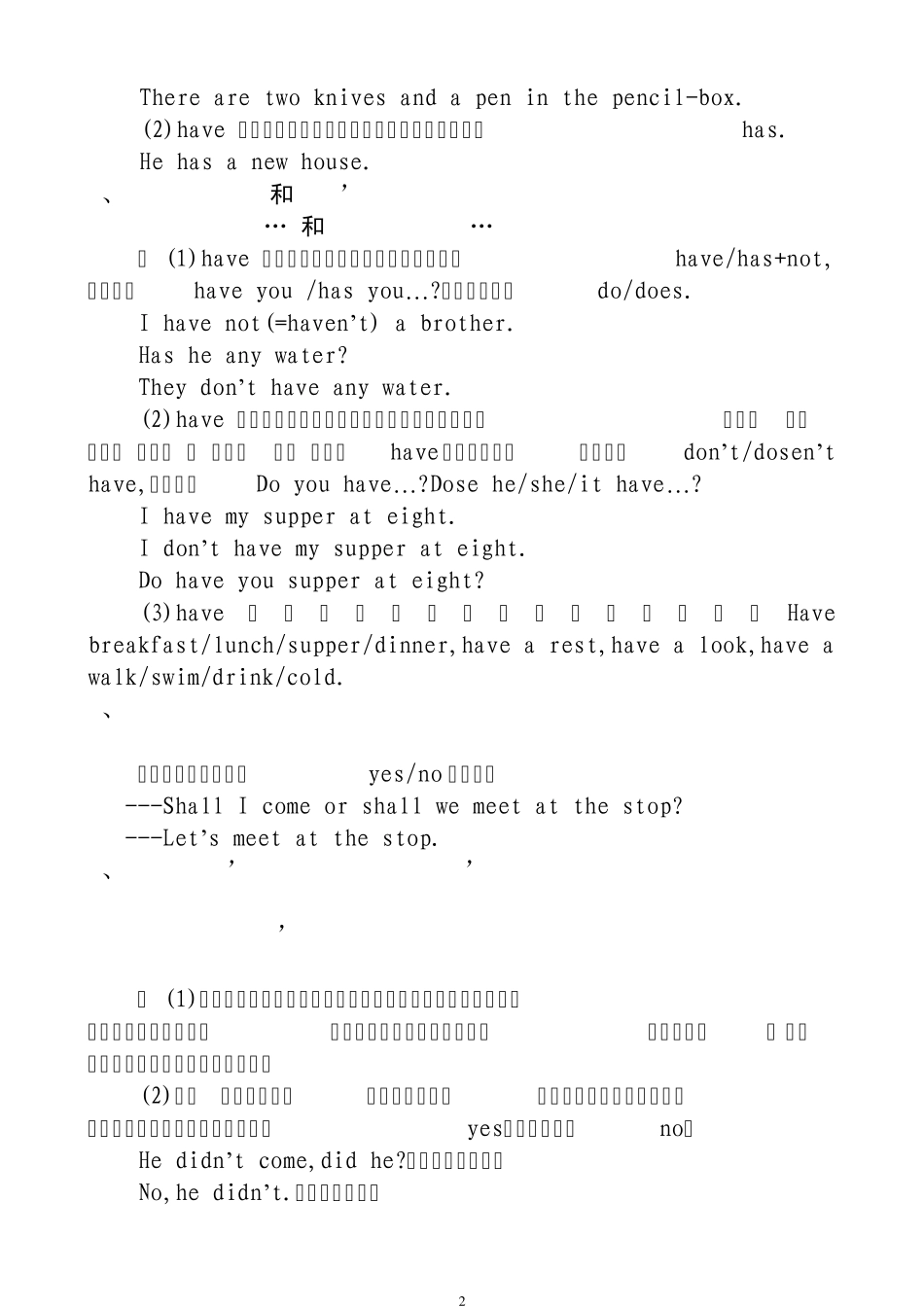
There ar