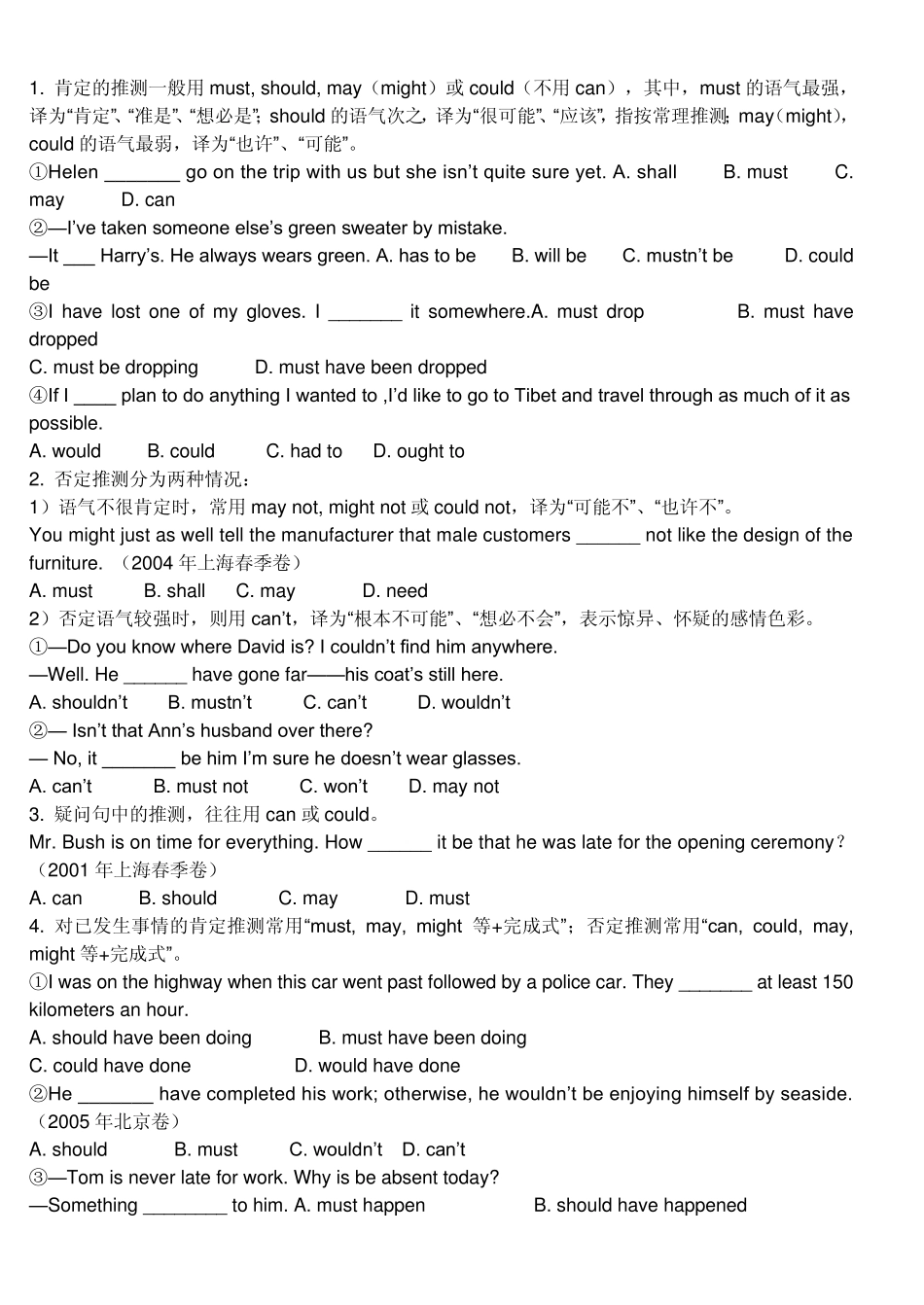
肯定的推测一般用must, should, may(might)或could(不用can),其中,must 的语气最强,译为“肯定”、“准是”、“想必是”;should 的语气次之,译为“很可能”、“应该”,指按常理推测;may(might),could 的语气最弱,译为“也许” 、“可能”
①Helen _______ go on the trip with us but she isn’t quite sure yet
shall B
must C
can ②— I’ve taken someone else’s green sweater by mistake
— It ___ Harry’s
He always wears green
has to be B
will be C
mustn’t be D
could be ③I have lost one of my gloves
I _______ it somewhere
must drop B
must have dropped C
must be dropping D
must have been dropped ④If I ____ plan to do anything I wanted to ,I’d like to go to Tibet and travel through as much of it as possible
would B
could C
had to D
ought to 2
否定推测分为两种情况: 1)语气不很肯定时,常用may not, might not 或could not,译为“可能不” 、“也许不”
You might just as well tell the manufactu