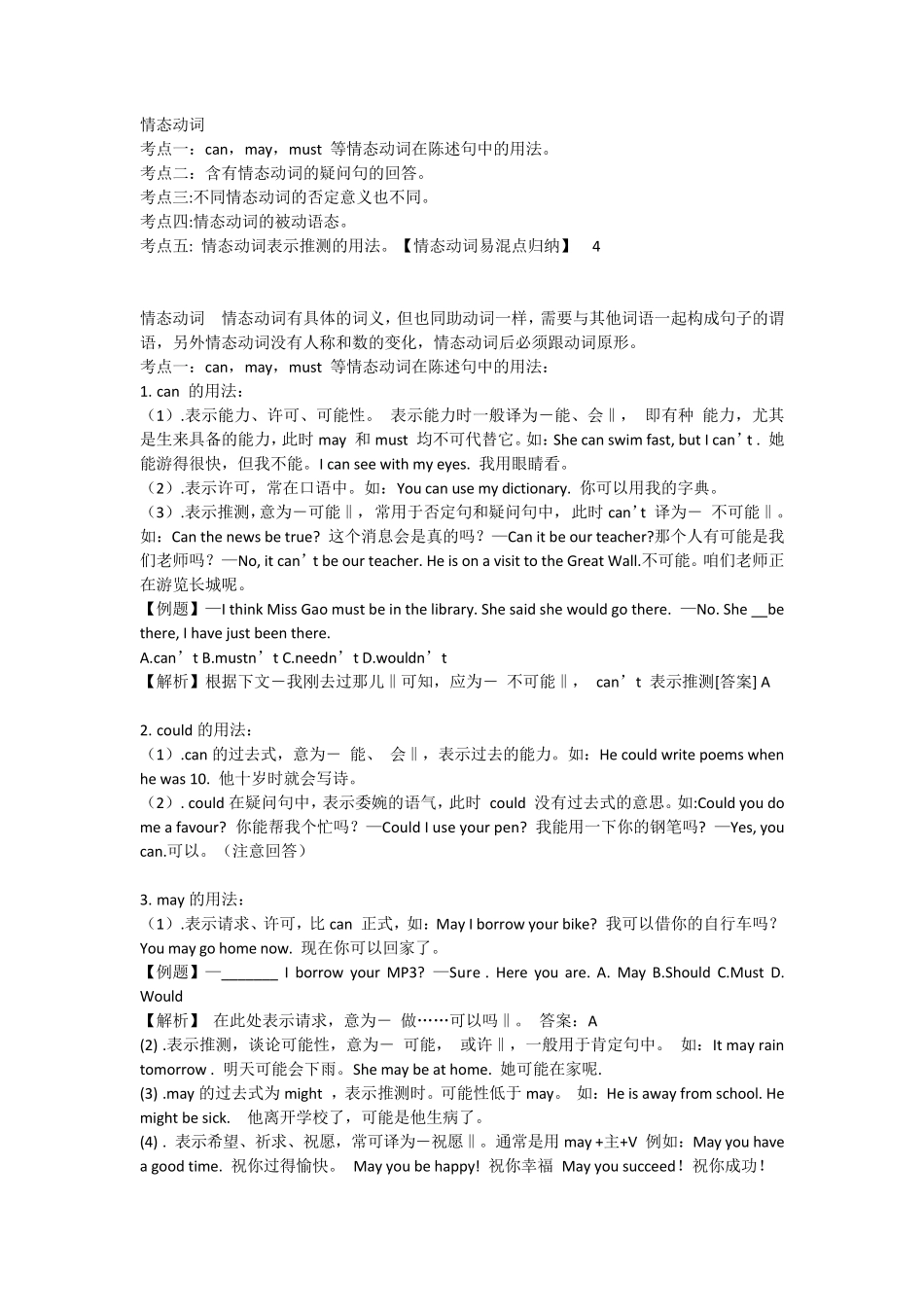
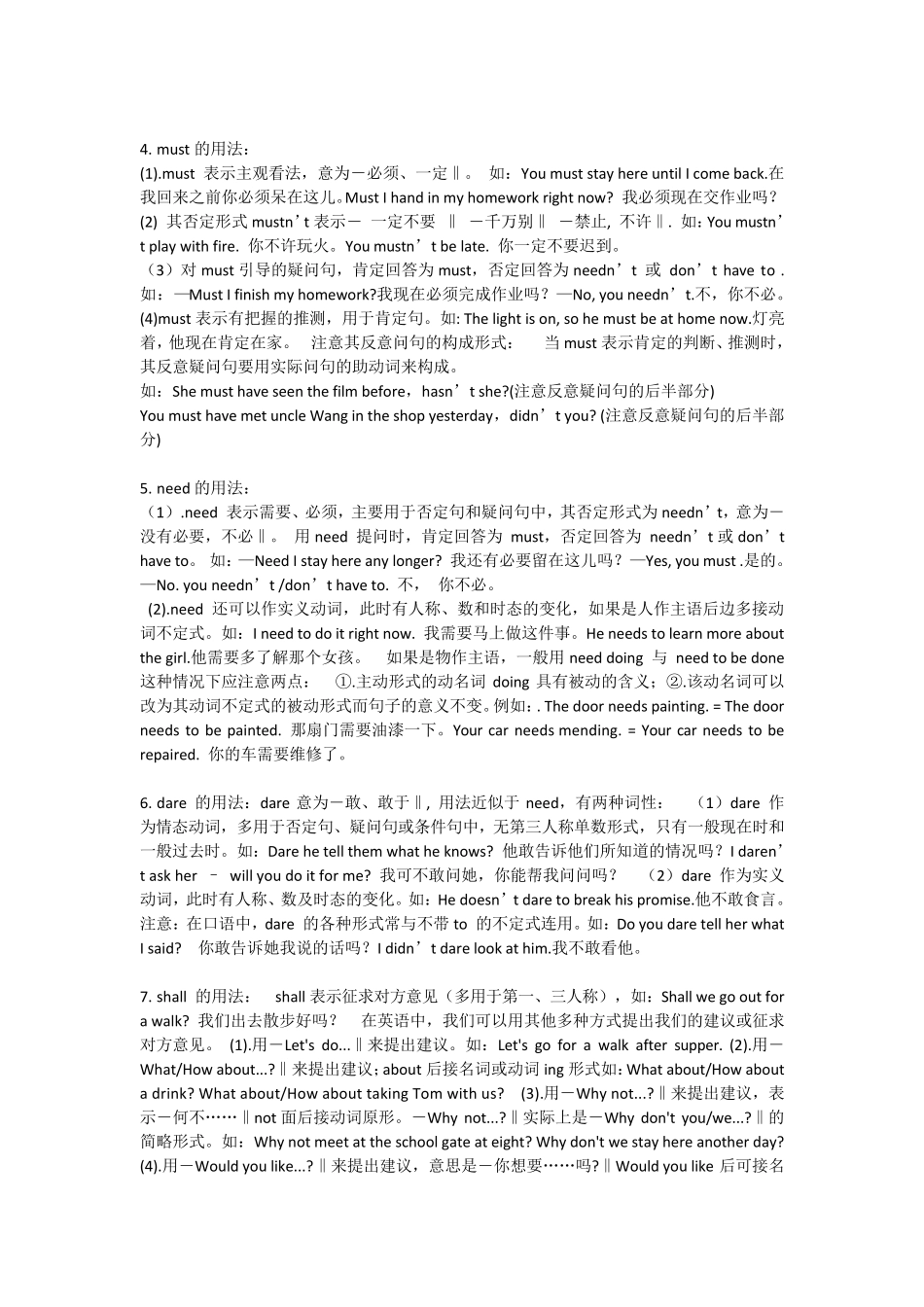
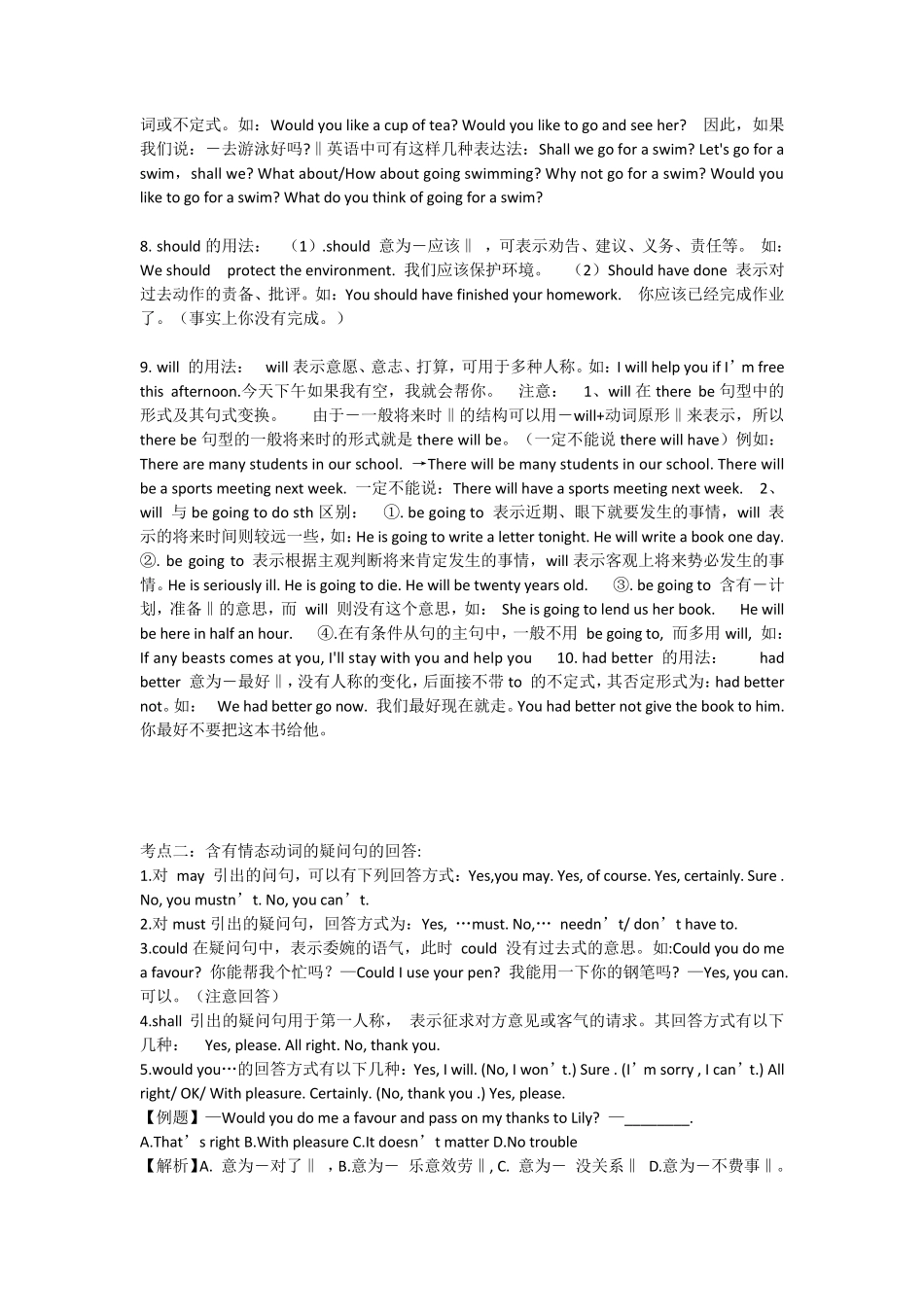
情态动词 考点一:can,may,must 等情态动词在陈述句中的用法
考点二:含有情态动词的疑问句的回答
考点三:不同情态动词的否定意义也不同
考点四:情态动词的被动语态
考点五: 情态动词表示推测的用法
【情态动词易混点归纳】 4 情态动词 情态动词有具体的词义,但也同助动词一样,需要与其他词语一起构成句子的谓语,另外情态动词没有人称和数的变化,情态动词后必须跟动词原形
考点一:can,may,must 等情态动词在陈述句中的用法: 1
can 的用法: (1)
表示能力、许可、可能性
表示能力时一般译为―能、会‖, 即有种 能力,尤其是生来具备的能力,此时 may 和 must 均不可代替它
如:She can swim fast, but I can’t
她能游得很快,但我不能
I can see with my eyes
表示许可,常在口语中
如:You can use my dictionary
你可以用我的字典
表示推测,意为―可能‖, 常用于否定句和疑问句中, 此时 can’t 译为― 不可能‖
如:Can the news be true
这个消息会是真的吗
—Can it be our teacher
那个人有可能是我们老师吗
—No, it can’t be our teacher
He is on a visit to the Great Wall
咱们老师正在游览长城呢
【例题】—I think Miss Gao must be in the library
She said she would go there
She __be there, I have just been there
can’t B
mustn’t C
needn’t D
wouldn’