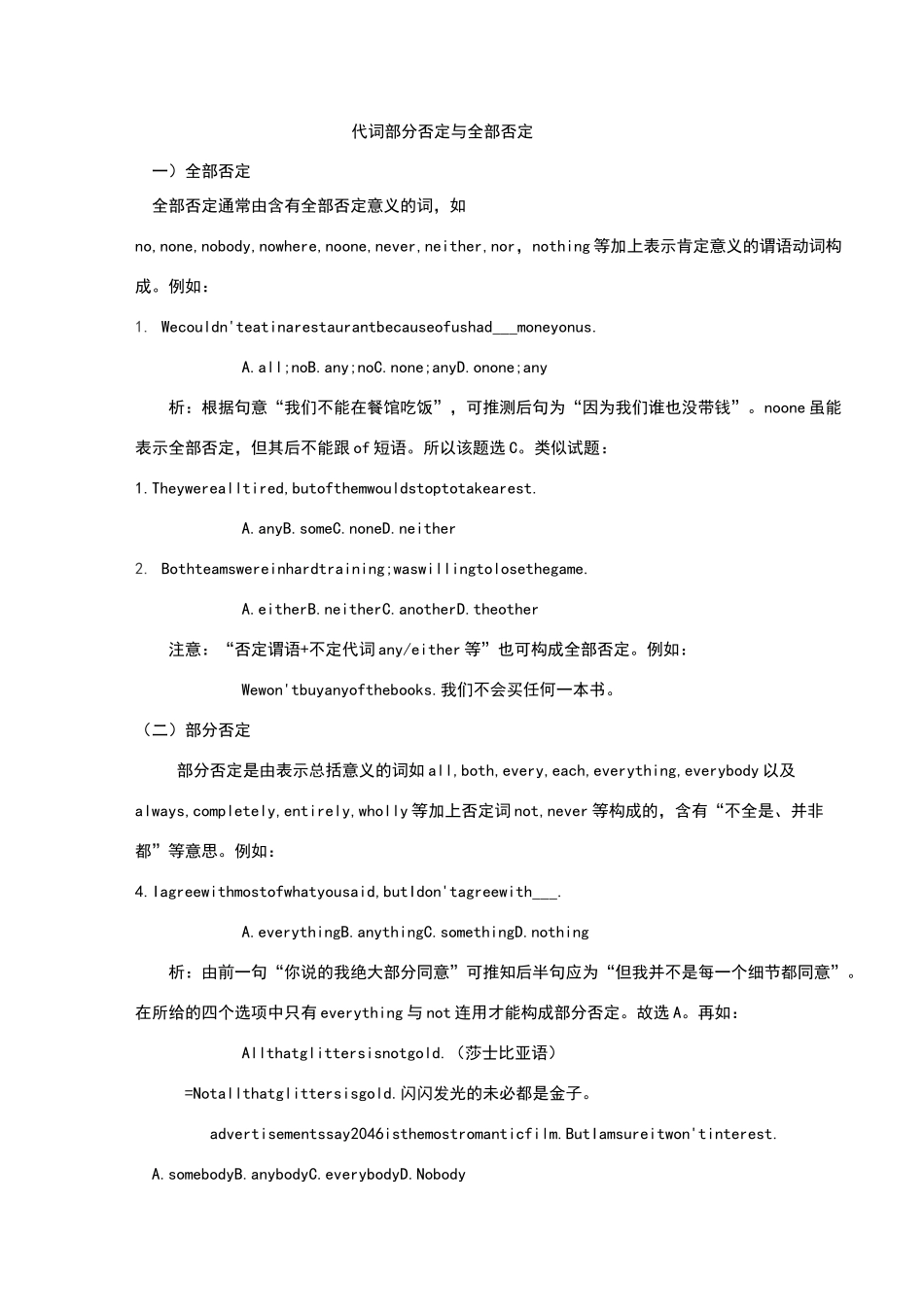
代词部分否定与全部否定一)全部否定全部否定通常由含有全部否定意义的词,如no,none,nobody,nowhere,noone,never,neither,nor,nothing 等加上表示肯定意义的谓语动词构成
Wecouldn'teatinarestaurantbecauseofushad___moneyonus
all;noB
any;noC
none;anyD
onone;any析:根据句意“我们不能在餐馆吃饭”,可推测后句为“因为我们谁也没带钱”
noone 虽能表示全部否定,但其后不能跟 of 短语
所以该题选 C
类似试题:1
Theywerealltired,butofthemwouldstoptotakearest
neither2
Bothteamswereinhardtraining;waswillingtolosethegame
eitherB
neitherC
anotherD
theother注意:“否定谓语+不定代词 any/either 等”也可构成全部否定
例如:Wewon'tbuyanyofthebooks
我们不会买任何一本书
(二)部分否定部分否定是由表示总括意义的词如 all,both,every,each,everything,everybody 以及always,completely,entirely,wholly 等加上否定词 not,never 等构成的,含有“不全是、并非都”等意思
Iagreewithmostofwhatyousaid,butIdon'tagreewith___
everythingB
anythingC
somethingD
nothing析:由前一句“你说的我绝大部分同意”可推知后半句应为“但我并