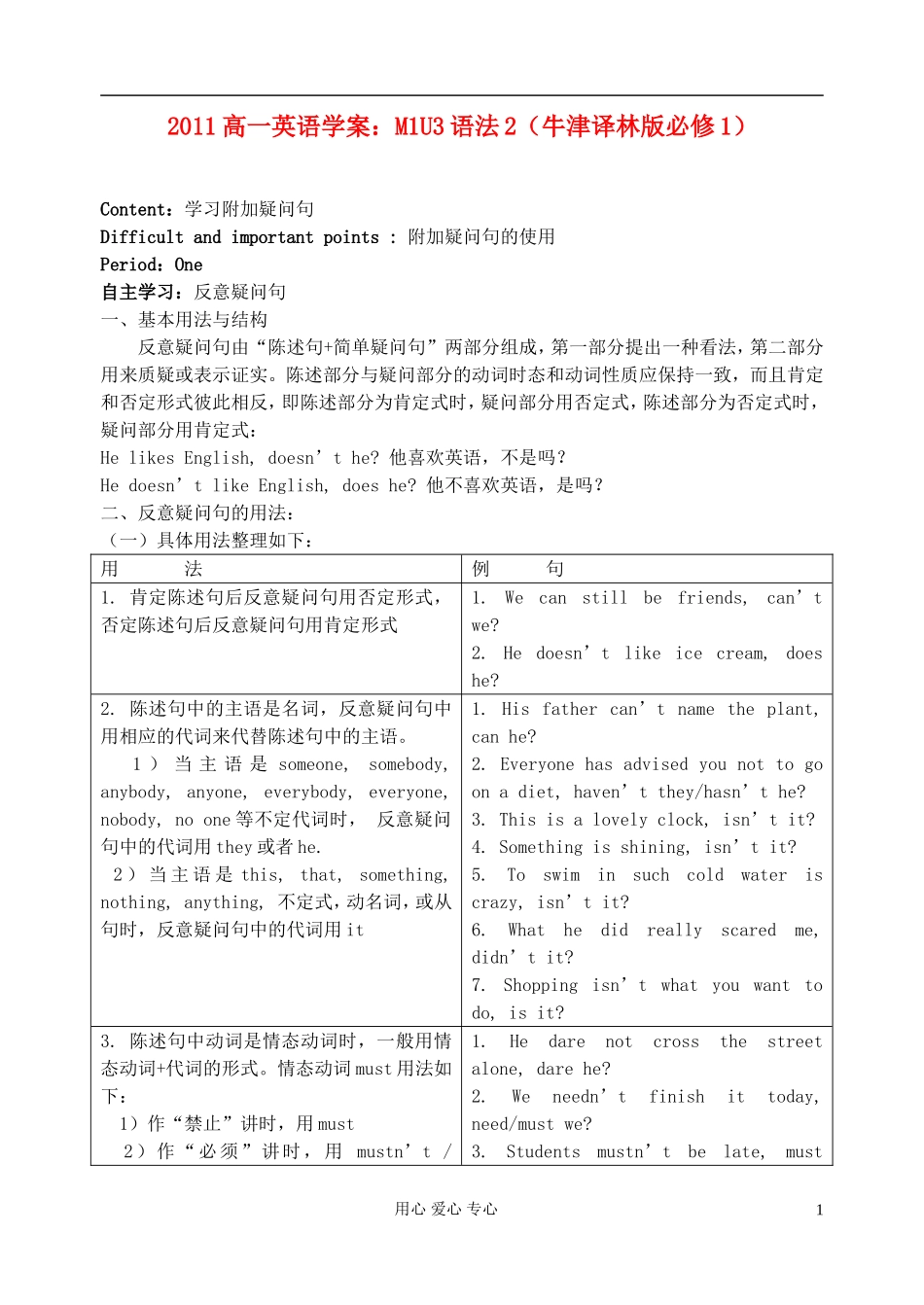
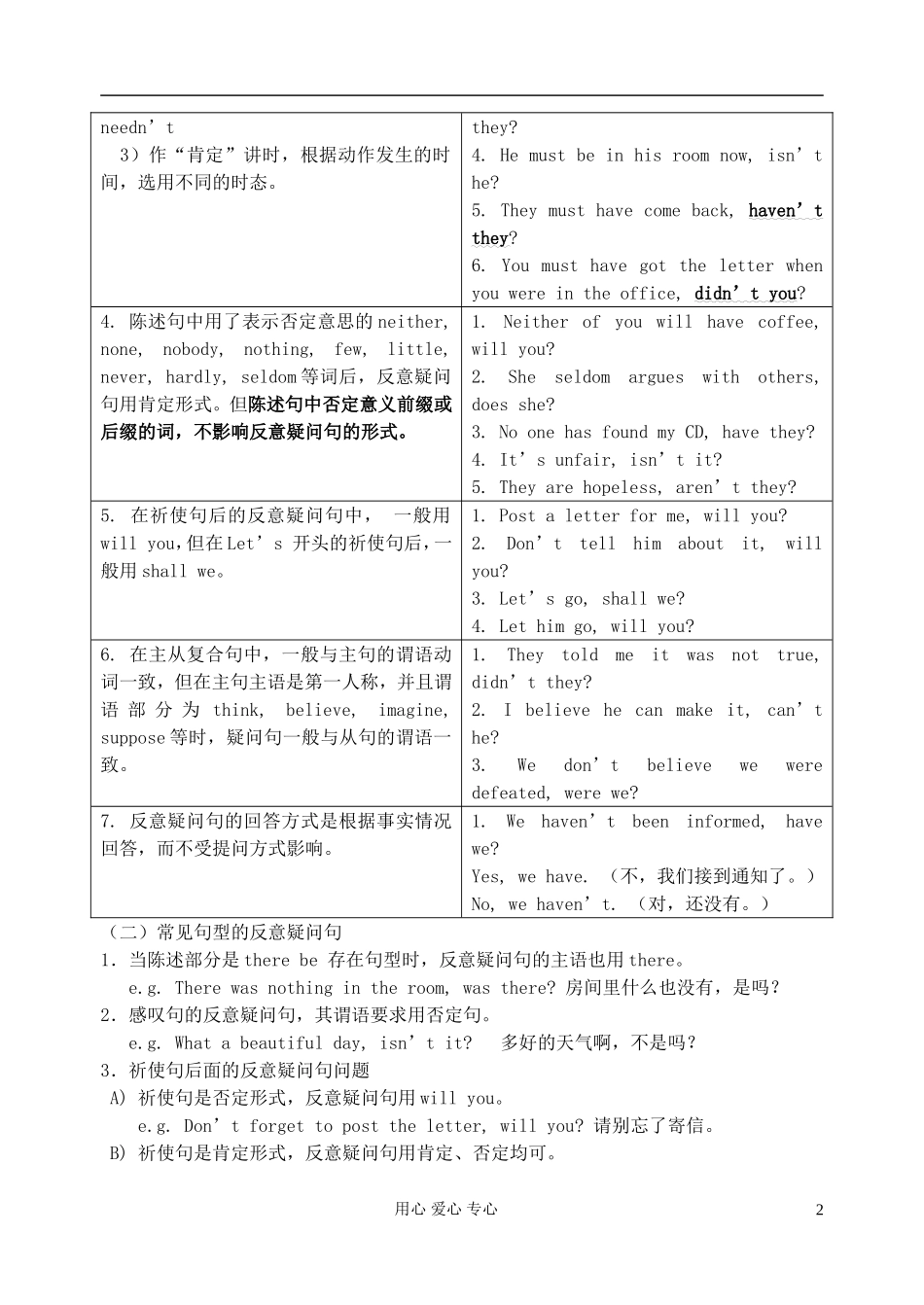
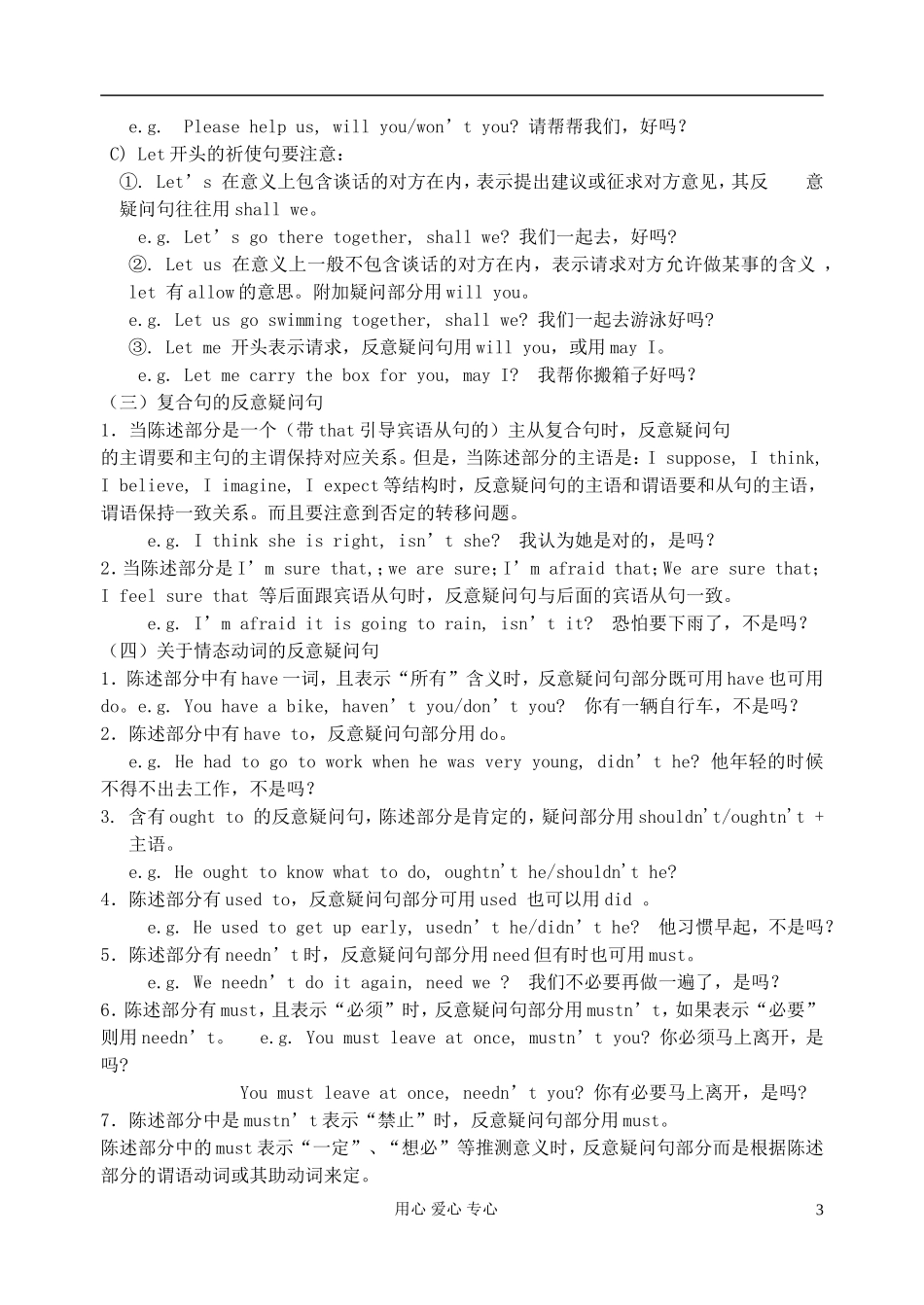
2011 高一英语学案:M1U3 语法 2(牛津译林版必修 1)Content:学习附加疑问句Difficult and important points : 附加疑问句的使用Period:One自主学习:反意疑问句一、基本用法与结构 反意疑问句由“陈述句+简单疑问句”两部分组成,第一部分提出一种看法,第二部分用来质疑或表示证实
陈述部分与疑问部分的动词时态和动词性质应保持一致,而且肯定和否定形式彼此相反,即陈述部分为肯定式时,疑问部分用否定式,陈述部分为否定式时,疑问部分用肯定式: He likes English, doesn’t he
他喜欢英语,不是吗
He doesn’t like English, does he
他不喜欢英语,是吗
二、反意疑问句的用法:(一)具体用法整理如下:用 法例 句1
肯定陈述句后反意疑问句用否定形式,否定陈述句后反意疑问句用肯定形式1
We can still be friends, can’t we
He doesn’t like ice cream, does he
陈述句中的主语是名词,反意疑问句中用相应的代词来代替陈述句中的主语
1 ) 当 主 语 是 someone, somebody, anybody, anyone, everybody, everyone, nobody, no one 等不定代词时, 反意疑问句中的代词用 they 或者 he
2 ) 当 主 语 是 this, that, something, nothing, anything, 不定式,动名词,或从句时,反意疑问句中的代词用 it 1
His father can’t name the plant, can he
Everyone has advised you not to go on a diet, have