第七章 原子结构和元素周期律Chapter 7 The Atomic Structure and Periodic System of Elements这一章中,我们介绍物质的微观结构──原子结构
化学工作者总是希望通过对物质本质的认识,来阐明元素相互化合的原理,把化学事实系统化,使化学成为可以理解的、容易加以记忆的学科
人们利用这些原理来预言具有 新功能的化合物的诞生
例如 科学家利用等电子原理(the isoelectronic principle)合成新的化合物:In 1971, the following isoelectronic compounds were known:Ni(CO)4 、 Co(CO)3(NO) 、 Fe(CO) 2(NO)2 、 and Mn(CO)(NO)3
The last member of this series, Cr(NO)4, was unknown
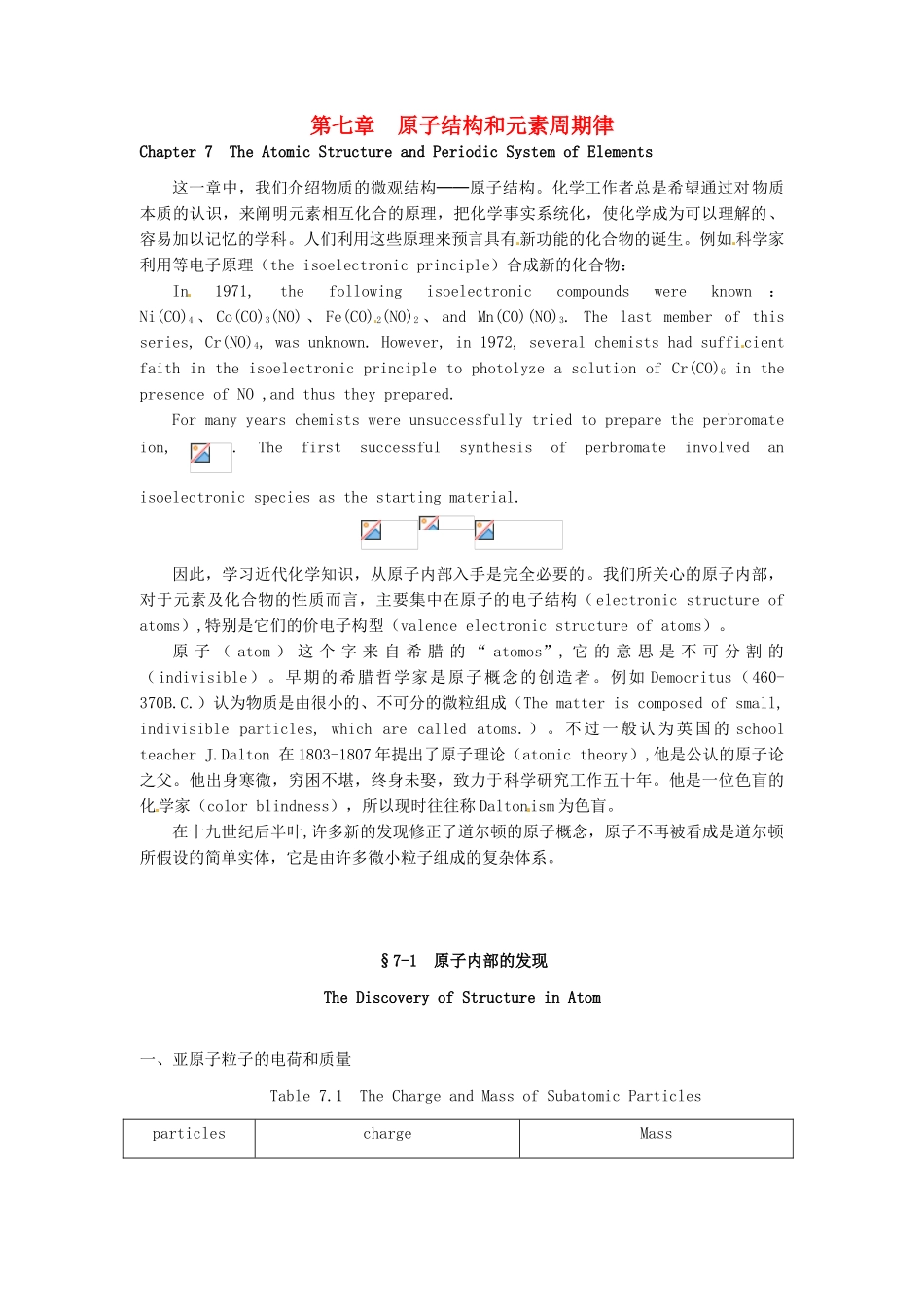
However, in 1972, several chemists had suffi cient faith in the isoelectronic principle to photolyze a solution of Cr(CO)6 in the presence of NO ,and thus they prepared
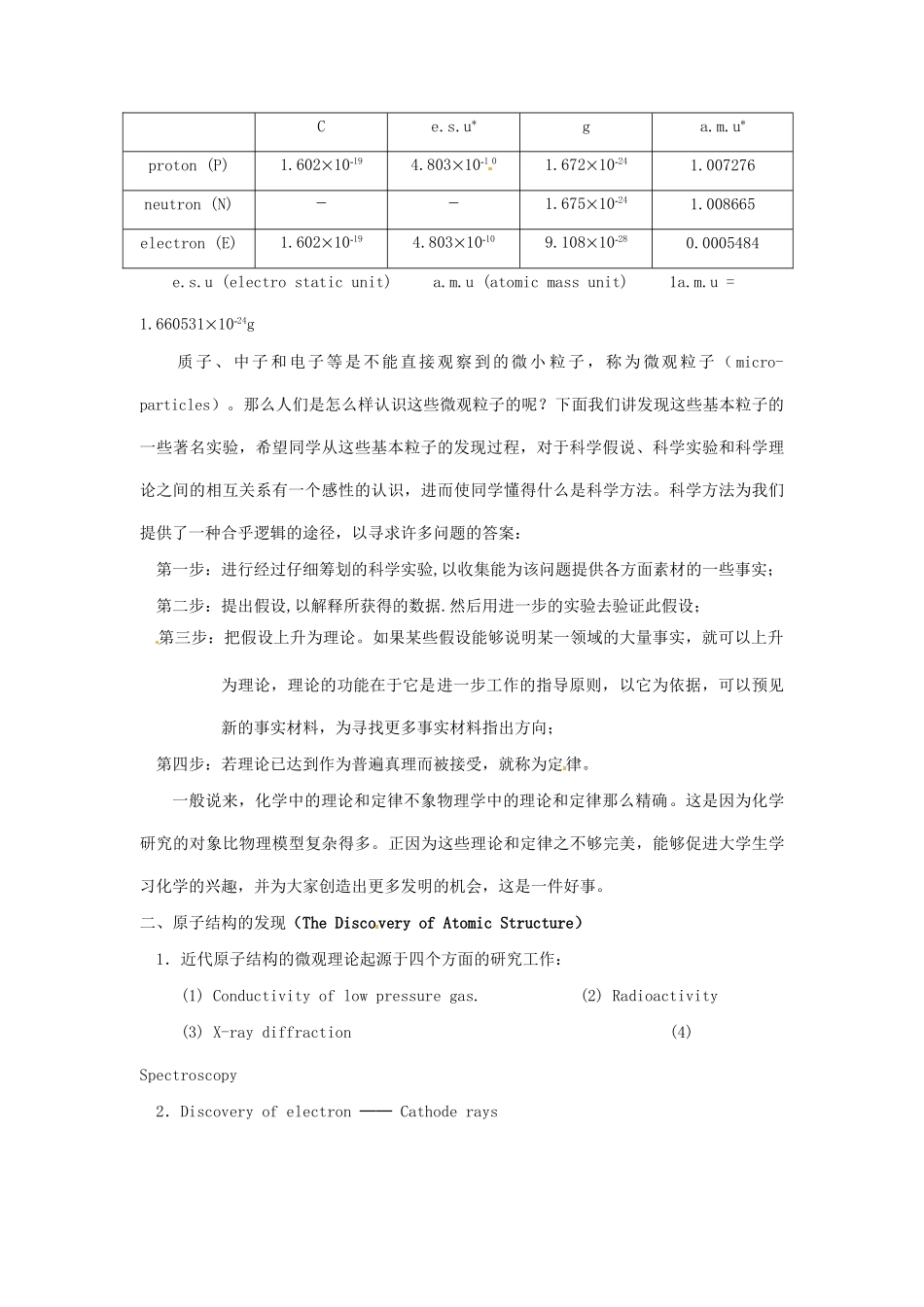
For many years chemists were unsuccessfully tried to prepare the perbromate ion,
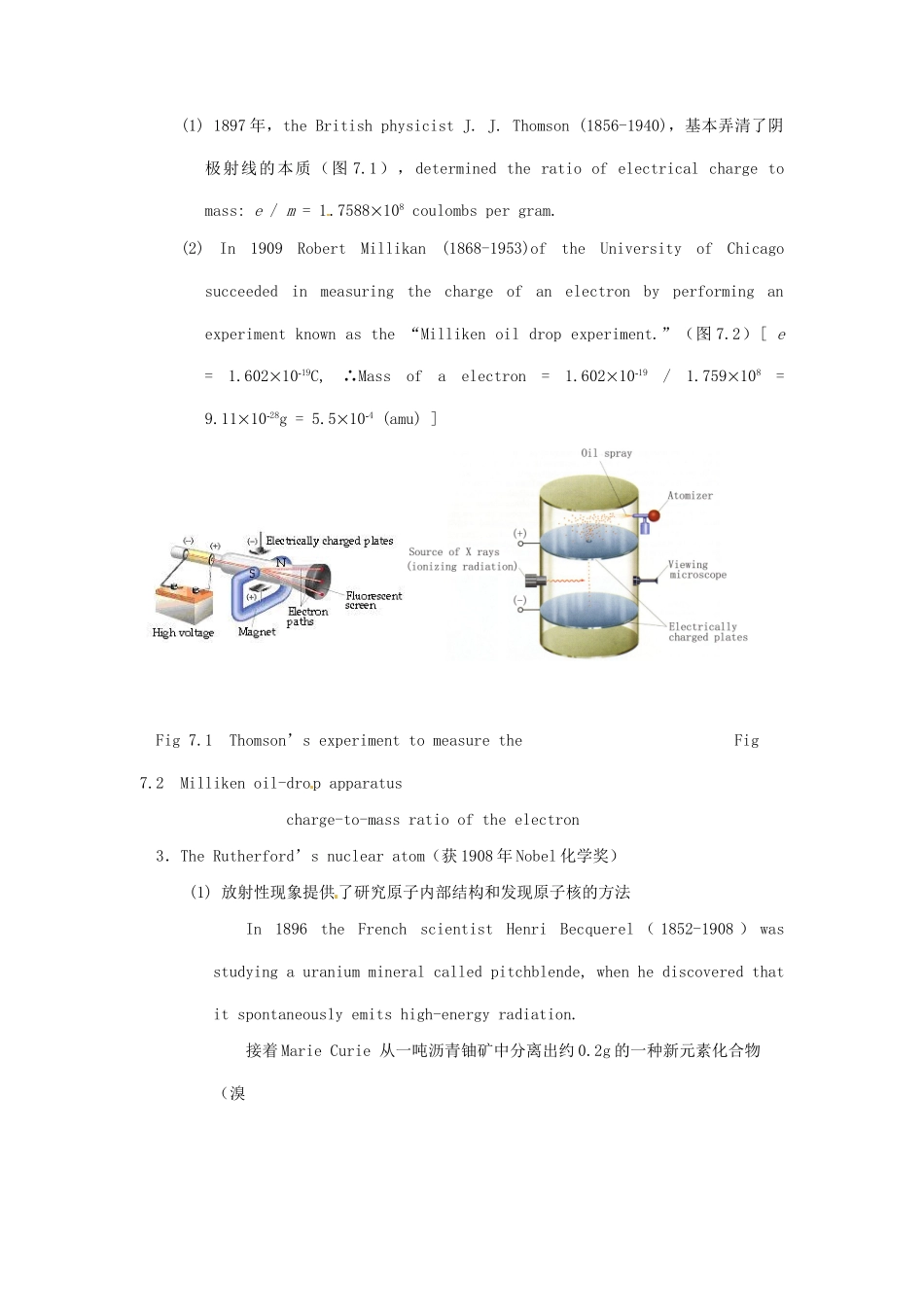
The first successful synthesis of perbromate involved an isoelectronic species as the starting material
因此,学习近代化学知识,从原子内部入手是完全必要的
我们所关心的原子内部,