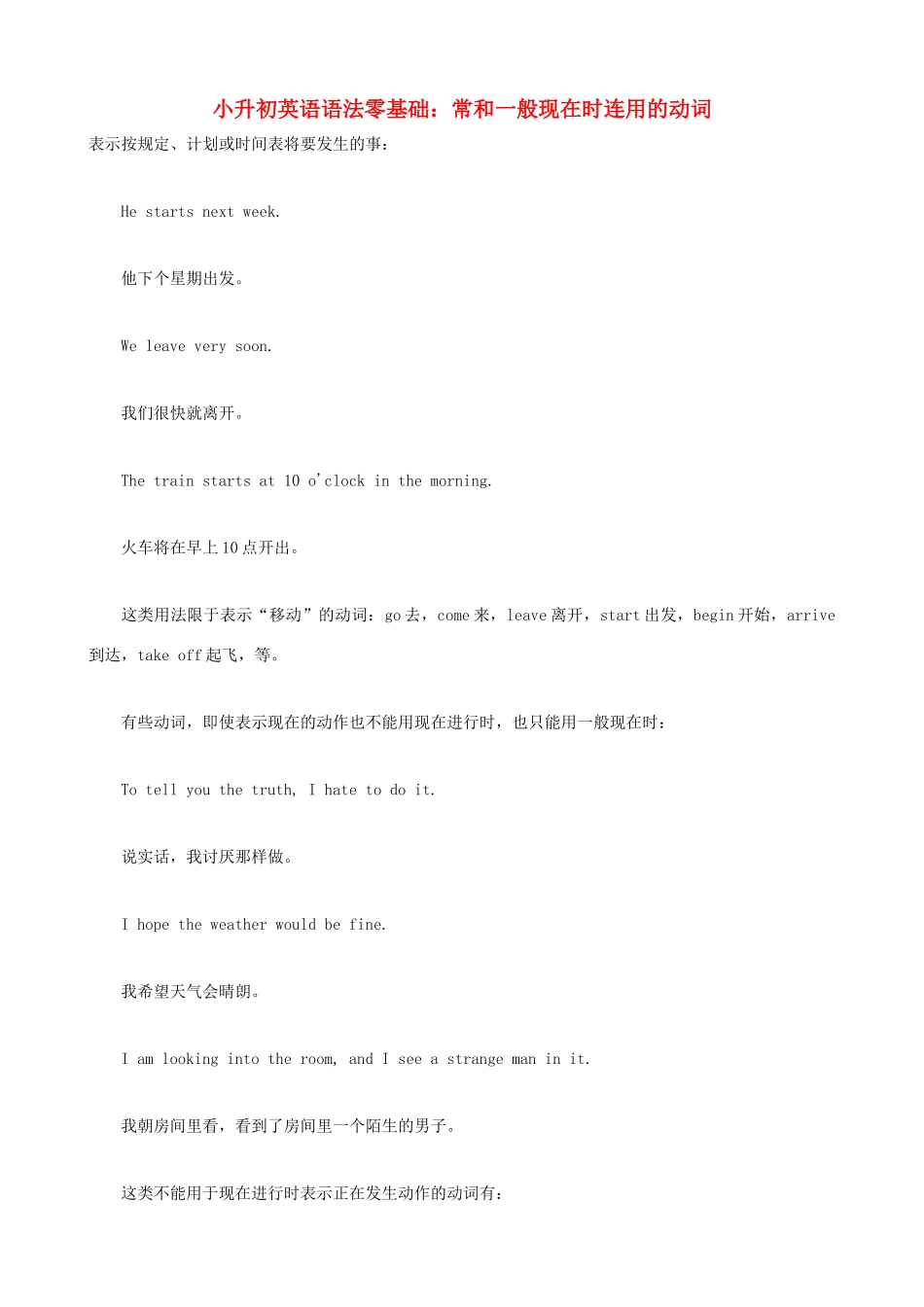
小升初英语语法零基础:常和一般现在时连用的动词表示按规定、计划或时间表将要发生的事: He starts next week
他下个星期出发
We leave very soon
我们很快就离开
The train starts at 10 o'clock in the morning
火车将在早上 10 点开出
这类用法限于表示“移动”的动词:go 去,come 来,leave 离开,start 出发,begin 开始,arrive到达,take off 起飞,等
有些动词,即使表示现在的动作也不能用现在进行时,也只能用一般现在时: To tell you the truth, I hate to do it
说实话,我讨厌那样做
I hope the weather would be fine
我希望天气会晴朗
I am looking into the room, and I see a strange man in it
我朝房间里看,看到了房间里一个陌生的男子
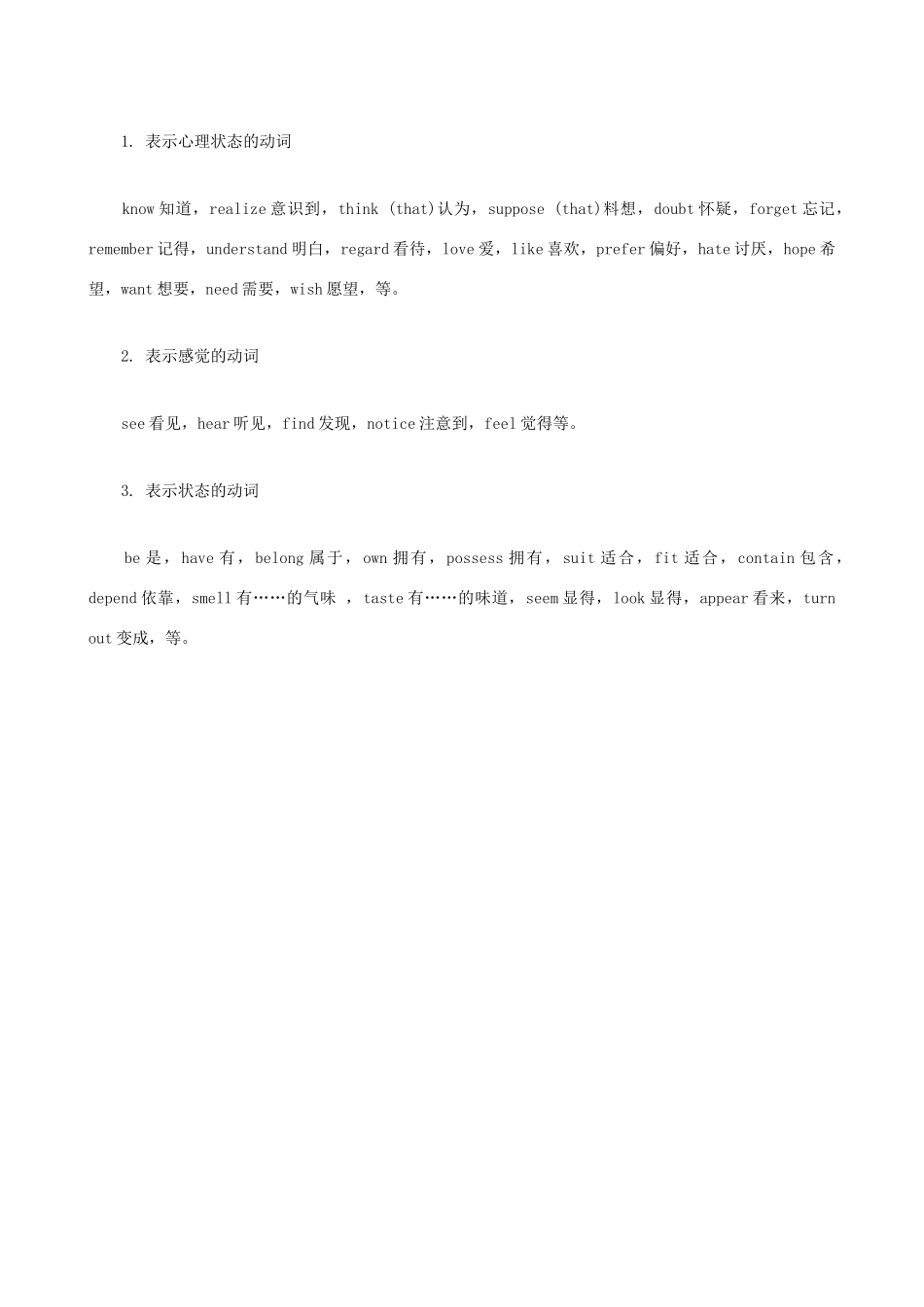
这类不能用于现在进行时表示正在发生动作的动词有: 1
表示心理状态的动词 know 知道,realize 意识到,think (that)认为,suppose (that)料想,doubt 怀疑,forget 忘记,remember 记得,understand 明白,regard 看待,love 爱,like 喜欢,prefer 偏好,hate 讨厌,hope 希望,want 想要,need 需要,wish 愿望,等
表示感觉的动词 see 看见,hear 听见,find 发现,notice 注意到,feel 觉得等
表示状态的动词 be 是,have 有,belong 属于,own 拥有,possess 拥有,suit 适合,fit 适合,contain 包含,