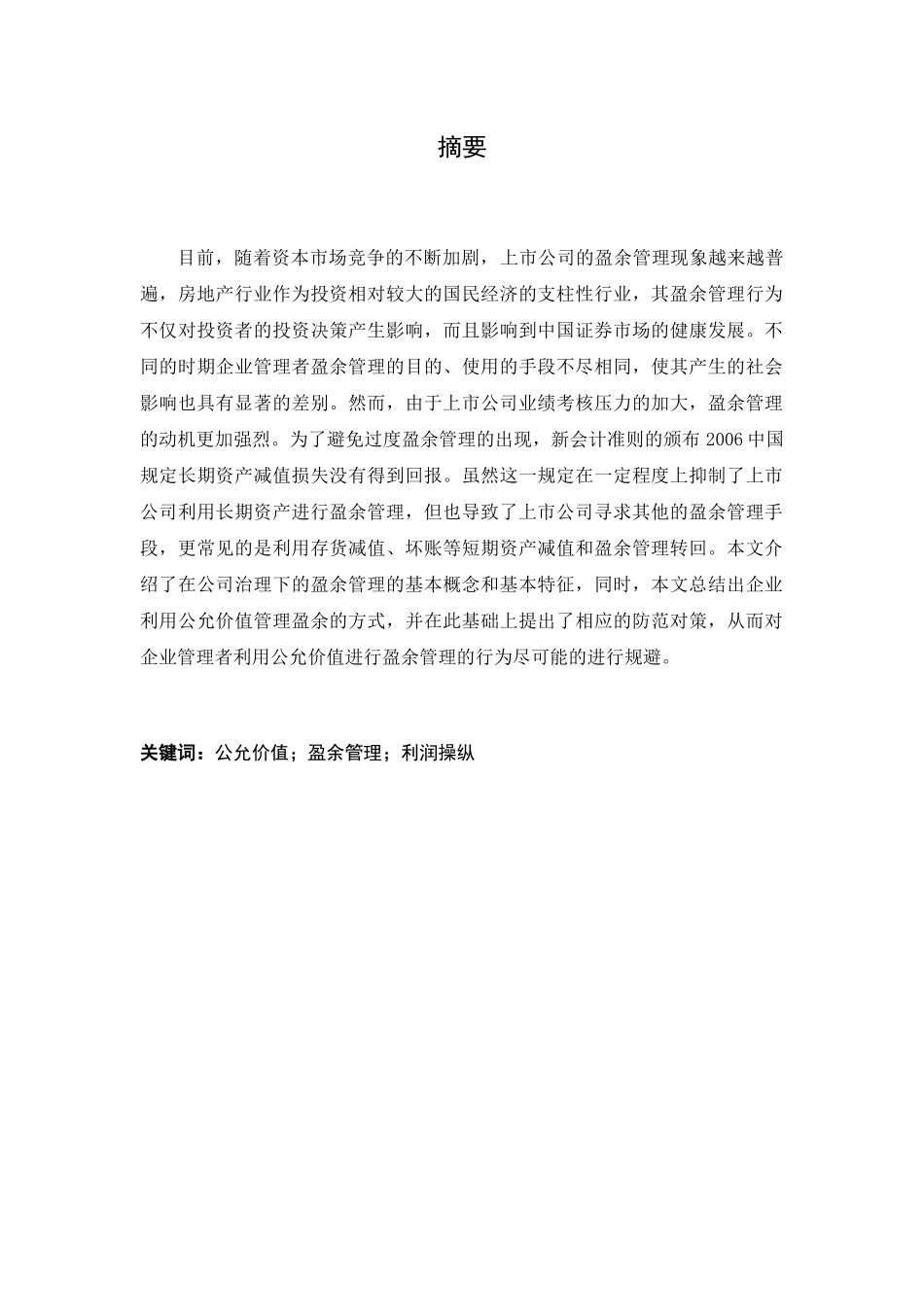
摘要目前,随着资本市场竞争的不断加剧,上市公司的盈余管理现象越来越普遍,房地产行业作为投资相对较大的国民经济的支柱性行业,其盈余管理行为不仅对投资者的投资决策产生影响,而且影响到中国证券市场的健康发展
不同的时期企业管理者盈余管理的目的、使用的手段不尽相同,使其产生的社会影响也具有显著的差别
然而,由于上市公司业绩考核压力的加大,盈余管理的动机更加强烈
为了避免过度盈余管理的出现,新会计准则的颁布 2006 中国规定长期资产减值损失没有得到回报
虽然这一规定在一定程度上抑制了上市公司利用长期资产进行盈余管理,但也导致了上市公司寻求其他的盈余管理手段,更常见的是利用存货减值、坏账等短期资产减值和盈余管理转回
本文介绍了在公司治理下的盈余管理的基本概念和基本特征,同时,本文总结出企业利用公允价值管理盈余的方式,并在此基础上提出了相应的防范对策,从而对企业管理者利用公允价值进行盈余管理的行为尽可能的进行规避
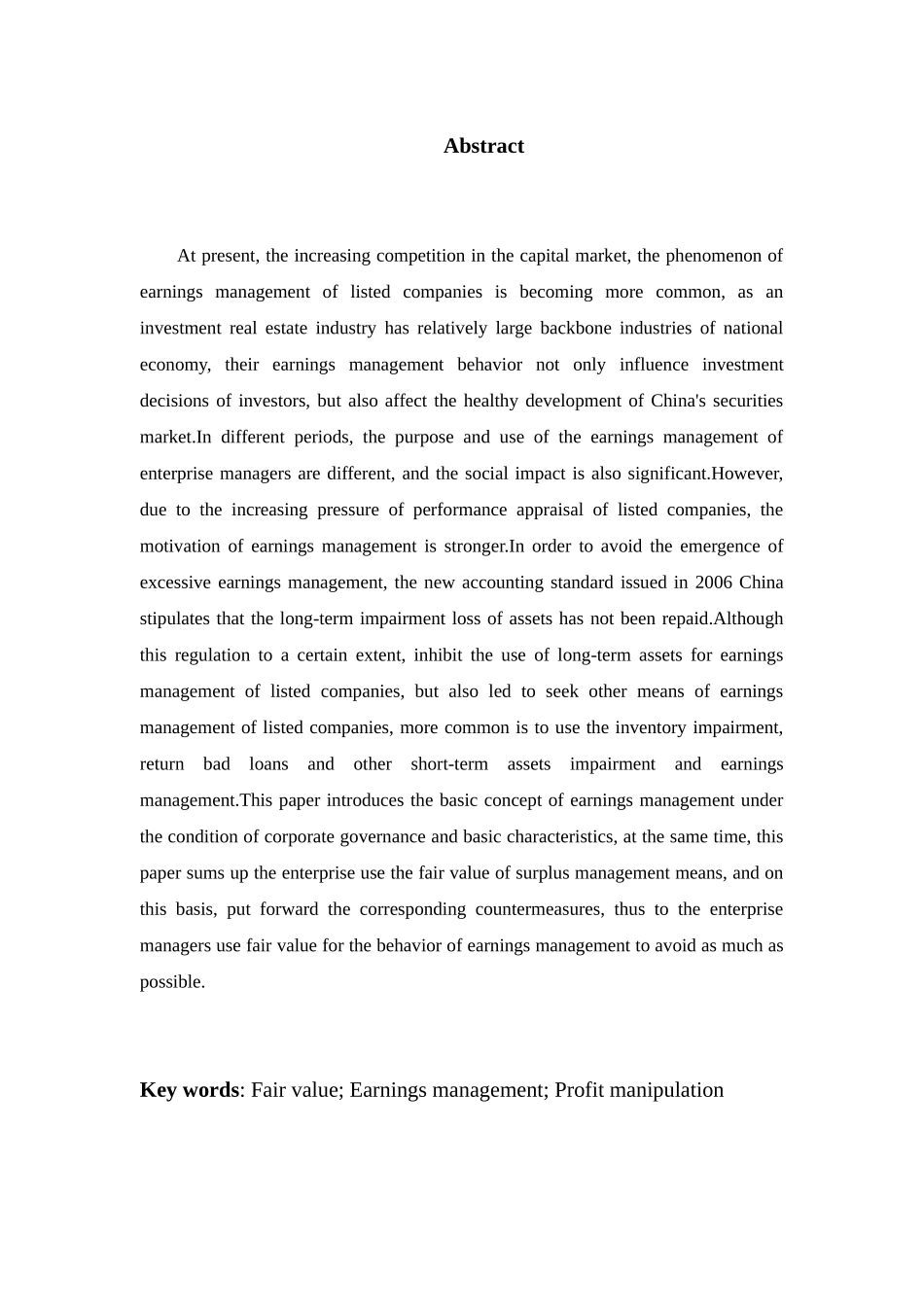
关键词:公允价值;盈余管理;利润操纵AbstractAt present, the increasing competition in the capital market, the phenomenon of earnings management of listed companies is becoming more common, as an investment real estate industry has relatively large backbone industries of national economy, their earnings management behavior not only influence investment decisions of investors, but also affect the healthy devel