英语的语态是通过动词形式的变化表现出来的
英语中有两种语态:主动语态和被动语态
主动语态表示主语是动作的执行者
例如:ManypeoplespeakChinese
谓语:speak的动作是由主语manypeople来执行的
被动语态表示主语是动作的承受者,即行为动作的对象
例如:Chineseisspokenbymanypeople
主语Chinese是动词speak的承受者
GrammarGrammar1
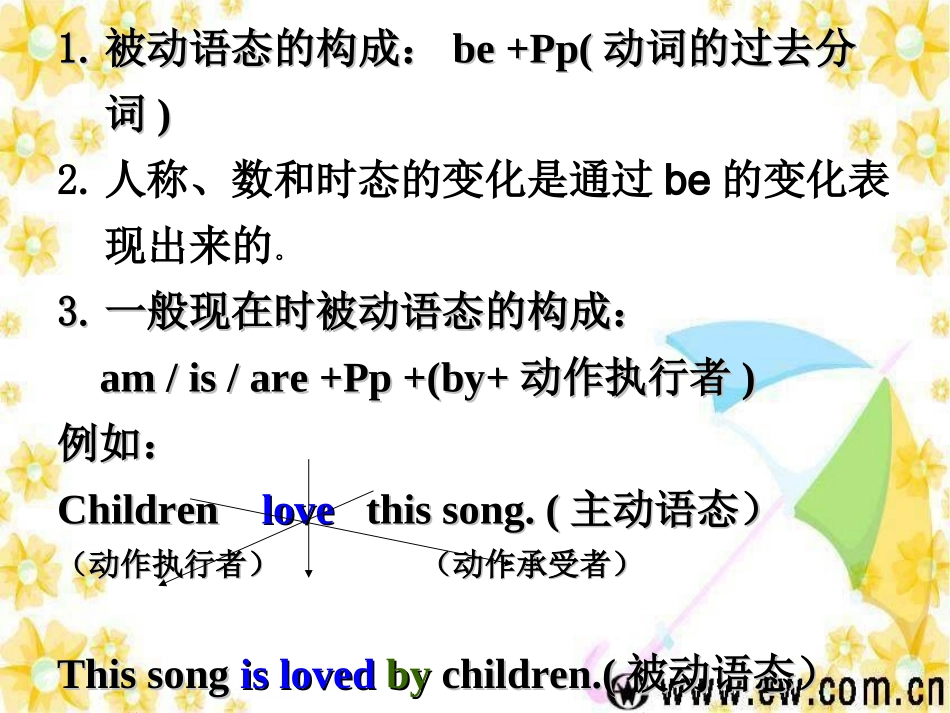
被动语态的构成:被动语态的构成:be+Pp(be+Pp(动词的过去分动词的过去分词词))2
人称、数和时态的变化是通过be的变化表现出来的
一般现在时被动语态的构成:一般现在时被动语态的构成:am/is/are+Pp+(by+am/is/are+Pp+(by+动作执行者动作执行者))例如:例如:ChildrenChildrenlovelovethissong
(thissong
(主动语态)主动语态)(动作执行者)(动作承受者)(动作执行者)(动作承受者)ThissongThissongislovedislovedbybychildren
(children
(被动语态)被动语态)(动作承受者)(动作执行者)(动作承受者)(动作执行者)主动语态变被动语态口诀:宾语提前主语变,原主变宾by后见,时态人称be关键
把下列的句子变为被动语态的句子1、TheyspeakEnglishinCanada
2、Peopleusewoodformakingtables
3、TheymakecomputersintheUSA
4、TheygrowriceinSouthChina
Englishisspoken(bythem)inCanada
Woodisused(bypeople)formakingtables
Computersaremade(bythem)intheUSA