复习一般现在时,一般过去时,一般将来时I一般现在时表示的是经常反复发生的动作或存在的状态
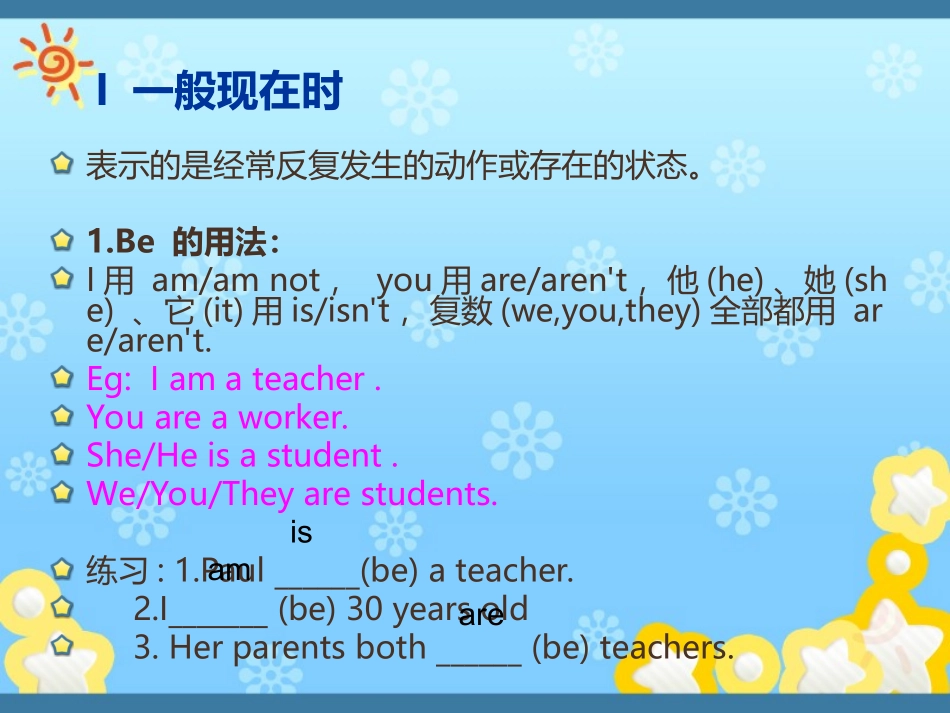
Be的用法:I用am/amnot,you用are/aren't,他(he)、她(she)、它(it)用is/isn't,复数(we,you,they)全部都用are/aren't
Eg:Iamateacher
Youareaworker
She/Heisastudent
We/You/Theyarestudents
Paul______(be)ateacher
I_______(be)30yearsold3
Herparentsboth______(be)teachers
isamare2
行为动词:do/don't,does/doesn't1
Igetupatsixinthemorning
我在早上六点钟起床2
Yougotoworkateight
你在八点去上班
Tomgoestoschoolbybike
汤姆骑自行车去学校
行为动词do一般现在时第三人称单(he,she,it)的构成规则:1)、一般动词,在词尾加s;如:work--works,live--lives,play--plays,sing--sings
eg:ShelivesinNingbo
2)、以是s,x,ch,sh,o结尾的动词,词尾加-es,如词尾为e,只加-s
读作/iz/如:teach------teaches,wash-----washes
eg:Mymotherwashesthecoat
我母亲洗了大衣
以辅音字母加y结尾的词,把y变i在加es,读作[Z]study–studiesfly--flied以元音字母加y结尾的词,加s,如play--plays4)
特殊情况:have---hasEx1
写出下列词的单三形