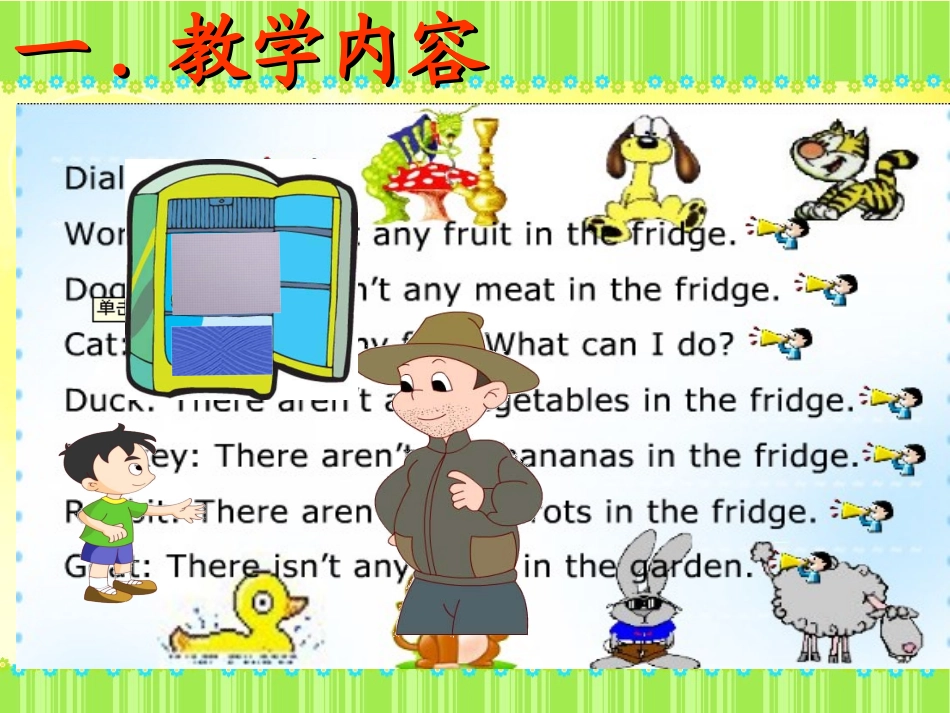
小学英语教学设计案小学英语教学设计案例例广东佛山南海实验小学曹梅《剑桥少儿英语》二级(上册)Unit13Thereisn’tanyfoodinthefridge.一、教学内容二、教学目标三、学情分析与资源准备四、教学过程一一..教学内容教学内容二、教学目标二、教学目标1.words:fridgesausagemeatvegetablecarrotpeoplefruit2.Newdrills:3.Self-listeningtothedialogueandpairwork4.Storiesreading5.Practice6.Filltheblanks三、学情分析与资源准备三、学情分析与资源准备1.学生情况分析2.教学资源准备1.学生情况.他们是四年级的学生,对英语学习兴趣浓厚.能用Thereis和Thereare回答What’sin/on/under/…的问题.少数学生通过其他渠道接触过thereisn’ttherearen’t句型2.教学资源.实物教具:abigboxmilkjuiceminibread.供学生交际的资源ppt.供学生自主听读的资源5stories四.教学过程–StepIWarm-up–StepIIPresentationALeading-in(situation)•Learnthenewdrills•morequestionsforunderstanding,(pickoutthekeysentencesandusefulexpressions)topracticethenewsentences.BSelf-listeningtothedialogue.C.AskandanswerquestionsaboutthedialoguePairworkD.Listeningandwriting(consolidationandmodelforapplicationofthenewwordsandsentences)–StepIIIStoriesreading.Situation.Listeningandreading–StepIIIIPractice.Oralpractice:Makedialogues/makestories/storytelling/StepIWarm-upA.GuessinggameB.Pairwork四.教学过程设计思路:本环节guessinggame是复习旧句型,里面的师生对话就是为后面Pairwork两两对话起示范作用。四.教学过程StepIWarm-upThereis…Thereare…What’sin\on\under\near…?Thereis…Thereare…What’sin\on\under\near…?B:StepIWarm-upPairwork注意问StepIWarm-up题:1.师生示范问答尽量做到少而精。2.复习方式灵活多样。–StepIIPresentation四.教学过程A.Leading-in(situation)andlearnthenewdrills.B.Self-listeningtothedialogue.C.Askandanswerquestionsaboutthedialogue.PairworkD.Listeningandwriting.四.教学过程–StepIIPresentationA.Leading-in(situation)andlearnthenewdrillsMorequestionsforunderstanding,pickoutandpracticethekeysentencesandusefulexpressions设计思路:语言是让我们运用的,要在具体的情境能够运用得出来,这样的语言才是有用的。此环节使用实物,师生对话引入课题Thereisn’tanyfoodinthefridge.在情景中学习新知识Thereisn’t…Therearen’t...Whatareyougoingtodo?Iamgoingto...Morequestionsforunderstanding,pickoutandpracticethekeysentencesandusefulexpressions.–StepIIPresentation××Practice:Thereisn’t…Therearen’t…inthefridge.√√Practice:Whatareyougoingtodo?Iamgoingtobuy…注意问题:利用实物和媒体灵活创设情景。四.教学过程–StepIIPresentationB:Self-listeningtothedialogue.C:Askandanswerquestionsaboutthedialogue,Pairwork设计思路:本环节(课标内容)区别于传统的由教师讲授单词、句型的方式,借助网络资源,让学生自主听读,在学生自主听读完对话之后,教师首先对学生的听读情况进行反馈检查,引导学生联系旧知,进行同位俩俩说,培养学生的语言运用能力。注意问题1.强化学生自主听课件时的大声跟读习惯。2.多考虑Wh问句,引导学生回答问题时说完整句。3.保证俩俩说的时间,根据学生情况决定是否用keypointsListenaskandanswerthesequestions1.WhereisTom?2.Thereisn’tanyfoodinTom’sfridge.WhatisTomgoingtodo?3.IsTomgoingtobuysomeicecream?4.Whatdoesthecatsay?5.Whydoesthecatsaythat??6.Whataboutthedogtheduckandthemonkey?7.Whoissaying:Therearen’tanypeoplehere?四.教学过程–StepIIPresentationD:Listeningandwriting.设计思路:加强写是中高年级英语教学的一个趋势。此环节是根据小学中高年级英语课标和考试要求,在保证听说领先的基础上,拼写也要跟上的练习注意问题:1.情景中填入四会单词2.形式多样Listenandfilltheblank听录音填空Hello,IamTom.Thisismyfridge.Thereisn’t...