电脑桌面
添加小米粒文库到电脑桌面
安装后可以在桌面快捷访问

情态动词815VIP免费

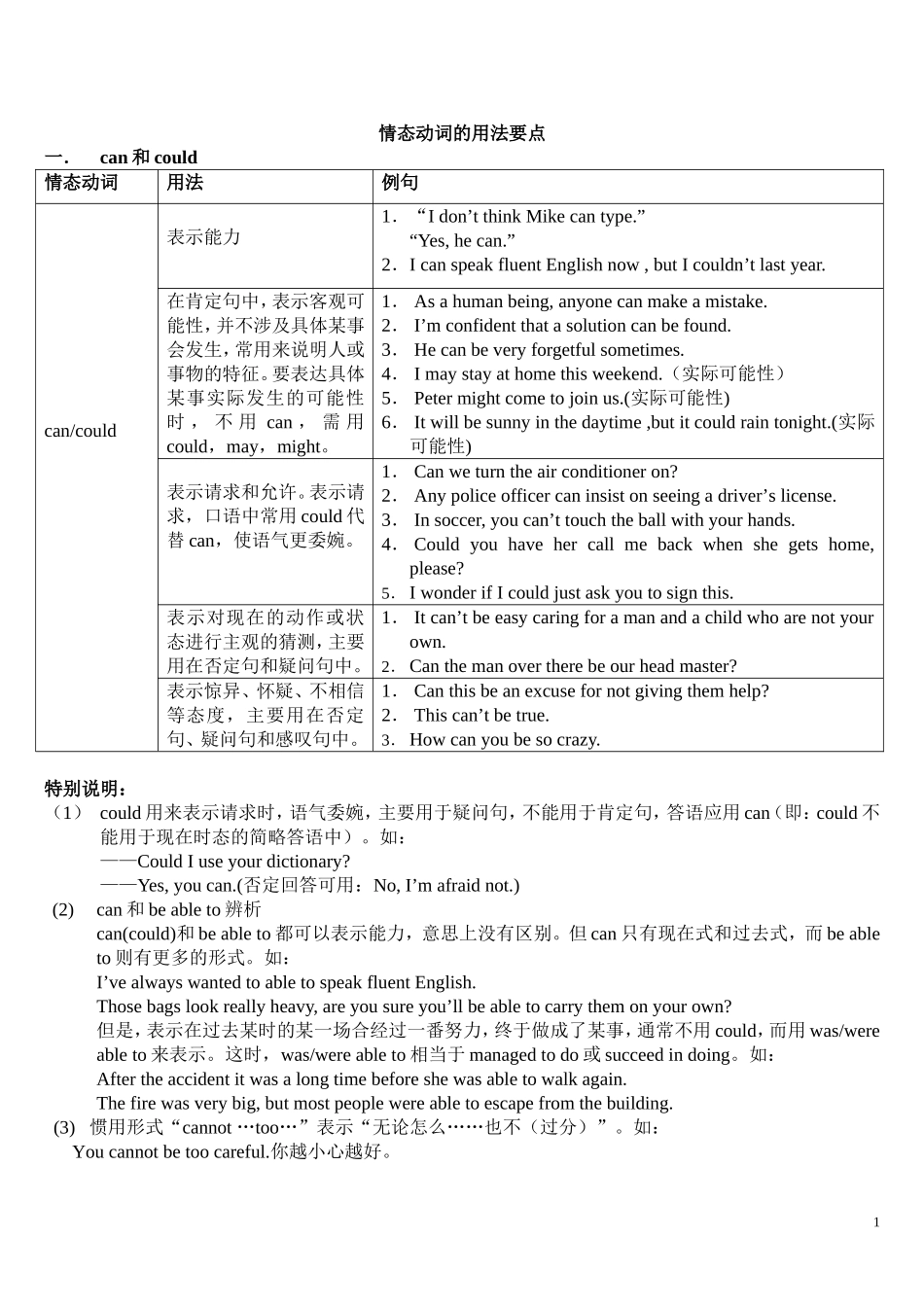
情态动词815_第1页
1/5
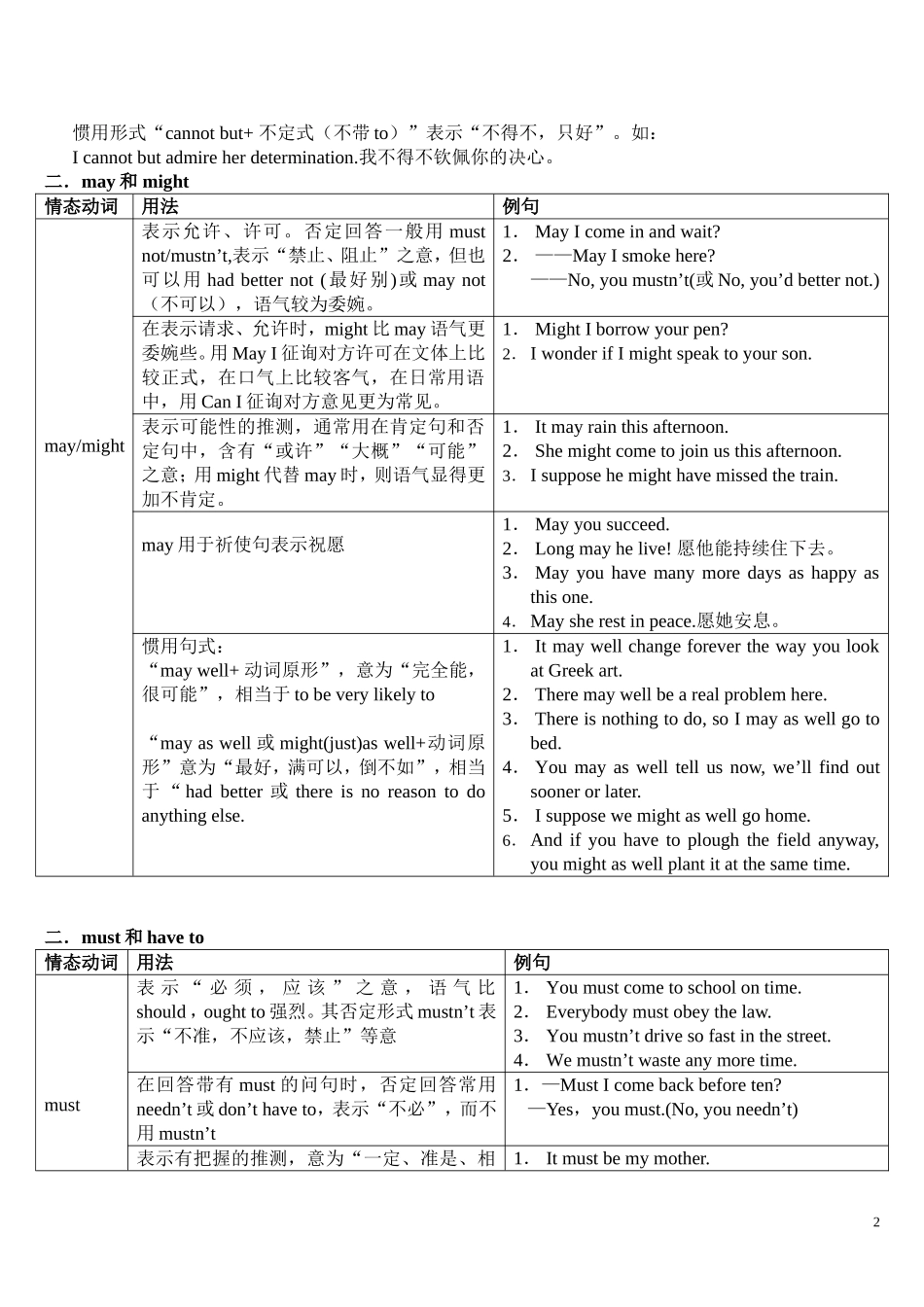
情态动词815_第2页
2/5
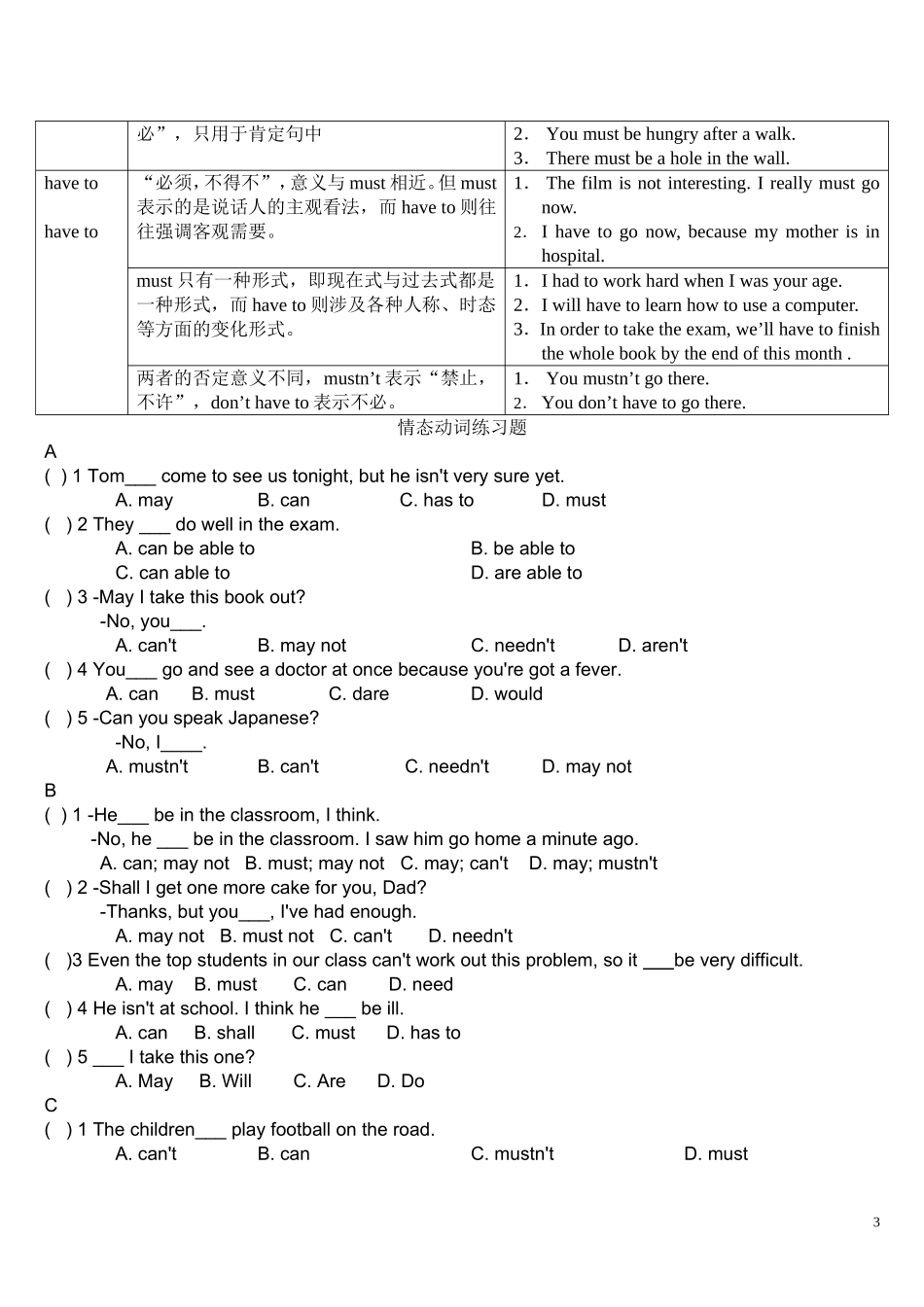
情态动词815_第3页
3/5
情态动词的用法要点一.can和could情态动词用法例句can/could表示能力1.“Idon’tthinkMikecantype.”“Yes,hecan.”2.IcanspeakfluentEnglishnow,butIcouldn’tlastyear.在肯定句中,表示客观可能性,并不涉及具体某事会发生,常用来说明人或事物的特征。要表达具体某事实际发生的可能性时,不用can,需用could,may,might。1.Asahumanbeing,anyonecanmakeamistake.2.I’mconfidentthatasolutioncanbefound.3.Hecanbeveryforgetfulsometimes.4.Imaystayathomethisweekend.(实际可能性)5.Petermightcometojoinus.(实际可能性)6.Itwillbesunnyinthedaytime,butitcouldraintonight.(实际可能性)表示请求和允许。表示请求,口语中常用could代替can,使语气更委婉。1.Canweturntheairconditioneron?2.Anypoliceofficercaninsistonseeingadriver’slicense.3.Insoccer,youcan’ttouchtheballwithyourhands.4.Couldyouhavehercallmebackwhenshegetshome,please?5.IwonderifIcouldjustaskyoutosignthis.表示对现在的动作或状态进行主观的猜测,主要用在否定句和疑问句中。1.Itcan’tbeeasycaringforamanandachildwhoarenotyourown.2.Canthemanovertherebeourheadmaster?表示惊异、怀疑、不相信等态度,主要用在否定句、疑问句和感叹句中。1.Canthisbeanexcusefornotgivingthemhelp?2.Thiscan’tbetrue.3.Howcanyoubesocrazy.特别说明:(1)could用来表示请求时,语气委婉,主要用于疑问句,不能用于肯定句,答语应用can(即:could不能用于现在时态的简略答语中)。如:——CouldIuseyourdictionary?——Yes,youcan.(否定回答可用:No,I’mafraidnot.)(2)can和beableto辨析can(could)和beableto都可以表示能力,意思上没有区别。但can只有现在式和过去式,而beableto则有更多的形式。如:I’vealwayswantedtoabletospeakfluentEnglish.Thosebagslookreallyheavy,areyousureyou’llbeabletocarrythemonyourown?但是,表示在过去某时的某一场合经过一番努力,终于做成了某事,通常不用could,而用was/wereableto来表示。这时,was/wereableto相当于managedtodo或succeedindoing。如:Aftertheaccidentitwasalongtimebeforeshewasabletowalkagain.Thefirewasverybig,butmostpeoplewereabletoescapefromthebuilding.(3)惯用形式“cannot…too…”表示“无论怎么……也不(过分)”。如:Youcannotbetoocareful.你越小心越好。1惯用形式“cannotbut+不定式(不带to)”表示“不得不,只好”。如:Icannotbutadmireherdetermination.我不得不钦佩你的决心。二.may和might情态动词用法例句may/might表示允许、许可。否定回答一般用mustnot/mustn’t,表示“禁止、阻止”之意,但也可以用hadbetternot(最好别)或maynot(不可以),语气较为委婉。1.MayIcomeinandwait?2.——MayIsmokehere?——No,youmustn’t(或No,you’dbetternot.)在表示请求、允许时,might比may语气更委婉些。用MayI征询对方许可在文体上比较正式,在口气上比较客气,在日常用语中,用CanI征询对方意见更为常见。1.MightIborrowyourpen?2.IwonderifImightspeaktoyourson.表示可能性的推测,通常用在肯定句和否定句中,含有“或许”“大概”“可能”之意;用might代替may时,则语气显得更加不肯定。1.Itmayrainthisafternoon.2.Shemightcometojoinusthisafternoon.3.Isupposehemighthavemissedthetrain.may用于祈使句表示祝愿1.Mayyousucceed.2.Longmayhelive!愿他能持续住下去。3.Mayyouhavemanymoredaysashappyasthisone.4.Maysherestinpeace.愿她安息。惯用句式:“maywell+动词原形”,意为“完全能,很可能”,相当于tobeverylikelyto“mayaswell或might(just)aswell+动词原形”意为“最好,满可以,倒不如”,相当于“hadbetter或thereisnoreasontodoanythingelse.1.ItmaywellchangeforeverthewayyoulookatGreekart.2.Theremaywellbearealproblemhere.3.Thereisnothingtodo,soImayaswellgotobed.4.Youmayaswelltellusnow,we’llfindoutsoonerorlater.5.Isupposewemightaswellgohom...

1、当您付费下载文档后,您只拥有了使用权限,并不意味着购买了版权,文档只能用于自身使用,不得用于其他商业用途(如 [转卖]进行直接盈利或[编辑后售卖]进行间接盈利)。
2、本站所有内容均由合作方或网友上传,本站不对文档的完整性、权威性及其观点立场正确性做任何保证或承诺!文档内容仅供研究参考,付费前请自行鉴别。
3、如文档内容存在违规,或者侵犯商业秘密、侵犯著作权等,请点击“违规举报”。

碎片内容

您可能关注的文档

教育教学文库+ 关注
实名认证
内容提供者

本店有大量的教育教学资料,课件

相关文档

相关标签

确认删除?
VIP
微信客服
  • 扫码咨询
会员Q群
  • 会员专属群点击这里加入QQ群
客服邮箱
回到顶部