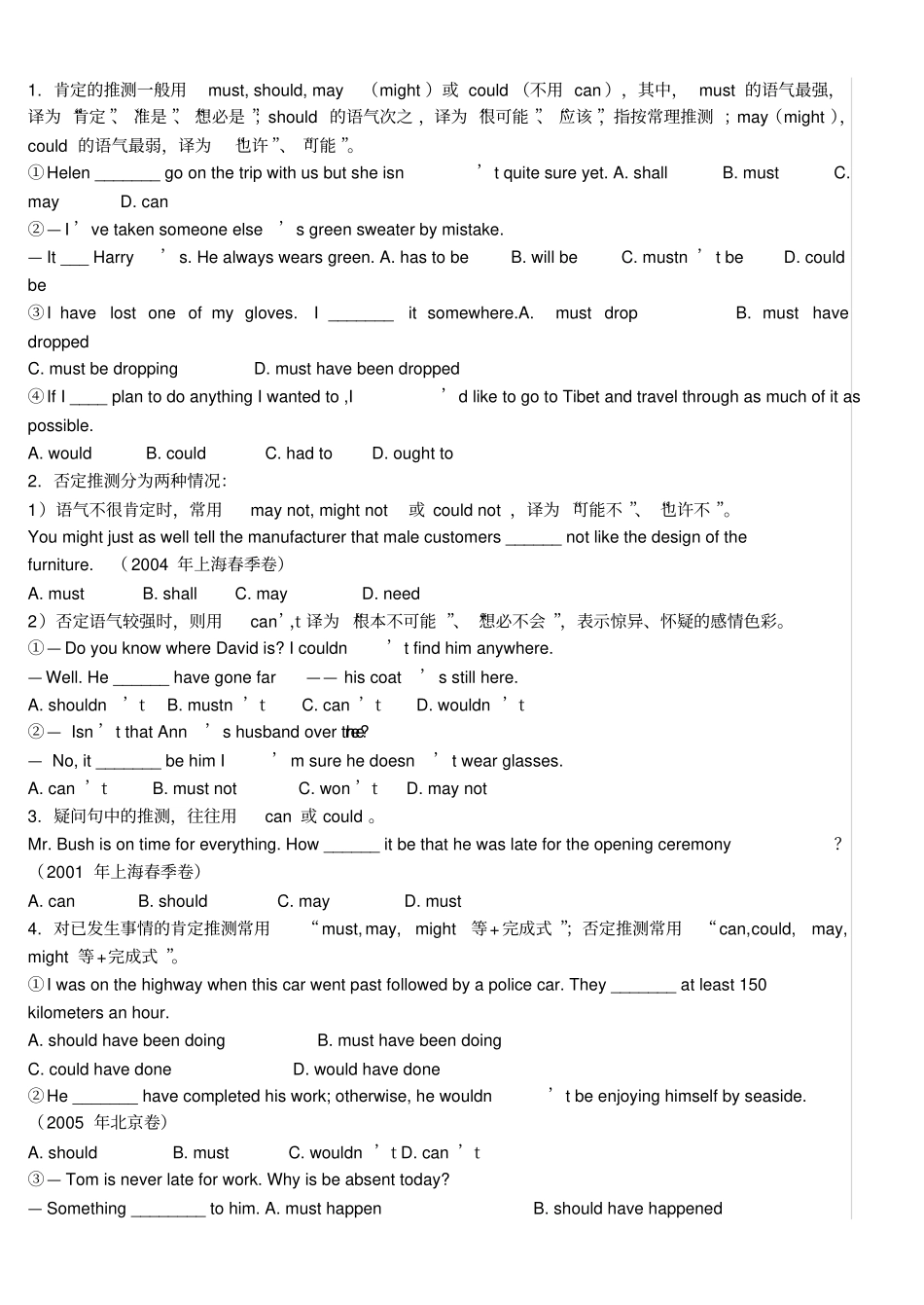
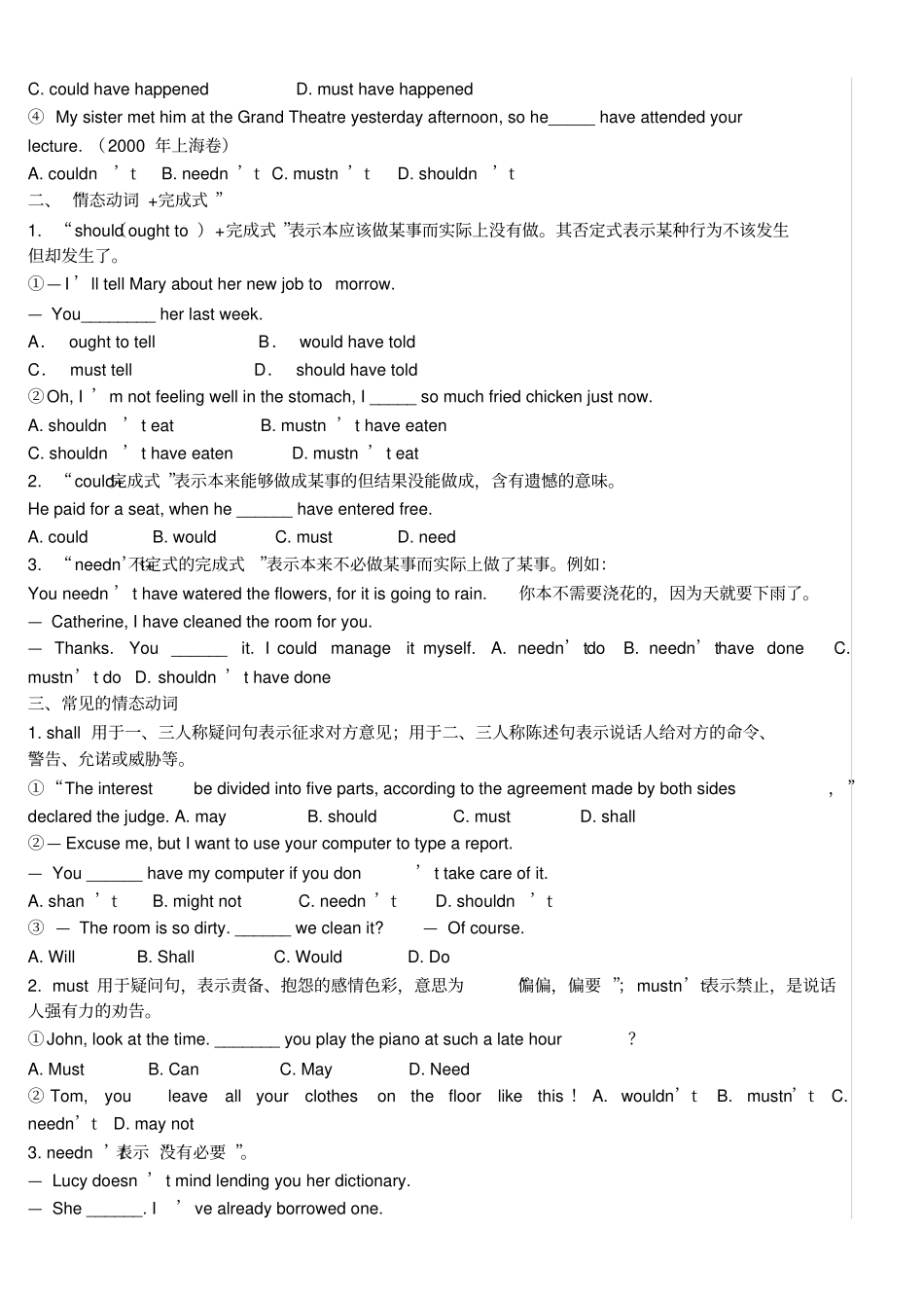
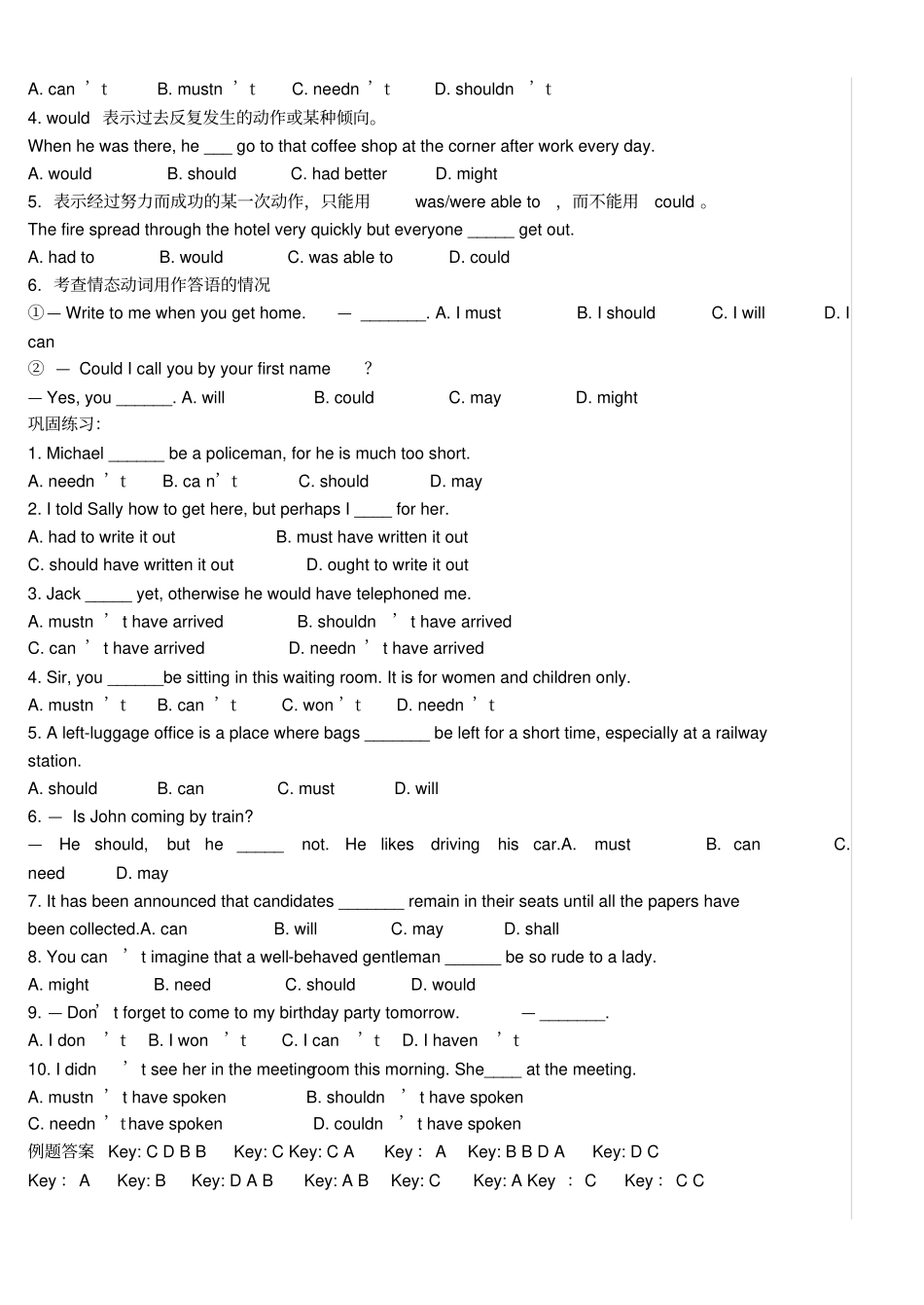
1.肯定的推测一般用must,should,may(might)或could(不用can),其中,must的语气最强,译为“肯定”、“准是”、“想必是”;should的语气次之,译为“很可能”、“应该”,指按常理推测;may(might),could的语气最弱,译为“也许”、“可能”。①Helen_______goonthetripwithusbutsheisn’tquitesureyet.A.shallB.mustC.mayD.can②—I’vetakensomeoneelse’sgreensweaterbymistake.—It___Harry’s.Healwayswearsgreen.A.hastobeB.willbeC.mustn’tbeD.couldbe③Ihavelostoneofmygloves.I_______itsomewhere.A.mustdropB.musthavedroppedC.mustbedroppingD.musthavebeendropped④IfI____plantodoanythingIwantedto,I’dliketogotoTibetandtravelthroughasmuchofitaspossible.A.wouldB.couldC.hadtoD.oughtto2.否定推测分为两种情况:1)语气不很肯定时,常用maynot,mightnot或couldnot,译为“可能不”、“也许不”。Youmightjustaswelltellthemanufacturerthatmalecustomers______notlikethedesignofthefurniture.(2004年上海春季卷)A.mustB.shallC.mayD.need2)否定语气较强时,则用can’t,译为“根本不可能”、“想必不会”,表示惊异、怀疑的感情色彩。①—DoyouknowwhereDavidis?Icouldn’tfindhimanywhere.—Well.He______havegonefar——hiscoat’sstillhere.A.shouldn’tB.mustn’tC.can’tD.wouldn’t②—Isn’tthatAnn’shusbandoverthere?—No,it_______behimI’msurehedoesn’twearglasses.A.can’tB.mustnotC.won’tD.maynot3.疑问句中的推测,往往用can或could。Mr.Bushisontimeforeverything.How______itbethathewaslatefortheopeningceremony?(2001年上海春季卷)A.canB.shouldC.mayD.must4.对已发生事情的肯定推测常用“must,may,might等+完成式”;否定推测常用“can,could,may,might等+完成式”。①Iwasonthehighwaywhenthiscarwentpastfollowedbyapolicecar.They_______atleast150kilometersanhour.A.shouldhavebeendoingB.musthavebeendoingC.couldhavedoneD.wouldhavedone②He_______havecompletedhiswork;otherwise,hewouldn’tbeenjoyinghimselfbyseaside.(2005年北京卷)A.shouldB.mustC.wouldn’tD.can’t③—Tomisneverlateforwork.Whyisbeabsenttoday?—Something________tohim.A.musthappenB.shouldhavehappenedC.couldhavehappenedD.musthavehappened④MysistermethimattheGrandTheatreyesterdayafternoon,sohe_____haveattendedyourlecture.(2000年上海卷)A.couldn’tB.needn’tC.mustn’tD.shouldn’t二、“情态动词+完成式”1.“should(oughtto)+完成式”表示本应该做某事而实际上没有做。其否定式表示某种行为不该发生但却发生了。①—I’lltellMaryabouthernewjobtomorrow.—You________herlastweek.A.oughttotellB.wouldhavetoldC.musttellD.shouldhavetold②Oh,I’mnotfeelingwellinthestomach,I_____somuchfriedchickenjustnow.A.shouldn’teatB.mustn’thaveeatenC.shouldn’thaveeatenD.mustn’teat2.“could+完成式”表示本来能够做成某事的但结果没能做成,含有遗憾的意味。Hepaidforaseat,whenhe______haveenteredfree.A.couldB.wouldC.mustD.need3.“needn’t+不定式的完成式”表示本来不必做某事而实际上做了某事。例如:Youneedn’thavewateredtheflowers,foritisgoingtorain.你本不需要浇花的,因为天就要下雨了。—Catherine,Ihavecleanedtheroomforyou.—Thanks.You______it.Icouldmanageitmyself.A.needn’tdoB.needn’thavedoneC.mustn’tdoD.shouldn’thavedone三、常见的情态动词1.shall用于一、三人称疑问句表示征求对方意见;用于二、三人称陈述句表示说话人给对方的命令、警告、允诺或威胁等。①“Theinterestbedividedintofiveparts,accordingtotheagreementmadebybothsides,”declaredthejudge.A.mayB.shouldC.mustD.shall②—Excuseme,butIwanttouseyourcomputertotypeareport.—You______havemycomputerifyoudon’ttakecareofit.A.shan’tB.mightnotC.needn’tD.shouldn’t③—Theroomissodir...