情态动词情态动词•1.表示请求、征求对方意见时用may,shall(用于第一人称);can,could,would(用于各种人称),其中could,would语气更加委婉一些
如:MayIkeepthebookforanotherweek﹖ShallIopenthedoor
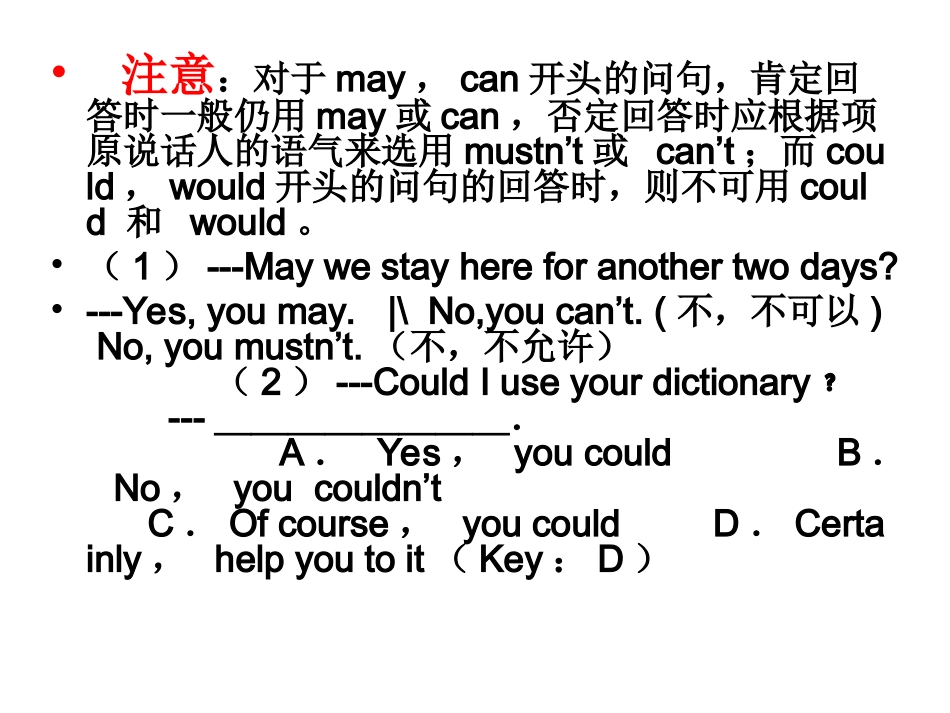
•Couldyoutellmewhomthisbikebelongsto﹖Wouldyoupleaseletmehavealook﹖•注意:对于may,can开头的问句,肯定回答时一般仍用may或can,否定回答时应根据项原说话人的语气来选用mustn’t或can’t;而could,would开头的问句的回答时,则不可用could和would
•(1)---Maywestayhereforanothertwodays
•---Yes,youmay
|\No,youcan’t
(不,不可以)No,youmustn’t
(不,不允许)(2)---CouldIuseyourdictionary﹖---________.A.Yes,youcouldB.No,youcouldn’tC.Ofcourse,youcouldD.Certainly,helpyoutoit(Key:D)•2.表示“允许”时常用may,can
如:Youmay/cantakewhateveryoulikeinthisroom.这间屋子里的东西你想拿什么就可以拿什么
•3.表示“必须”常用must,haveto
Must更强调说话人的主观看法,而haveto表示的却是客观的需要
Haveto比must有更多的时态形式
Must开头的问句,否定回答用needn’t或don’thaveto
•Idon’tlikethebag
Imustbuyanewone
•TheTVsetisbroken
Ihavetobuyanewone
•Youwillh