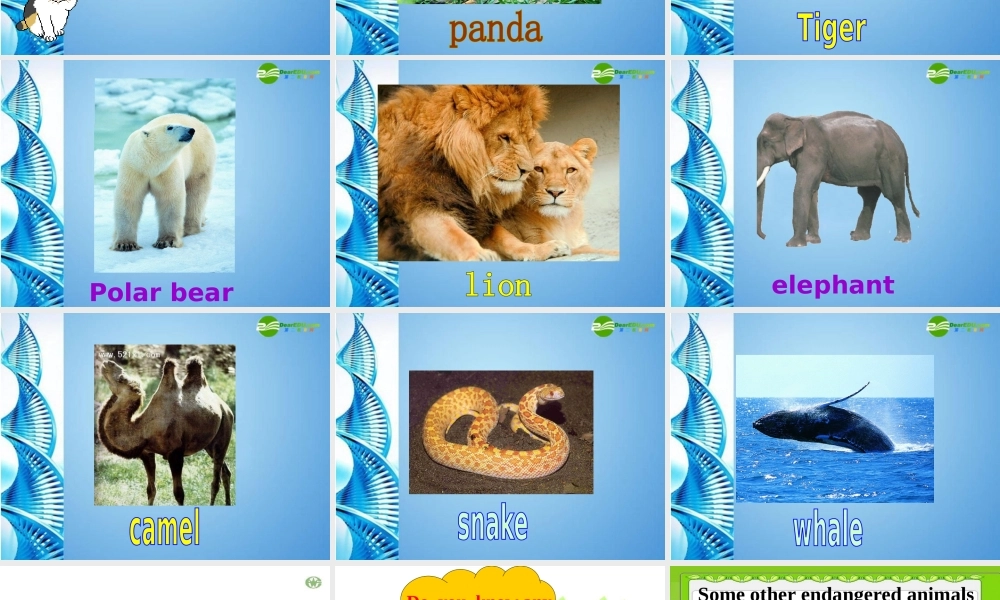
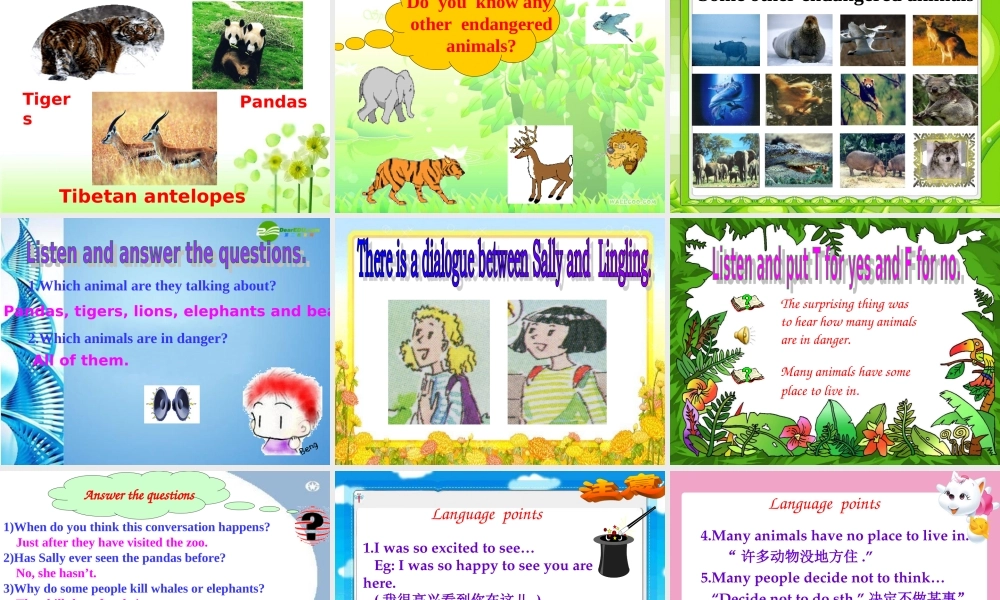
1.A dialogue about animals in danger.2.The use of the infinitive. (to do) Brain-storming Polar bear elephant TigersPandasTibetan antelopesWhat is happening to… Do you know any other endangered animals? Some other endangered animals Pandas, tigers, lions, elephants and bears.All of them.1.Which animal are they talking about?2.Which animals are in danger? 1.The surprising thing was to hear how many animals are in danger.2.Many animals have some place to live in.TF 1)When do you think this conversation happens? Just after they have visited the zoo.2)Has Sally ever seen the pandas before? No, she hasn’t.3)Why do some people kill whales or elephants? They kill them for their meat.4)What happens when the village and farmers grow bigger? Many animals have no place to live in.5)Who has made the water too dirty to drink? Humans.Answer the questions 1.I was so excited to see… Eg: I was so happy to see you are here. ( 我很高兴看到你在这儿 .)2.It was interesting to learn… 形式主语3.We need to protect them better “need to do sth.” .” 需要做…”Language points 4.Many animals have no place to live in. “ 许多动物没地方住 .”5.Many people decide not to think… “Decide not to do sth.” 决定不做某事”6.Let’s find out what we can do to save them…“ 想想为了挽救它们 , 我们能做些什么 ?Language points Practise the dialogue into pairs, then act it out. 1.When people ______too many animals, they become rare.2.Elephants and whales are examples of animals___________.3.Nature___________are forests or large parks where Animals can live in peace.4.We can_________animals in danger if we give them some safe to live.5.We need to give animals fresh water and somewhere to live.This will help them live in________.killin dangerreservesprotectpeace Decide which animal is the most important to be protected and say the reason. 1.Recite the dialogue.2.Finish Ex 1 and Ex2 in the workbook.