一般现在时1
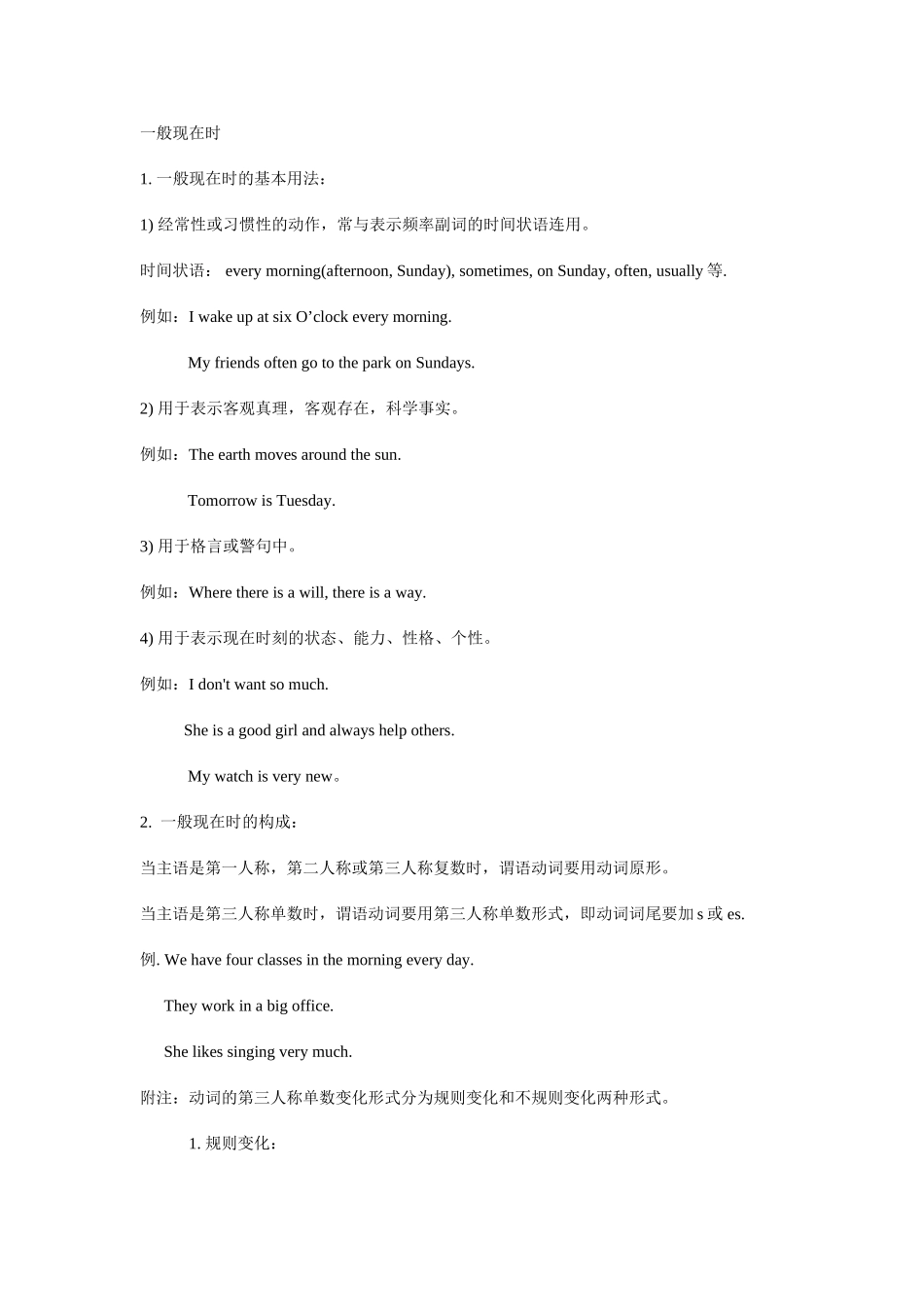
一般现在时的基本用法:1)经常性或习惯性的动作,常与表示频率副词的时间状语连用
时间状语:everymorning(afternoon,Sunday),sometimes,onSunday,often,usually等
例如:IwakeupatsixO’clockeverymorning
MyfriendsoftengototheparkonSundays
2)用于表示客观真理,客观存在,科学事实
例如:Theearthmovesaroundthesun
TomorrowisTuesday
3)用于格言或警句中
例如:Wherethereisawill,thereisaway
4)用于表示现在时刻的状态、能力、性格、个性
例如:Idon'twantsomuch
Sheisagoodgirlandalwayshelpothers
Mywatchisverynew
一般现在时的构成:当主语是第一人称,第二人称或第三人称复数时,谓语动词要用动词原形
当主语是第三人称单数时,谓语动词要用第三人称单数形式,即动词词尾要加s或es
Wehavefourclassesinthemorningeveryday
Theyworkinabigoffice
Shelikessingingverymuch
附注:动词的第三人称单数变化形式分为规则变化和不规则变化两种形式
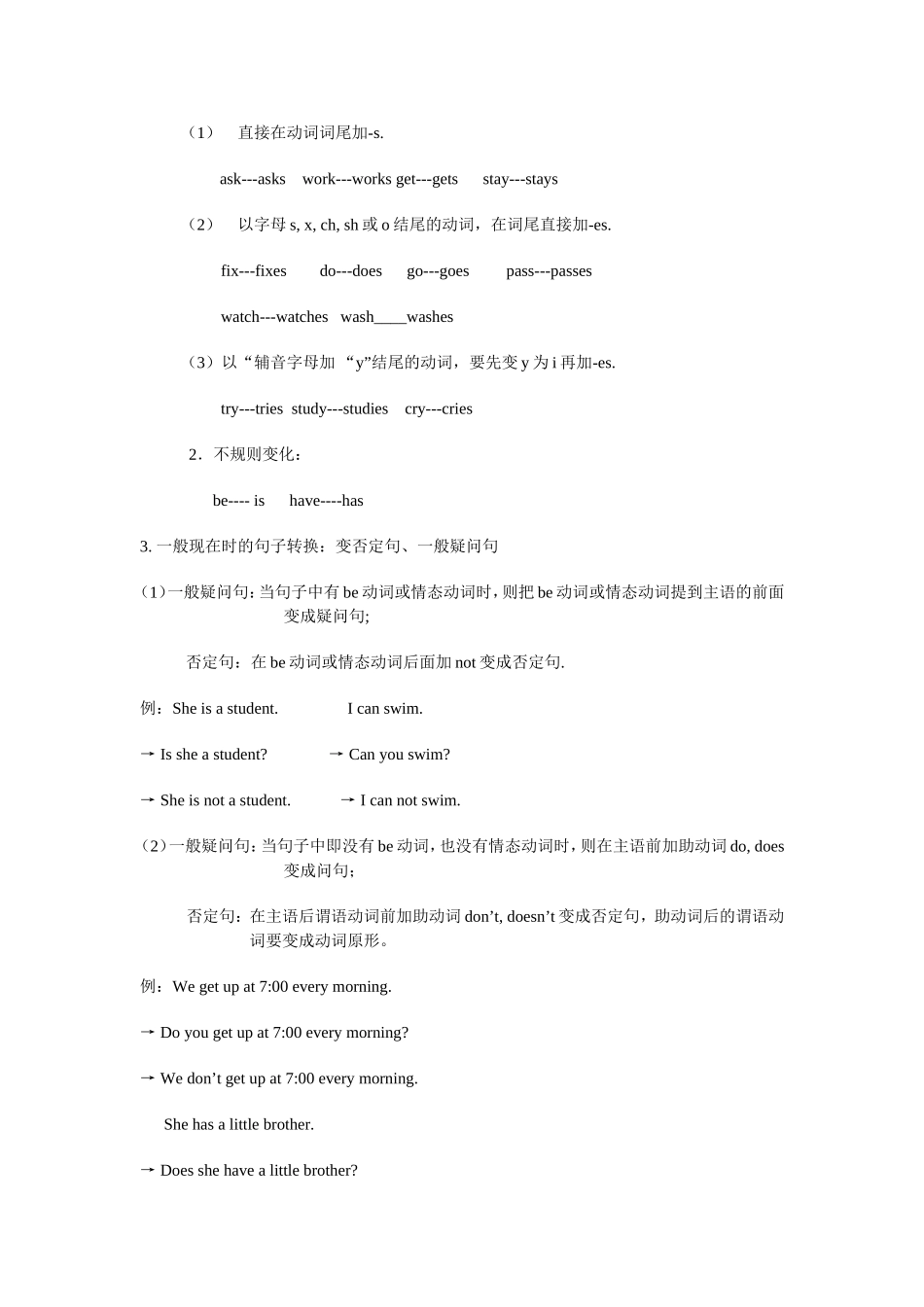
规则变化:(1)直接在动词词尾加-s
ask---askswork---worksget---getsstay---stays(2)以字母s,x,ch,sh或o结尾的动词,在词尾直接加-es
fix---fixesdo---doesgo---goespass---passeswatch---watcheswash____washes(3)以“辅音字母加“y”结尾的动词,要先变y为i再加-es