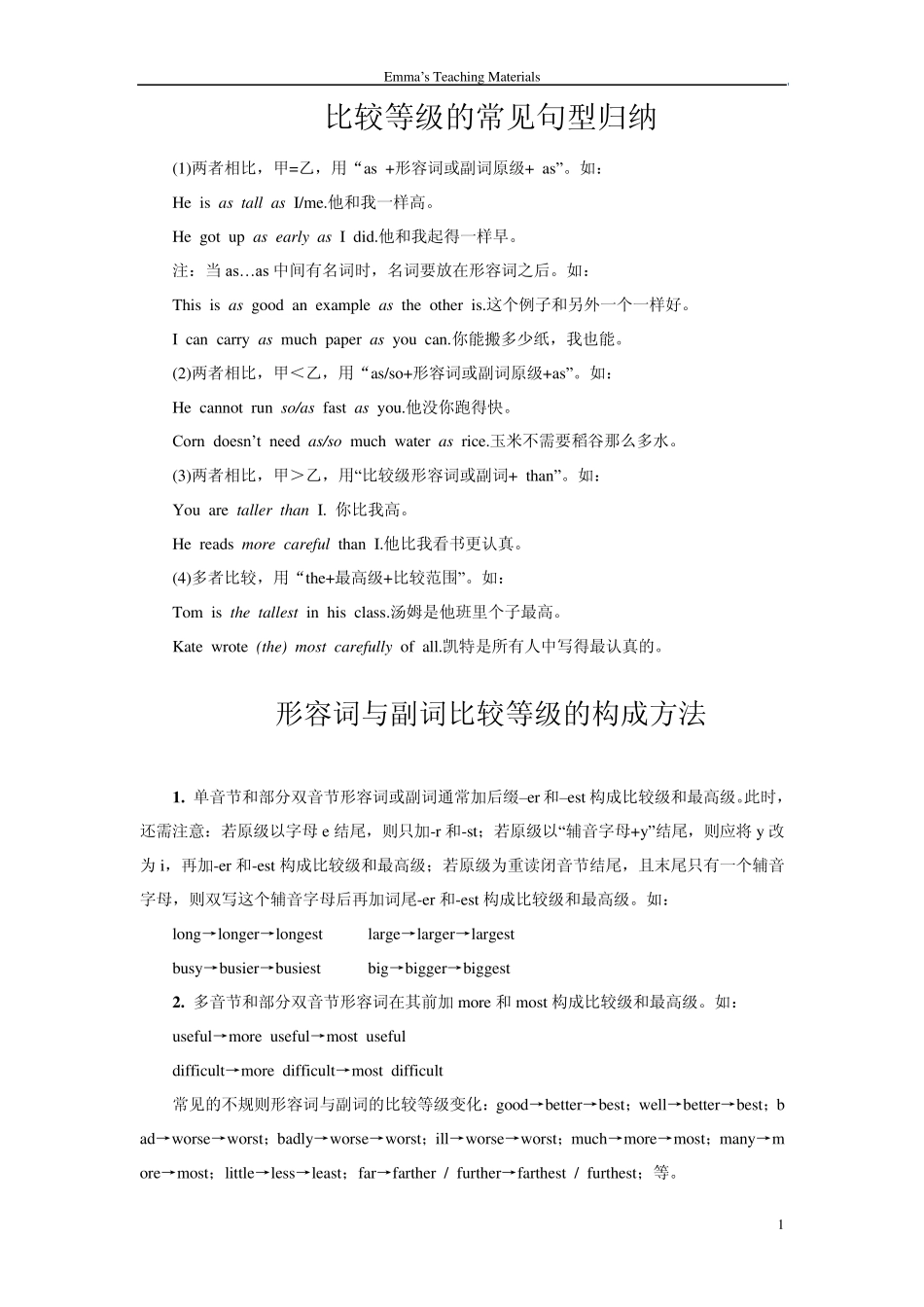
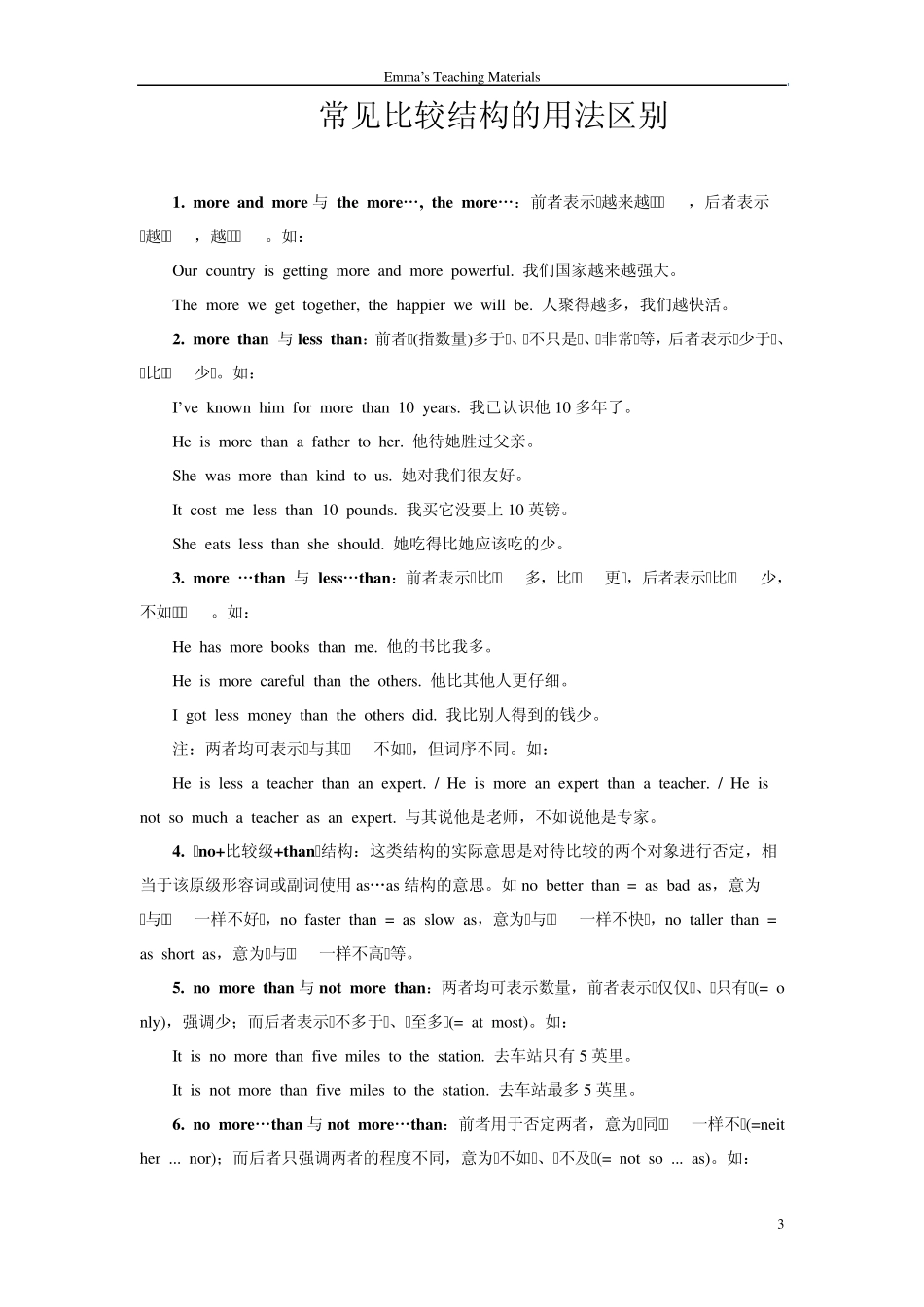
Emma’s Teaching Materials 1 比较等级的常见句型归纳 (1)两者相比,甲=乙,用“as +形容词或副词原级+ as”
如: He is as tall as I/me
他和我一样高
He got up as early as I did
他和我起得一样早
注:当 as…as 中间有名词时,名词要放在形容词之后
如: This is as good an example as the other is
这个例子和另外一个一样好
I can carry as much paper as you can
你能搬多少纸,我也能
(2)两者相比,甲<乙,用“as/so+形容词或副词原级+as”
如: He cannot run so/as fast as you
他没你跑得快
Corn doesn’t need as/so much water as rice
玉米不需要稻谷那么多水
(3)两者相比,甲>乙,用“比较级形容词或副词+ than”
如: You are taller than I
He reads more careful than I
他比我看书更认真
(4)多者比较,用“the+最高级+比较范围”
如: Tom is the tallest in his class
汤姆是他班里个子最高
Kate wrote (the) most carefully of all
凯特是所有人中写得最认真的
形容词与副词比较等级的构成方法 1
单音节和部分双音节形容词或副词通常加后缀–er 和–est 构成比较级和最高级
此时,还需注意:若原级以字母 e 结尾,则只加-r 和-st;若原级以“辅音字母+y”结尾,则应将 y改为 i,再加-er 和-est 构成比较级和最高级;若原级为重读闭音节结尾,且末尾只有一个辅音字母