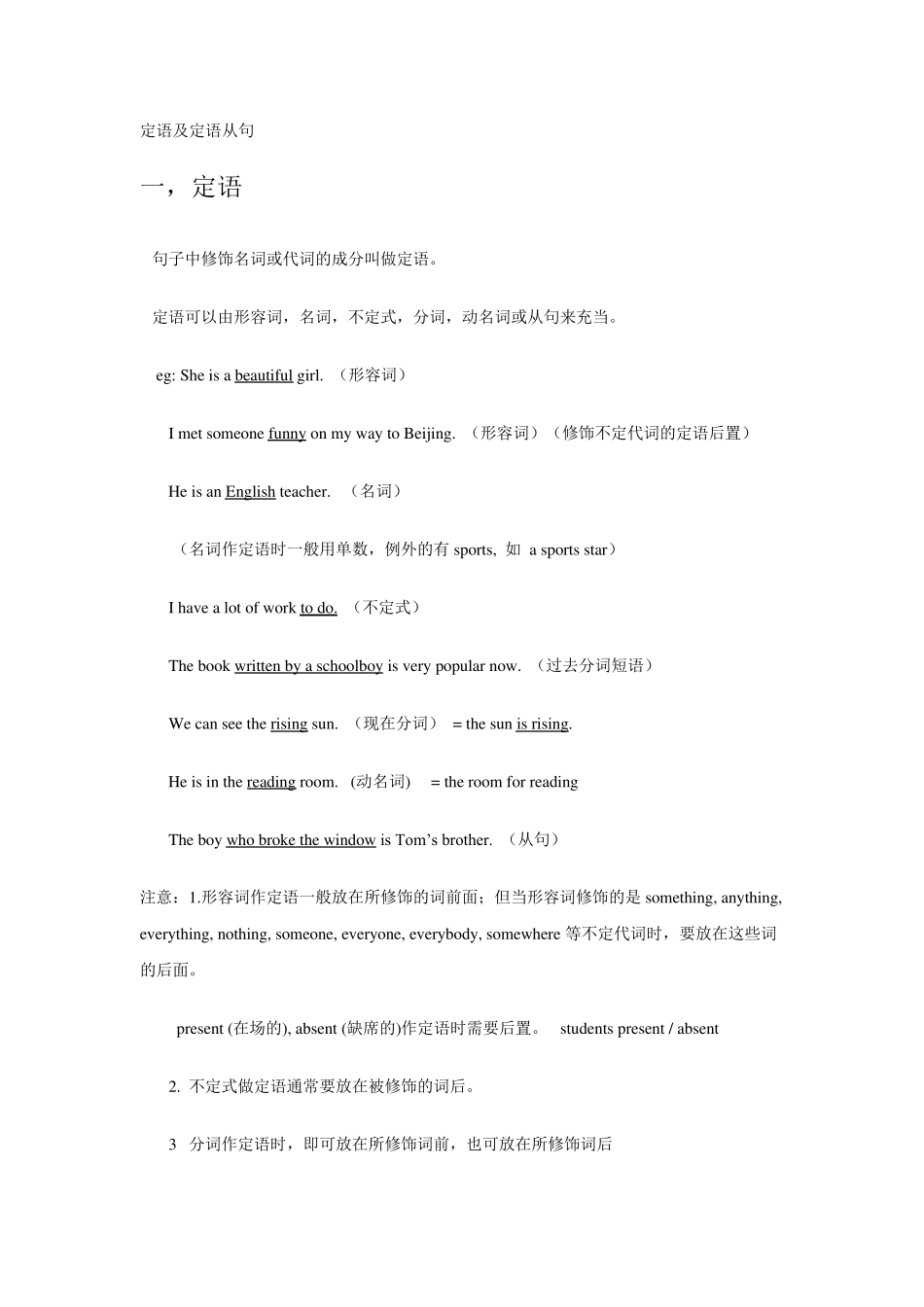
定语及定语从句 一,定语 句子中修饰名词或代词的成分叫做定语
定语可以由形容词,名词,不定式,分词,动名词或从句来充当
eg: She is a beautiful girl
(形容词) I met someone funny on my way to Beijing
(形容词)(修饰不定代词的定语后置) He is an English teacher
(名词) (名词作定语时一般用单数,例外的有 sports, 如 a sports star) I have a lot of work to do
(不定式) The book written by a schoolboy is very popular now
(过去分词短语) We can see the rising sun
(现在分词) = the sun is rising
He is in the reading room
(动名词) = the room for reading The boy who broke the window is Tom’s brother
(从句) 注意:1
形容词作定语一般放在所修饰的词前面;但当形容词修饰的是 something, anything, everything, nothing, someone, everyone, everybody, somewhere 等不定代词时,要放在这些词的后面
present (在场的), absent (缺席的)作定语时需要后置
students present / absent 2
不定式做定语通常要放在被修饰的词后
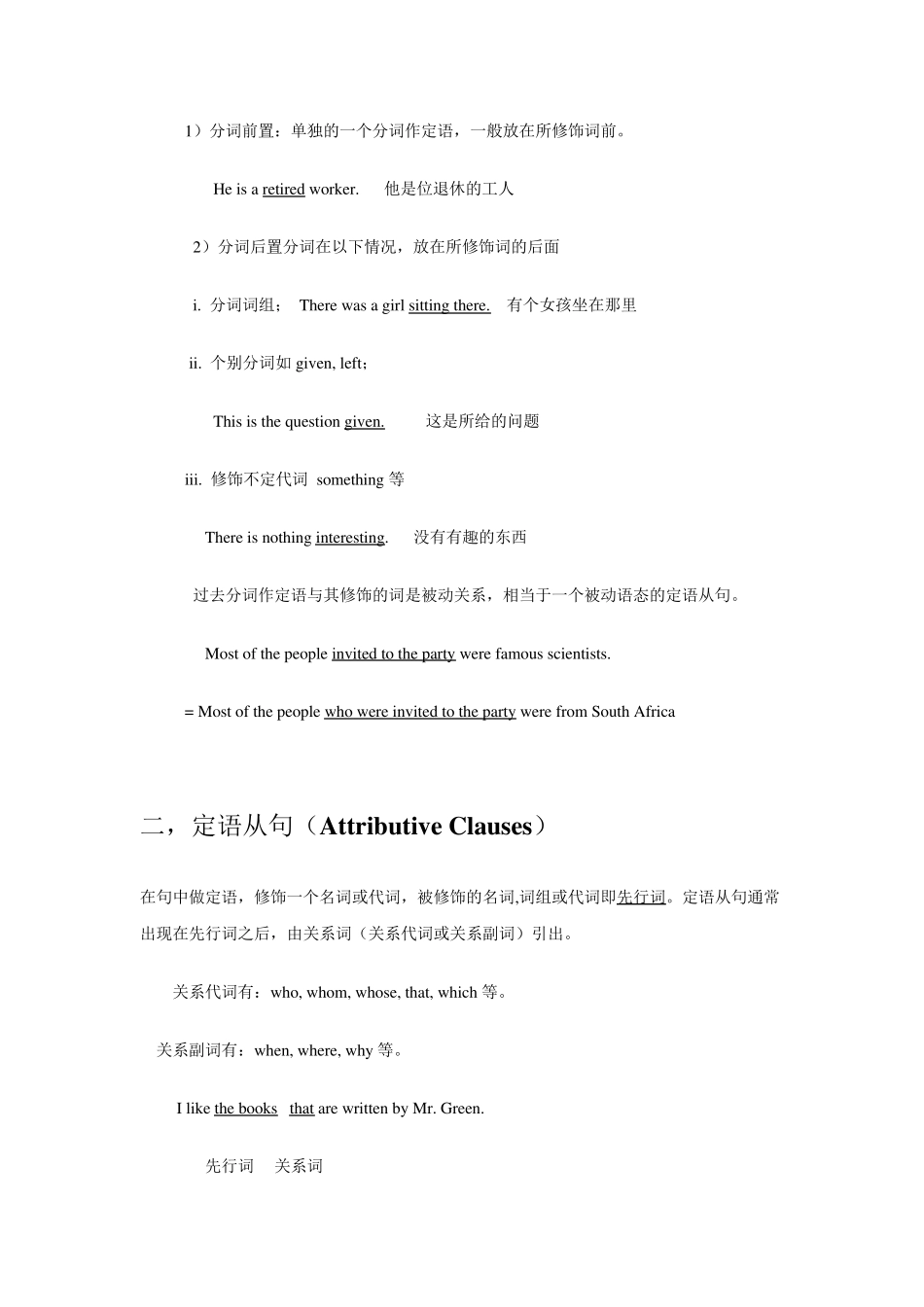
3 分词作定语时,即可放在所修饰词前,也可放在所修饰词后 1)分词前置:单独的一个分词作定语,一般放在所修饰词前
He is a retired worker
他是位退休的工人