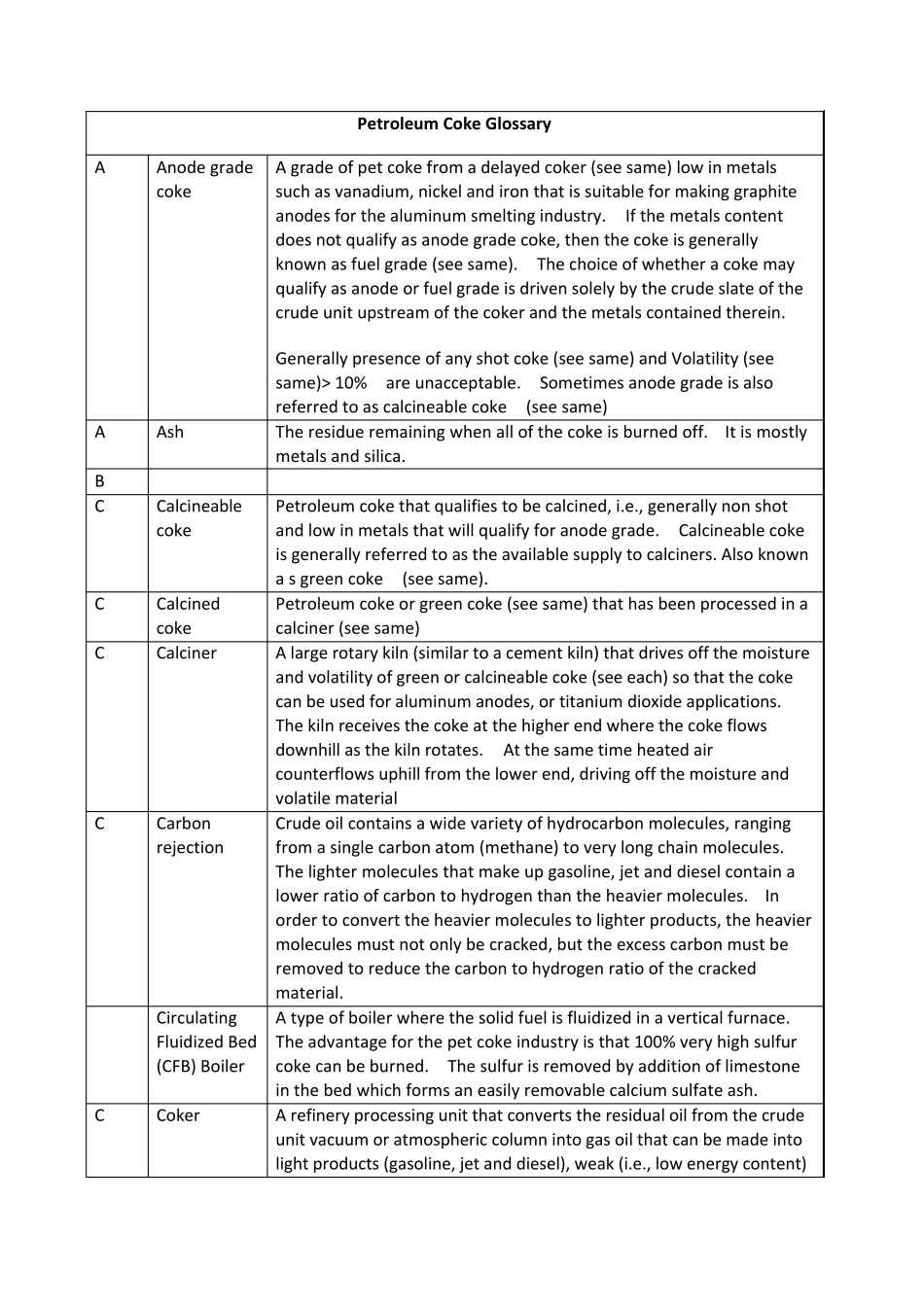
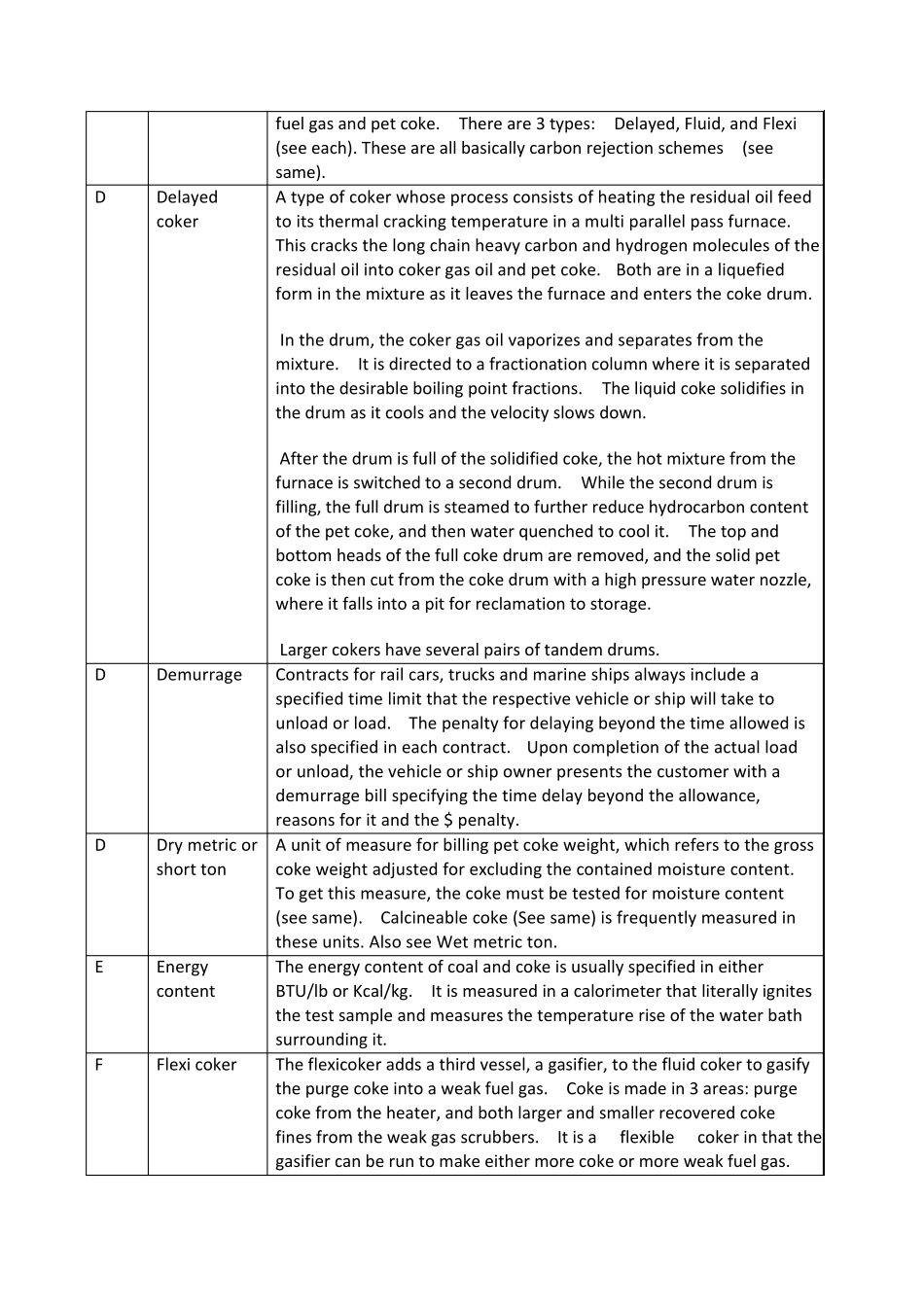
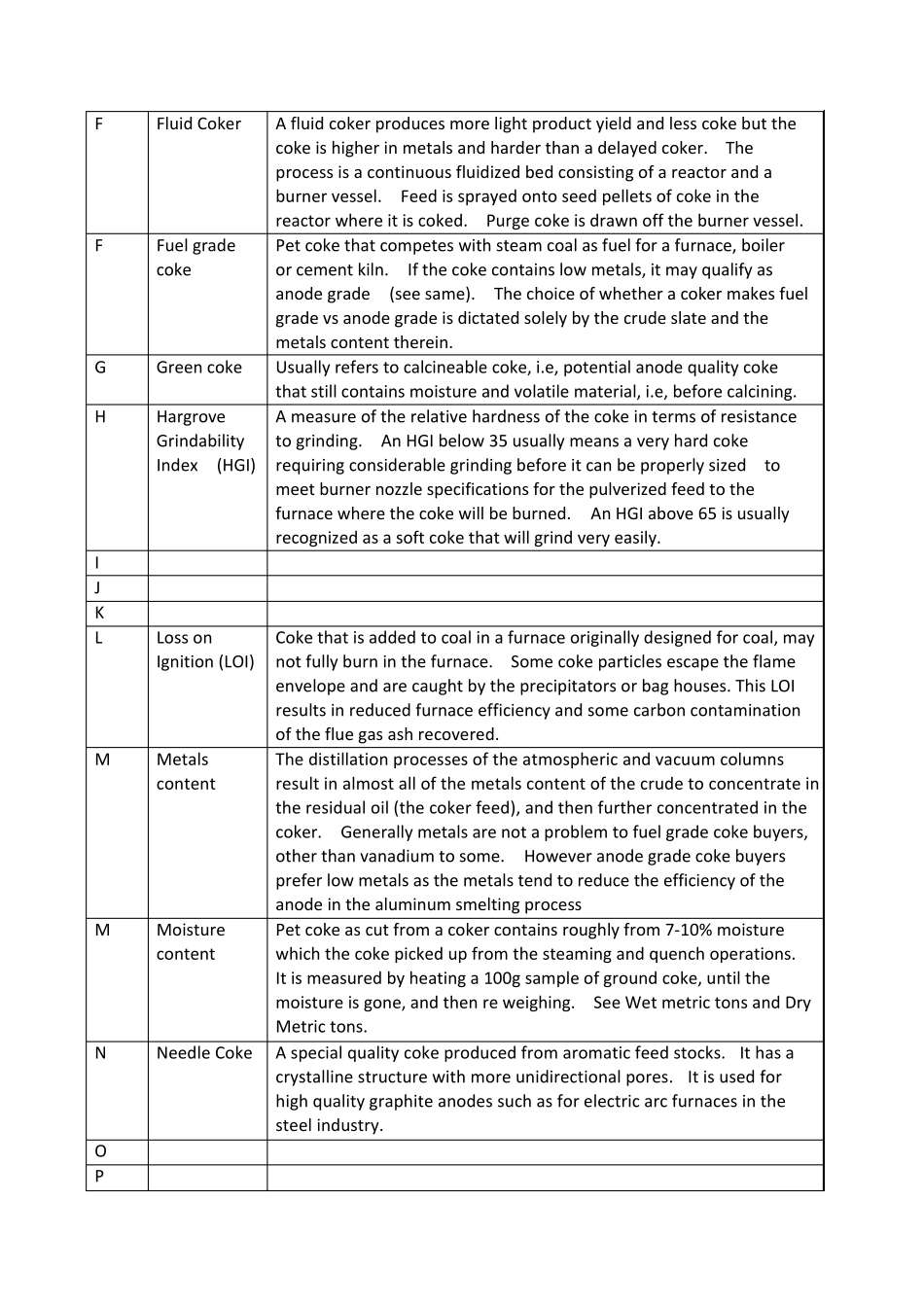
Petroleum Coke Glossary A Anode grade coke A grade of pet coke from a delayed coker (see same) low in metals such as vanadium, nickel and iron that is suitable for making graphite anodes for the aluminum smelting industry. If the metals content does not qualify as anode grade coke, then the coke is generally known as fuel grade (see same). The choice of whether a coke may qualify as anode or fuel grade is driven solely by the crude slate of the crude unit upstream of the coker and the metals contained therein. Generally presence of any shot coke (see same) and Volatility (see same)> 10% are unacceptable. Sometimes anode grade is also referred to as calcineable coke (see same) A Ash The residue remaining when all of the coke is burned off. It is mostly metals and silica. B C Calcineable coke Petroleum coke that qualifies to be calcined, i.e., generally non shot and low in metals that will qualify for anode grade. Calcineable coke is generally referred to as the available supply to calciners. Also known a s green coke (see same). C Calcined coke Petroleum coke or green coke (see same) that has been processed in a calciner (see same) C Calciner A large rotary kiln (similar to a cement kiln) that drives off the moisture and volatility of green or calcineable coke (see each) so that the coke can be used for aluminum anodes, or titanium dioxide applications. The kiln receives the coke at the higher end where the coke flows downhill as the kiln rotates. At the same time heated air counterflows uphill from the lower end, driving off the moisture and volatile material C Carbon rejection Crude oil contains a wide variety of hydrocarbon molecules, ranging from a single carbon atom ...