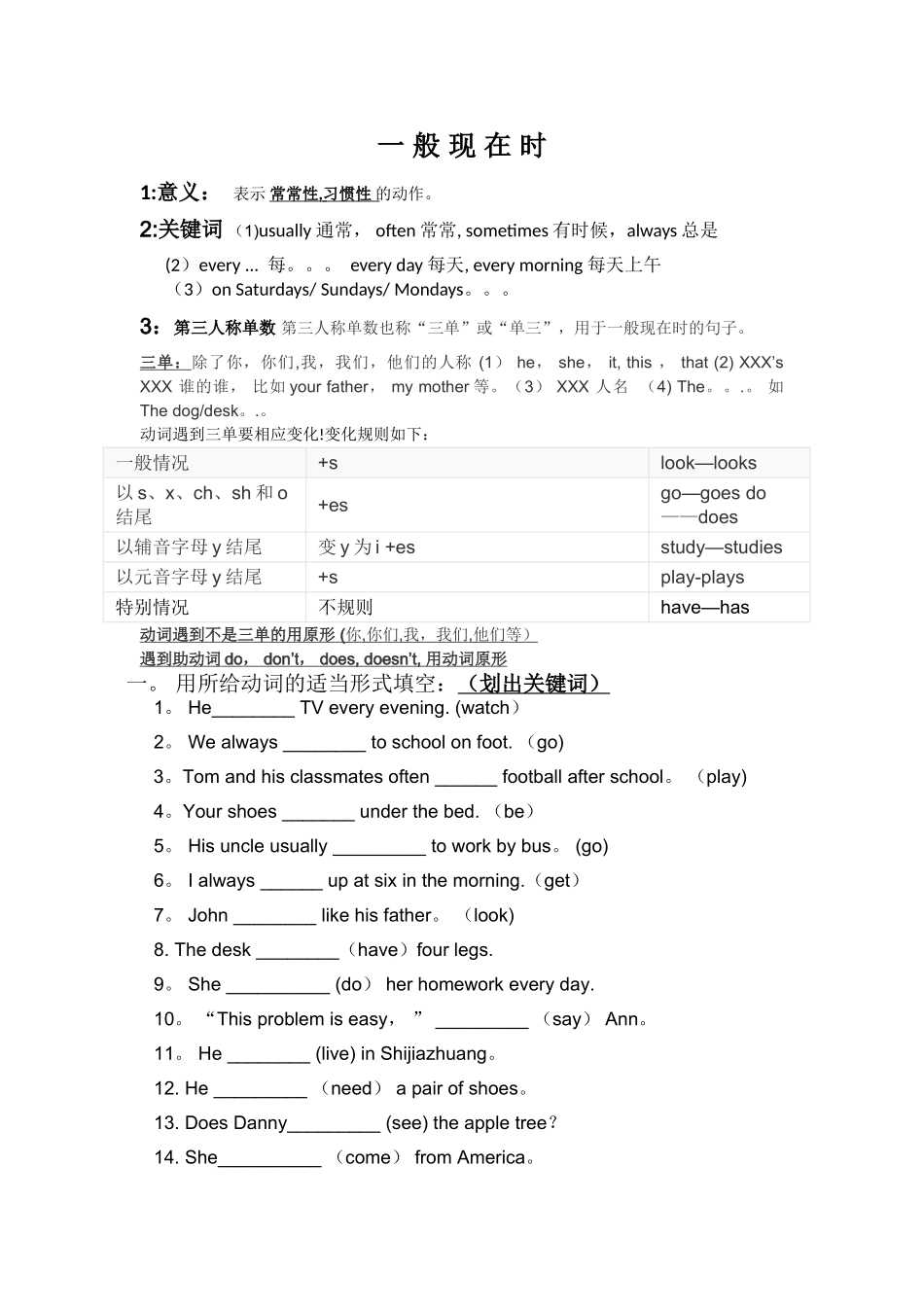
一 般 现 在 时1:意义: 表示 常常性 , 习惯性 的动作
2:关键词 (1)usually 通常, often 常常, sometimes 有时候,always 总是 (2)every
every day 每天, every morning 每天上午 (3)on Saturdays/ Sundays/ Mondays
3:第三人称单数 第三人称单数也称“三单”或“单三”,用于一般现在时的句子
三单:除了你,你们,我,我们,他们的人称 (1) he, she, it, this , that (2) XXX’s XXX 谁的谁, 比如 your father, my mother 等
(3) XXX 人名 (4) The
如The dog/desk
动词遇到三单要相应变化
变化规则如下:一般情况+slook—looks以 s、x、ch、sh 和 o结尾+esgo—goes do——does以辅音字母 y 结尾变 y 为 i +esstudy—studies以元音字母 y 结尾+splay-plays特别情况不规则have—has动词遇到不是三单的用原形 ( 你 , 你们 , 我,我们 , 他们等) 遇到助动词 do , don ’ t , does, doesn ’ t, 用动词原形 一
用所给动词的适当形式填空:(划出关键词)1
He________ TV every evening
(watch)2
We always ________ to school on foot
Tom and his classmates often ______ football after school
(play)4
Your shoes _______ under the bed
His uncle usu