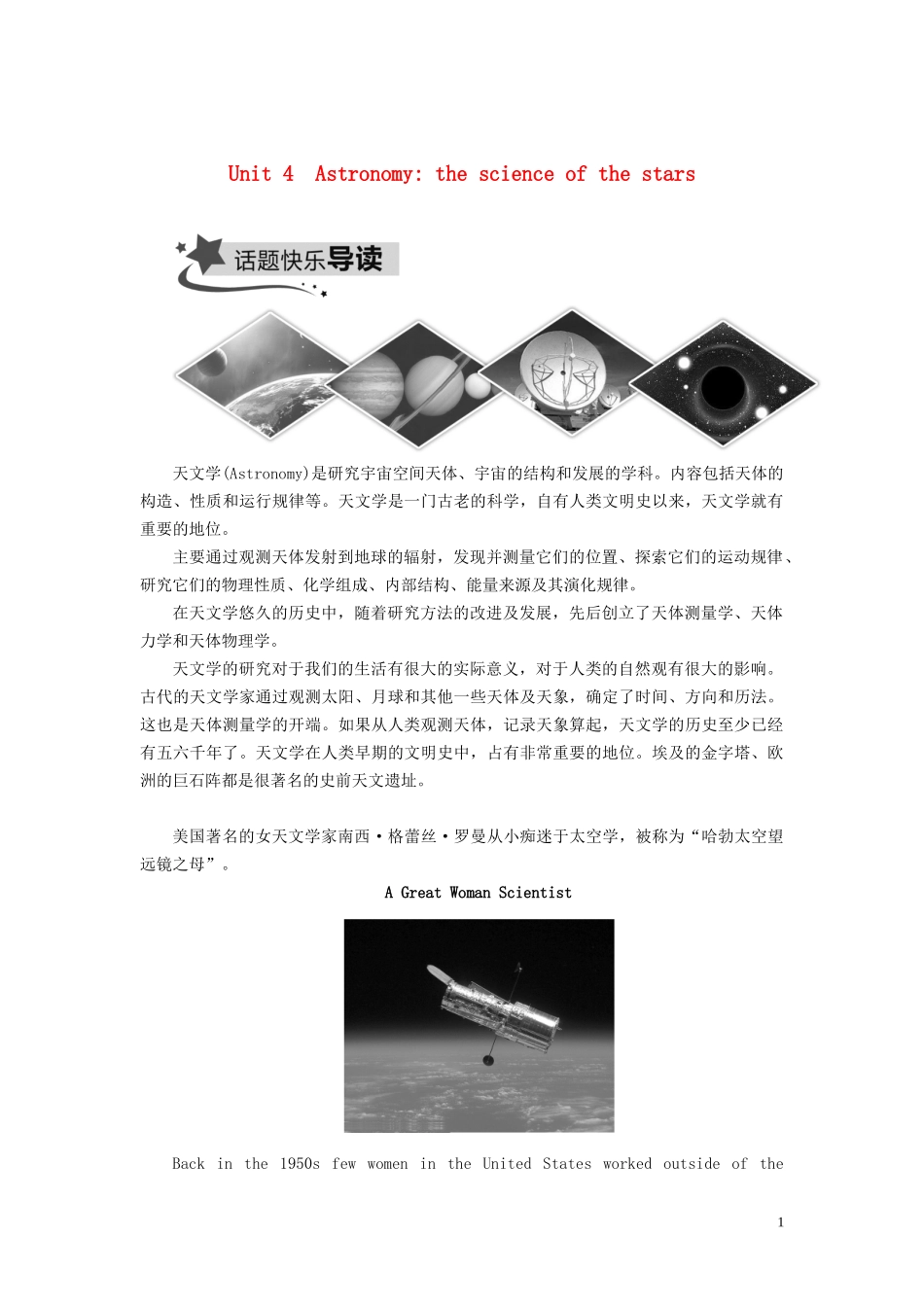
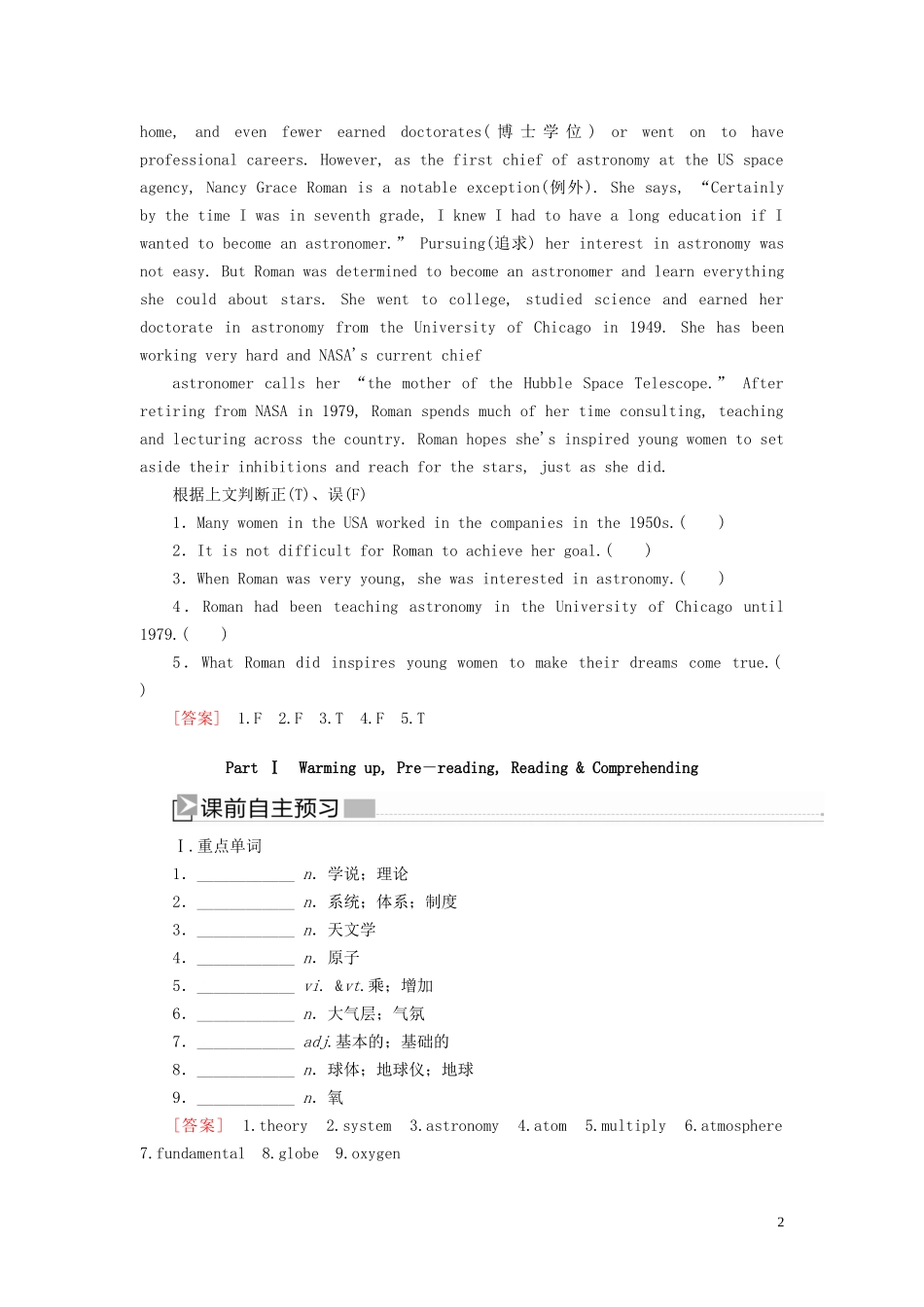
Unit 4 Astronomy: the science of the stars天文学(Astronomy)是研究宇宙空间天体、宇宙的结构和发展的学科
内容包括天体的构造、性质和运行规律等
天文学是一门古老的科学,自有人类文明史以来,天文学就有重要的地位
主要通过观测天体发射到地球的辐射,发现并测量它们的位置、探索它们的运动规律、研究它们的物理性质、化学组成、内部结构、能量来源及其演化规律
在天文学悠久的历史中,随着研究方法的改进及发展,先后创立了天体测量学、天体力学和天体物理学
天文学的研究对于我们的生活有很大的实际意义,对于人类的自然观有很大的影响
古代的天文学家通过观测太阳、月球和其他一些天体及天象,确定了时间、方向和历法
这也是天体测量学的开端
如果从人类观测天体,记录天象算起,天文学的历史至少已经有五六千年了
天文学在人类早期的文明史中,占有非常重要的地位
埃及的金字塔、欧洲的巨石阵都是很著名的史前天文遗址
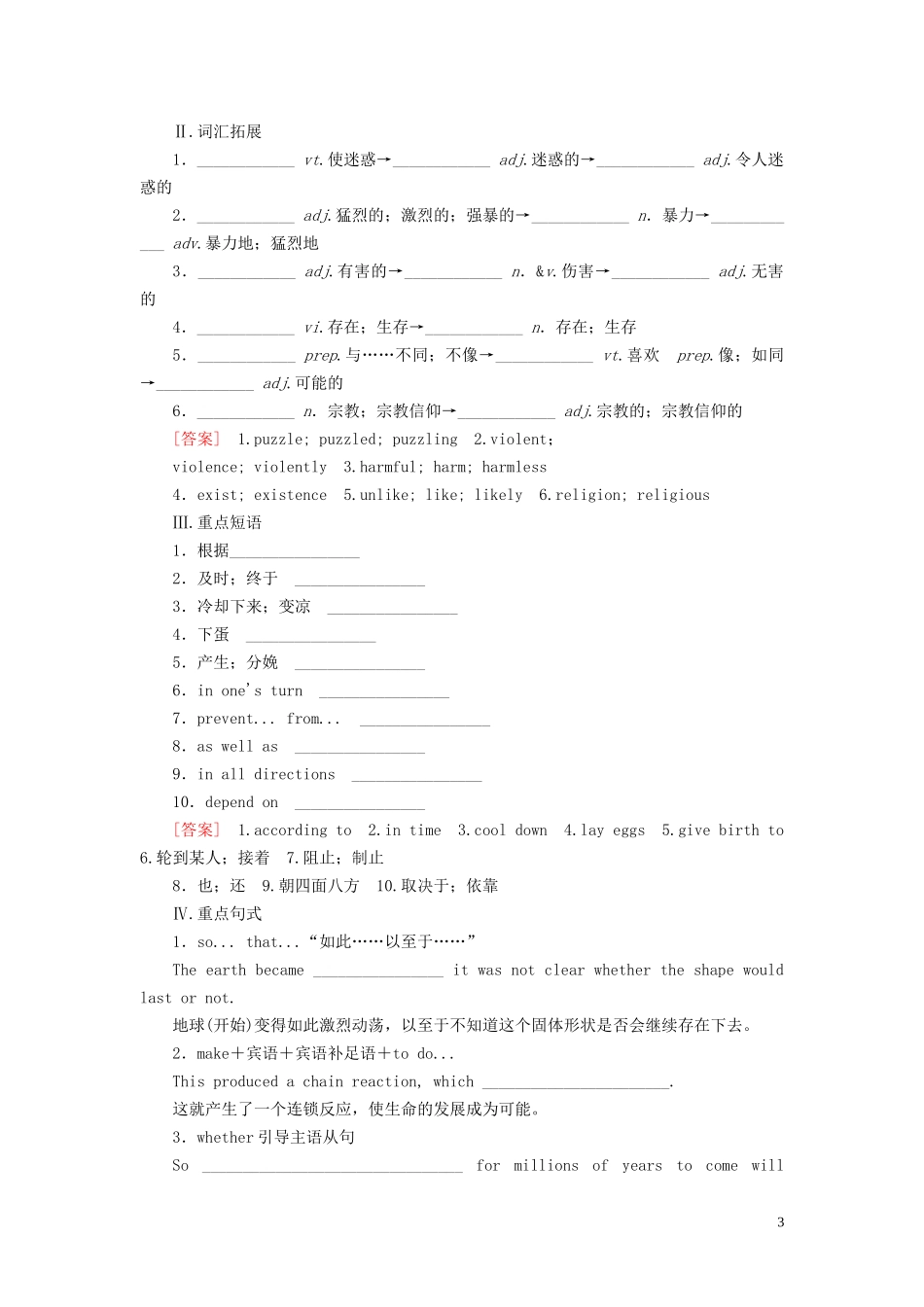
美国著名的女天文学家南西·格蕾丝·罗曼从小痴迷于太空学,被称为“哈勃太空望远镜之母”
A Great Woman ScientistBack in the 1950s few women in the United States worked outside of the 1home, and even fewer earned doctorates( 博 士 学 位 ) or went on to have professional careers
However, as the first chief of astronomy at the US space agency, Nancy Grace Roman is a notable exception(例外)
She says, “Certainly by the time I was in s