小升初语法讲义---句子分类陈述句知识精要1. 陈述句句型的理解和综合运用2
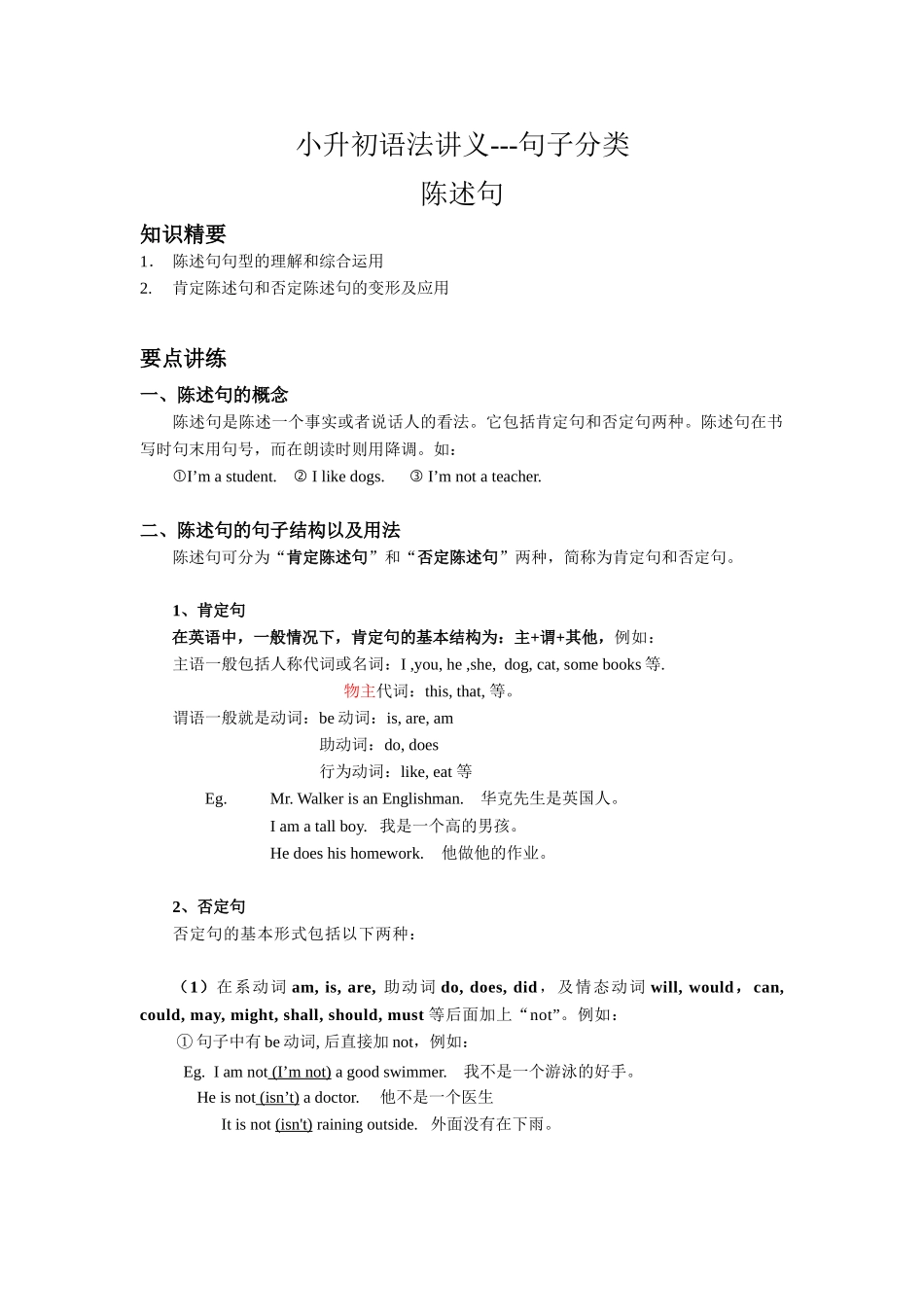
肯定陈述句和否定陈述句的变形及应用要点讲练一、陈述句的概念陈述句是陈述一个事实或者说话人的看法
它包括肯定句和否定句两种
陈述句在书写时句末用句号,而在朗读时则用降调
如: I’m a student
I like dogs
I’m not a teacher
二、陈述句的句子结构以及用法陈述句可分为“肯定陈述句”和“否定陈述句”两种,简称为肯定句和否定句
1、肯定句在英语中,一般情况下,肯定句的基本结构为:主+谓+其他,例如:主语一般包括人称代词或名词:I ,you, he ,she, dog, cat, some books 等
物主代词:this, that, 等
谓语一般就是动词:be 动词:is, are, am助动词:do, does行为动词:like, eat 等Eg
Walker is an Englishman
华克先生是英国人
I am a tall boy
我是一个高的男孩
He does his homework
他做他的作业
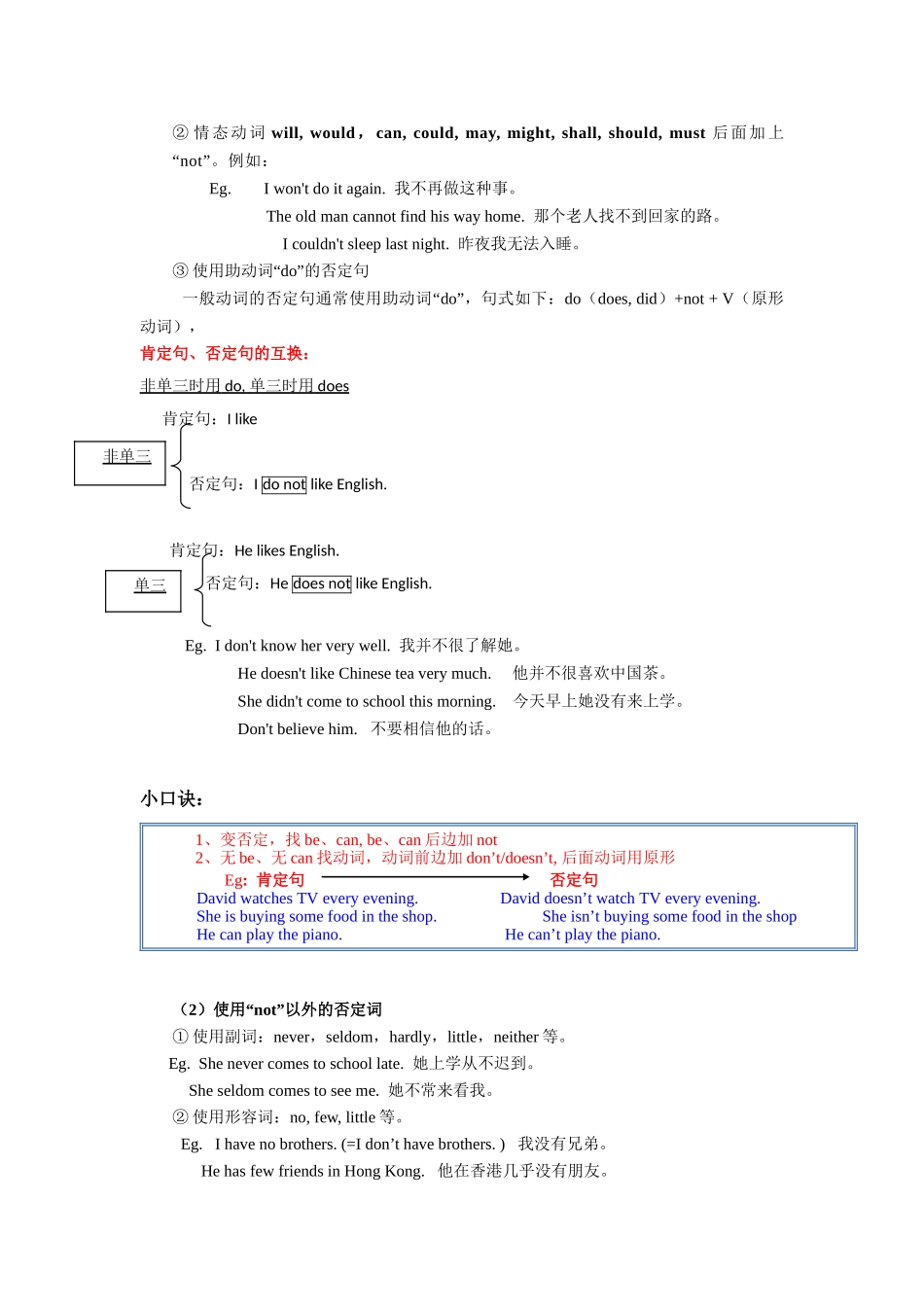
2、否定句否定句的基本形式包括以下两种:(1)在系动词 am, is, are, 助动词 do, does, did,及情态动词 will, would,can, could, may, might, shall, should, must 等后面加上“not”
例如: ① 句子中有 be 动词, 后直接加 not,例如: Eg
I am not (I’m not) a good swimmer
我不是一个游泳的好手
He is not (isn’t) a doctor
他不是一个医生It is not (isn't) raining outside
外面没有在下雨
② 情态动词 will,