too 和enough 的用法及区别(11页)Good is good, but better carries it
精益求精,善益求善
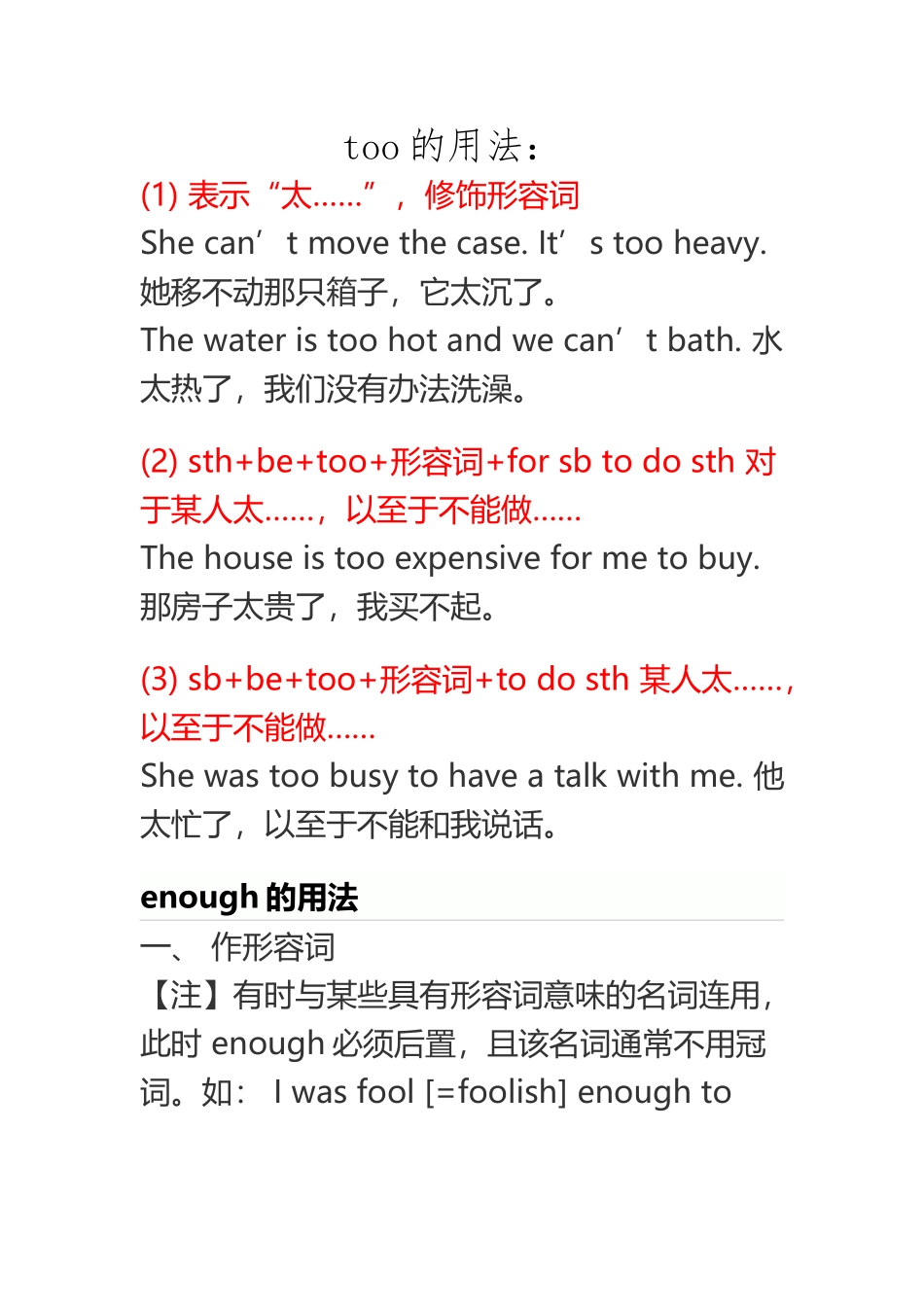
too 的用法: (1) 表示“太……”,修饰形容词 She can’t move the case
It’s too heavy
她移不动那只箱子,它太沉了
The water is too hot and we can’t bath
水太热了,我们没有办法洗澡
(2) sth+be+too+形容词+for sb to do sth 对于某人太……,以至于不能做…… The house is too expensive for me to buy
那房子太贵了,我买不起
(3) sb+be+too+形容词+to do sth 某人太……,以至于不能做…… She was too busy to have a talk with me
他太忙了,以至于不能和我说话
enough 的用法一、 作形容词 【注】有时与某些具有形容词意味的名词连用,此时 enough 必须后置,且该名词通常不用冠词
如: I was fool [=foolish] enough to accept his offer
我接受他的提议真是太傻了
1、 作定语时,既可修饰可数名词,也可修饰不可数名词
1) Are there enough seats for ten persons
有没有足够十人的座位
2)We have enough food for a week
我们有足够维持一周的食物
有时也可以将 enough 放在被修饰名词的后面,例如: I don’t have wine enough (=enough wine) for five persons
我的酒不够 5 个人喝
2、 作表语 只有当主语是代词数词和“数词+名词”