Unit 6 Do you like bananas
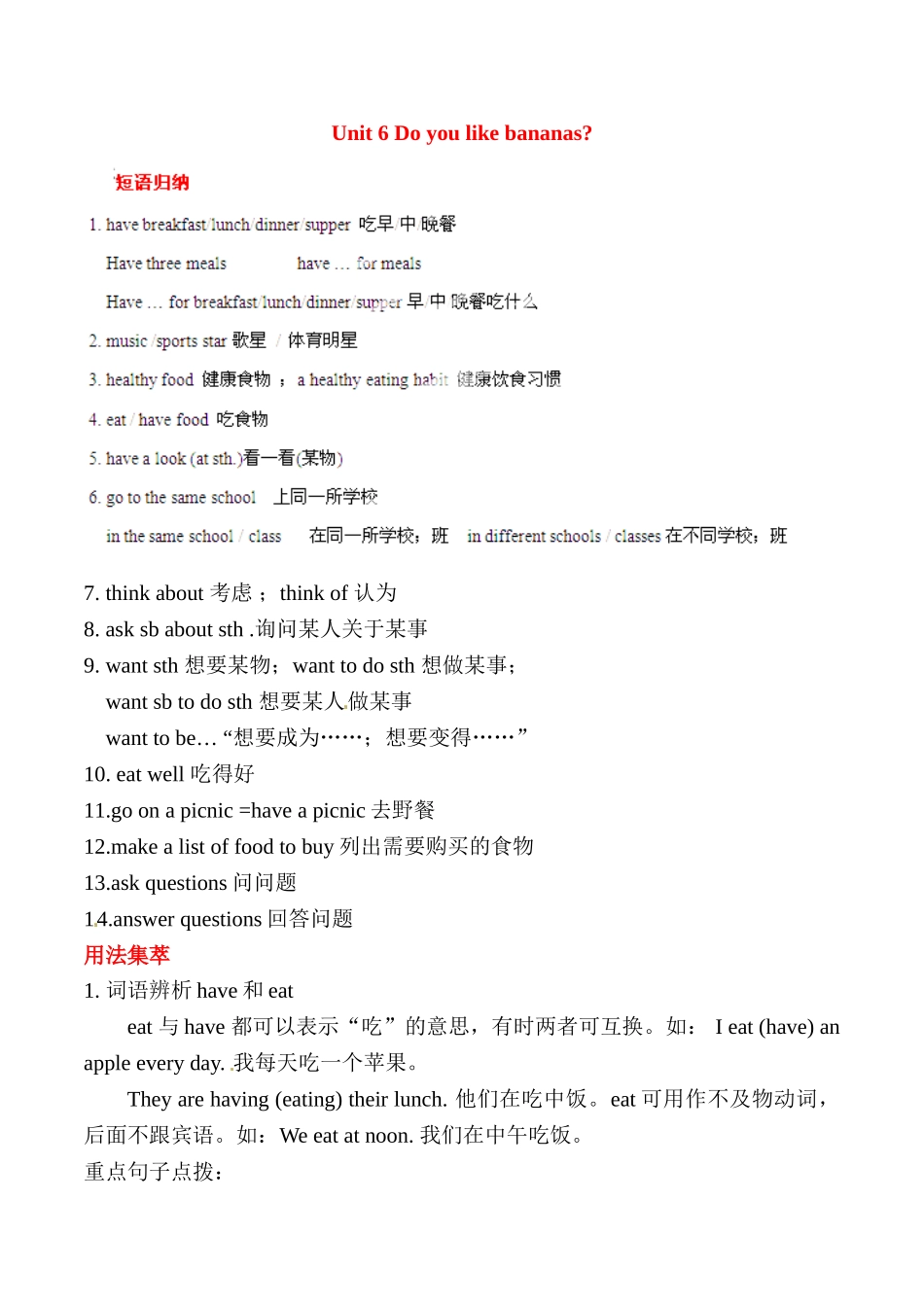
think about 考虑 ;think of 认为8
ask sb about sth
询问某人关于某事9
want sth 想要某物;want to do sth 想做某事;want sb to do sth 想要某人做某事want to be… “想要成为……;想要变得……”10
eat well 吃得好11
go on a picnic =have a picnic 去野餐12
make a list of food to buy 列出需要购买的食物13
ask questions 问问题 14
answer questions 回答问题用法集萃1
词语辨析 have 和 eat eat 与 have 都可以表示“吃”的意思,有时两者可互换
如: I eat (have) an apple every day
我每天吃一个苹果
They are having (eating) their lunch
他们在吃中饭
eat 可用作不及物动词,后面不跟宾语
如:We eat at noon
我们在中午吃饭
重点句子点拨:1
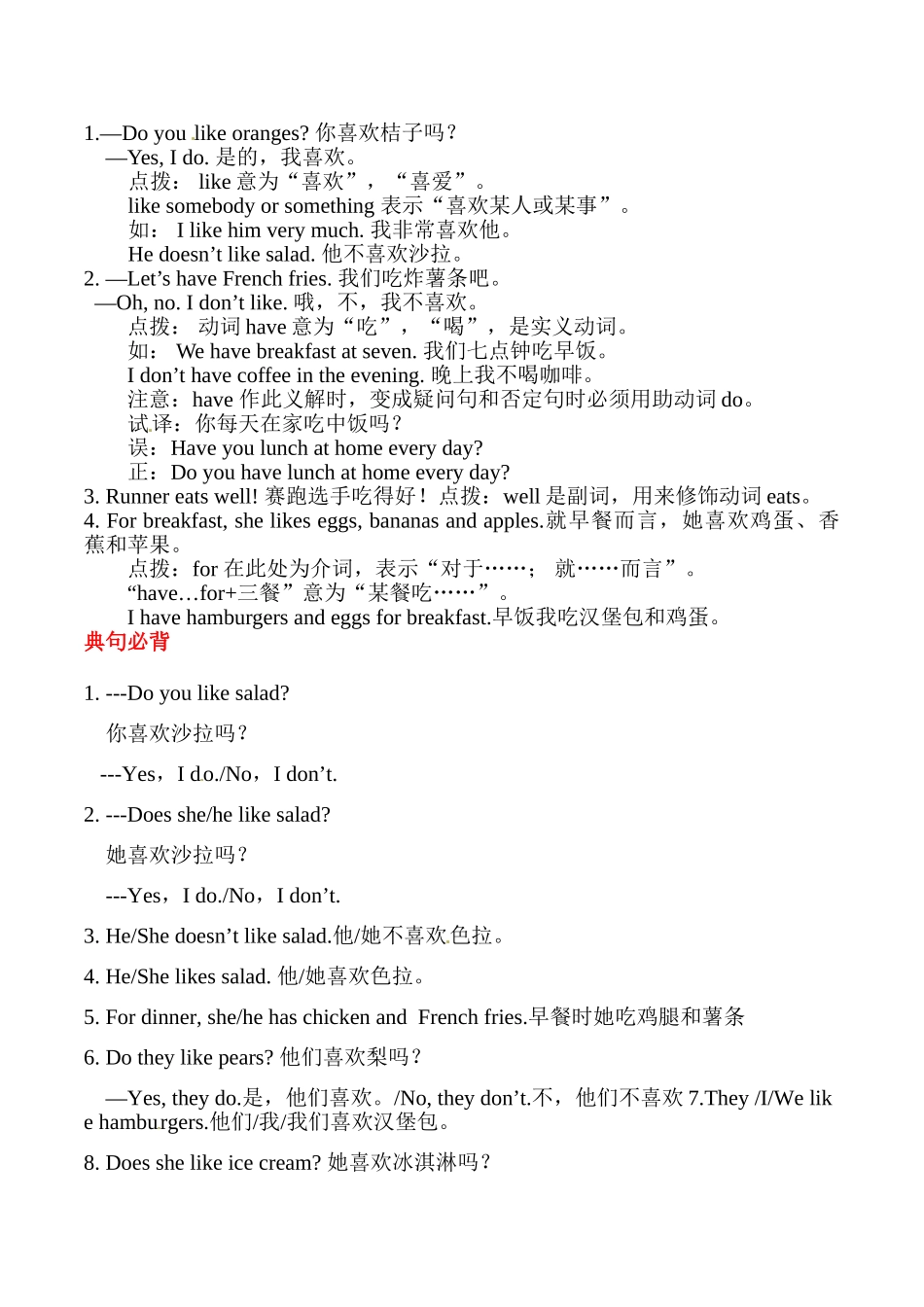
—Do you like oranges
你喜欢桔子吗
—Yes, I do
是的,我喜欢
点拨: like 意为“喜欢”,“喜爱”
like somebody or something 表示“喜欢某人或某事”
如: I like him very much
我非常喜欢他
He doesn’t like salad
他不喜欢沙拉
—Let’s have French fries
我们吃炸薯条吧
—Oh, no
I don’t like
哦,不,我不喜欢
点拨: 动词 have 意为“吃”,“喝”,是实义动词
如: We have break