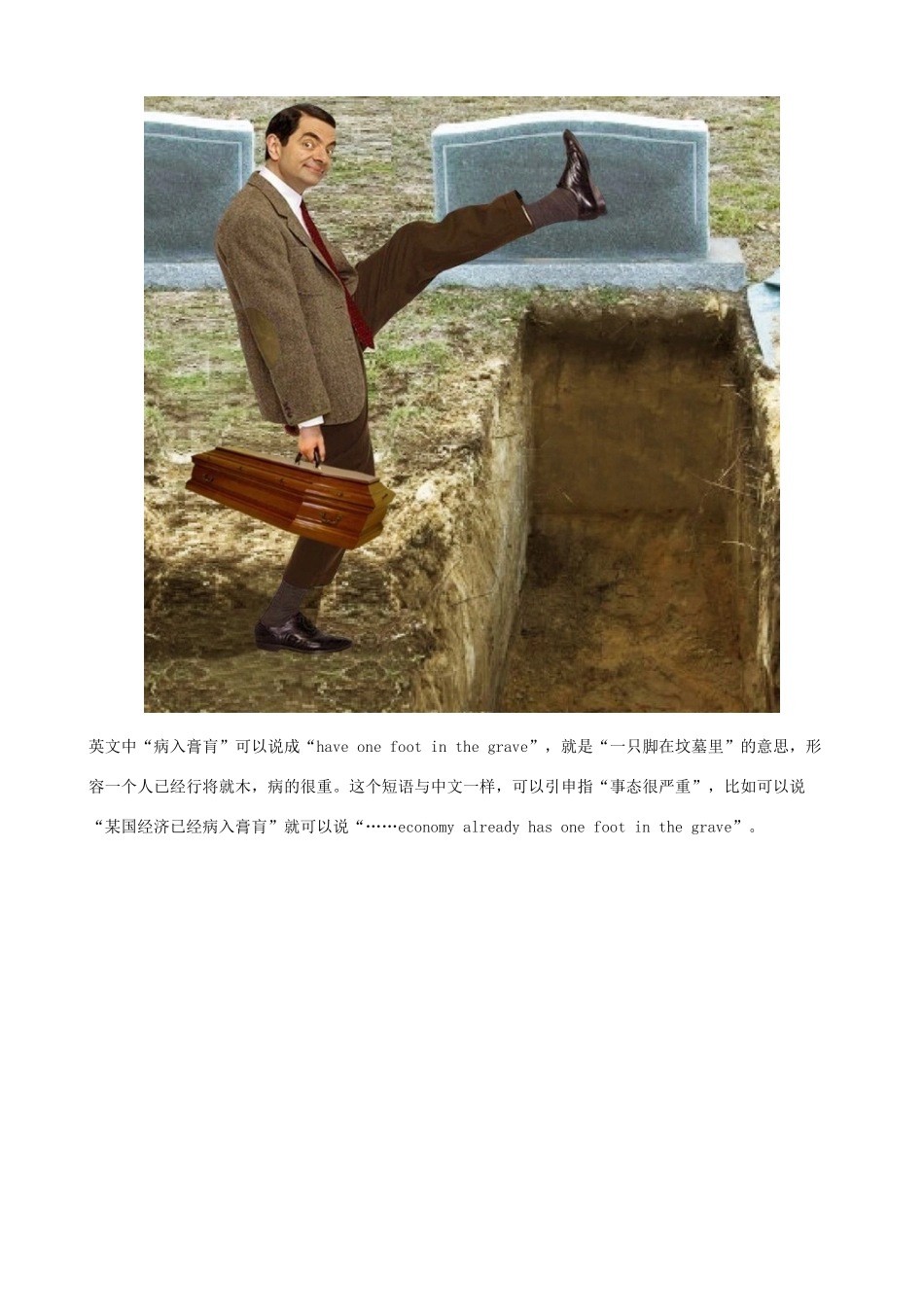
病入膏肓(中英对照学英语)成语来源have one foot in the grave病入膏肓In the Spring and Autumn Period (春秋时期,770-476 BC), King Jing of the State of Jin (晋国) fell ill
And he heard that there was a doctor of exceptional skill, so he dispatched person to invite the doctor
春秋时期,晋景公有一次得了重病,听说秦国有一个医术很高明的医生,便专程派人去请来
One night he dreamed that the disease turned into two little kids talking beside him
有一晚,晋景公恍惚中做了个梦
梦见了两个小孩,正悄悄地在他身旁说话
One said, “I’m afraid the doctor will hurt us
”一个说:“那个高明的医生马上就要来了,我看我们这回难逃了,我们躲到什么地方去呢
” The other said, “Do not worry
We can hide above ‘huang’ and below ‘gao’
Then the doctor will be able to do nothing to us
”另一个小孩说道:“这没什么可怕的,我们躲到肓的上面,膏的下面,无论他怎样用药,都奈何我们不得
”The next day, having examined the king, the doctor said, ‘Your disease is incurable, I am afraid, Your Majesty
It’ above huang and