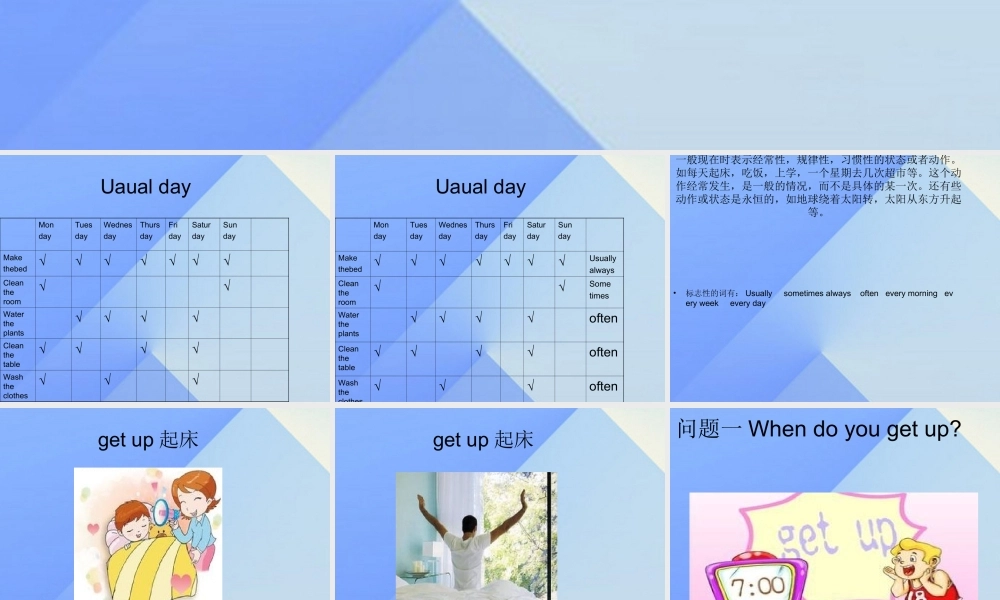
Unit 6 An Unusual DayUaual day MondayTuesdayWednesdayThursdayFridaySaturdaySundayMakethebed√√√√√√√Clean the room√√Water the plants√√√√Clean the table√√√√Wash the clothes√√√Uaual day MondayTuesdayWednesdayThursdayFridaySaturdaySundayMakethebed√√√√√√√UsuallyalwaysClean the room√√SometimesWater the plants√√√√oftenClean the table√√√√oftenWash the clothes√√√often一般现在时表示经常性,规律性,习惯性的状态或者动作
如每天起床,吃饭,上学,一个星期去几次超市等
这个动作经常发生,是一般的情况,而不是具体的某一次
还有些动作或状态是永恒的,如地球绕着太阳转,太阳从东方升起等
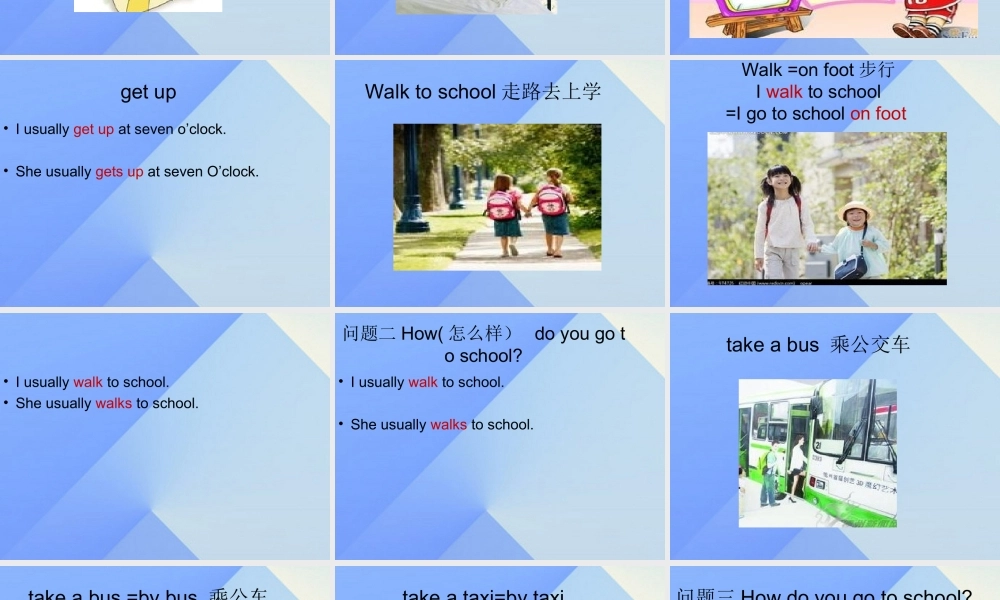
•标志性的词有: Usually sometimes always often every morning every week every dayget up 起床get up 起床问题一 When do you get up
get up• I usually get up at seven o’clock
• She usually gets up at seven O’clock
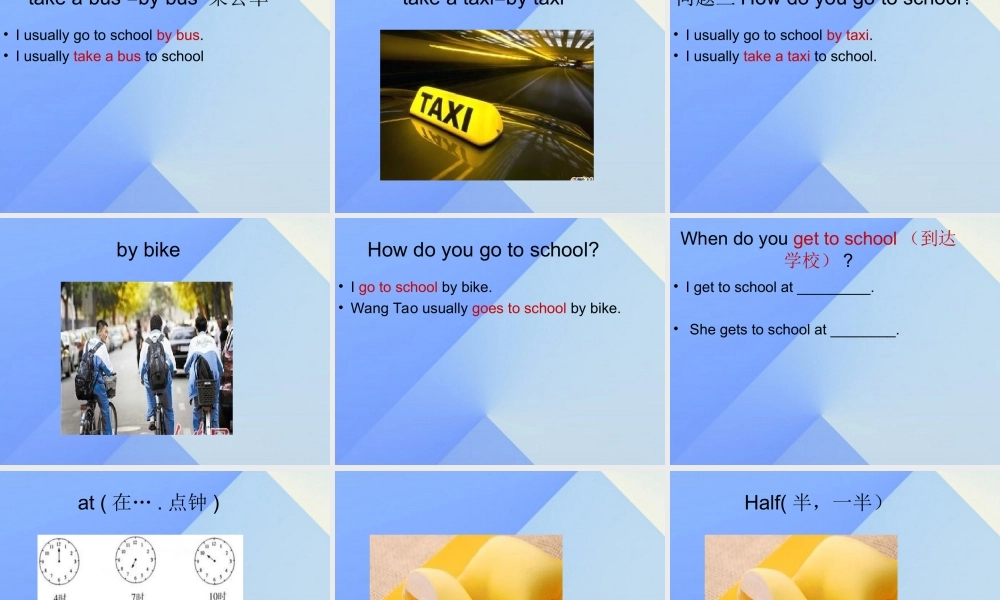
Walk to school 走路去上学Walk =on foot 步行I walk to school=I go to school on foot • I usually walk to school
• She usually walks to school