AimsanddemandsAimsanddemands1
Howtoformthecomparativeandsuperlativedegreesofadjectivesandadverbs
(怎样构成形容词和副词的比较级和最高级)和副词的比较级和最高级)2
Howtousethecomparativeandsuperlativedegreesofadjectivesandadverbs
HowtoimproveourabilitiesofusingEnglish
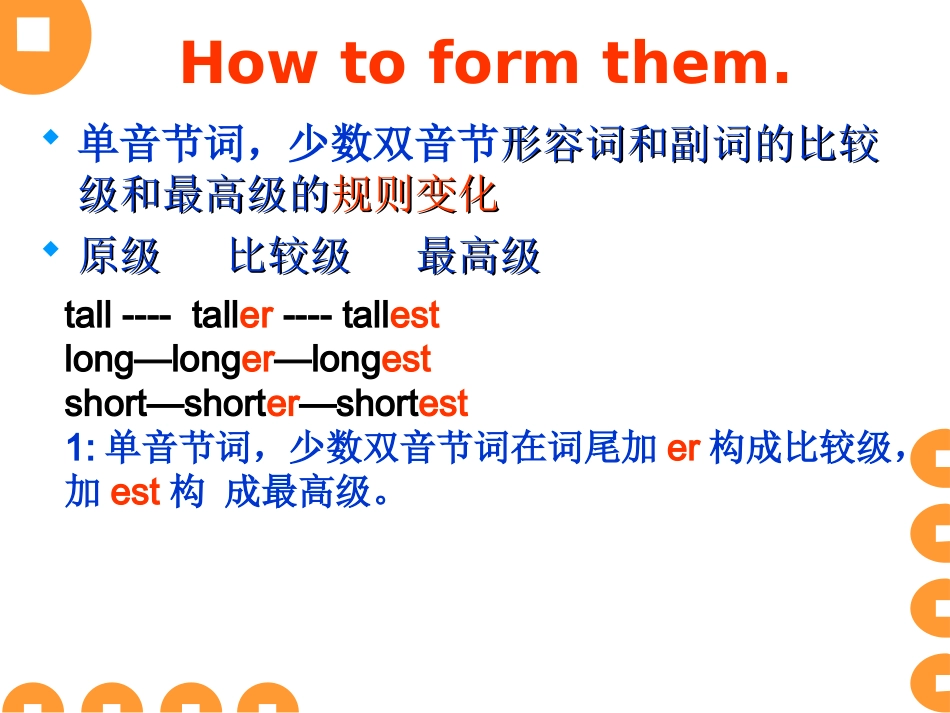
Howtoformthem
单音节词,少数双音节形容词和副词的比较形容词和副词的比较级和最高级的级和最高级的规则变化规则变化原级比较级最高级原级比较级最高级tall----taller----tallestlong—longer—longestshort—shorter—shortest1:单音节词,少数双音节词在词尾加er构成比较级,加est构成最高级
nice--nicer--nicestlarge–larger--largestcute—cuter—cutest2:以不发音的e结尾的词,直接在词的后面加r构成比较级,加st构成最高级
hot–hotter--hottestbig—bigger—biggestfat—fatter—fattest3:重读闭音节词,如末尾只有一个辅音字母应先双写这个辅音字母,再加er构成比较级,加est构成最高级
easy--easier–easiestheavy—heavier—heaviesthappy—happier—happiest4:以辅音字母+y结尾的词,先变y为i再加er构成比较级,加est构成最高级
55:双音节词:双音节词,,多音节词在词前加多音节词在词前加moremore/less构构成比较级,加成比较级,加mostmost/least构成最高级