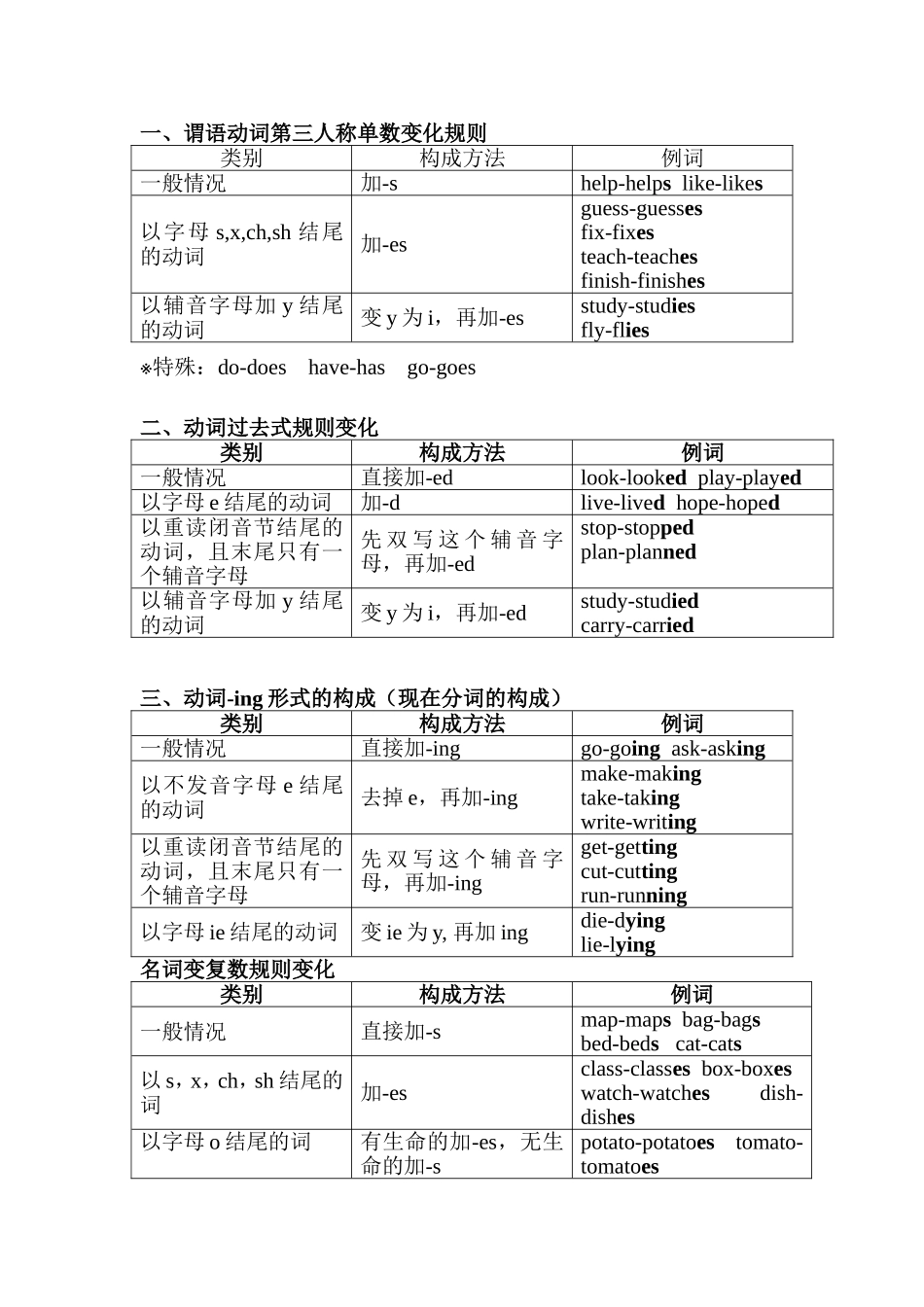
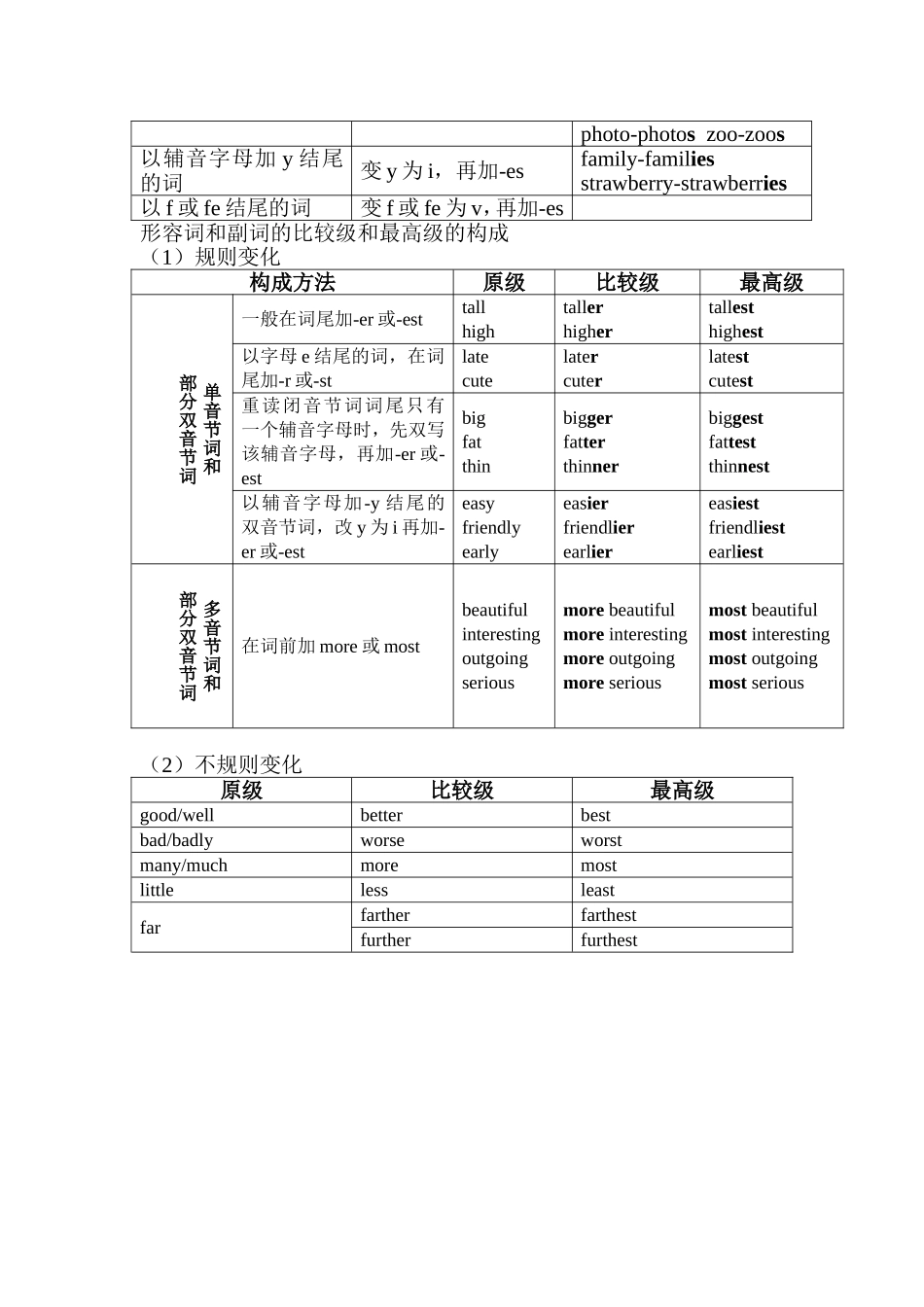
一、谓语动词第三人称单数变化规则类别构成方法例词一般情况加-shelp-helpslike-likes以字母s,x,ch,sh结尾的动词加-esguess-guessesfix-fixesteach-teachesfinish-finishes以辅音字母加y结尾的动词变y为i,再加-esstudy-studiesfly-flies※特殊:do-doeshave-hasgo-goes二、动词过去式规则变化类别构成方法例词一般情况直接加-edlook-lookedplay-played以字母e结尾的动词加-dlive-livedhope-hoped以重读闭音节结尾的动词,且末尾只有一个辅音字母先双写这个辅音字母,再加-edstop-stoppedplan-planned以辅音字母加y结尾的动词变y为i,再加-edstudy-studiedcarry-carried三、动词-ing形式的构成(现在分词的构成)类别构成方法例词一般情况直接加-inggo-goingask-asking以不发音字母e结尾的动词去掉e,再加-ingmake-makingtake-takingwrite-writing以重读闭音节结尾的动词,且末尾只有一个辅音字母先双写这个辅音字母,再加-ingget-gettingcut-cuttingrun-running以字母ie结尾的动词变ie为y,再加ingdie-dyinglie-lying名词变复数规则变化类别构成方法例词一般情况直接加-smap-mapsbag-bagsbed-bedscat-cats以s,x,ch,sh结尾的词加-esclass-classesbox-boxeswatch-watchesdish-dishes以字母o结尾的词有生命的加-es,无生命的加-spotato-potatoestomato-tomatoesphoto-photos