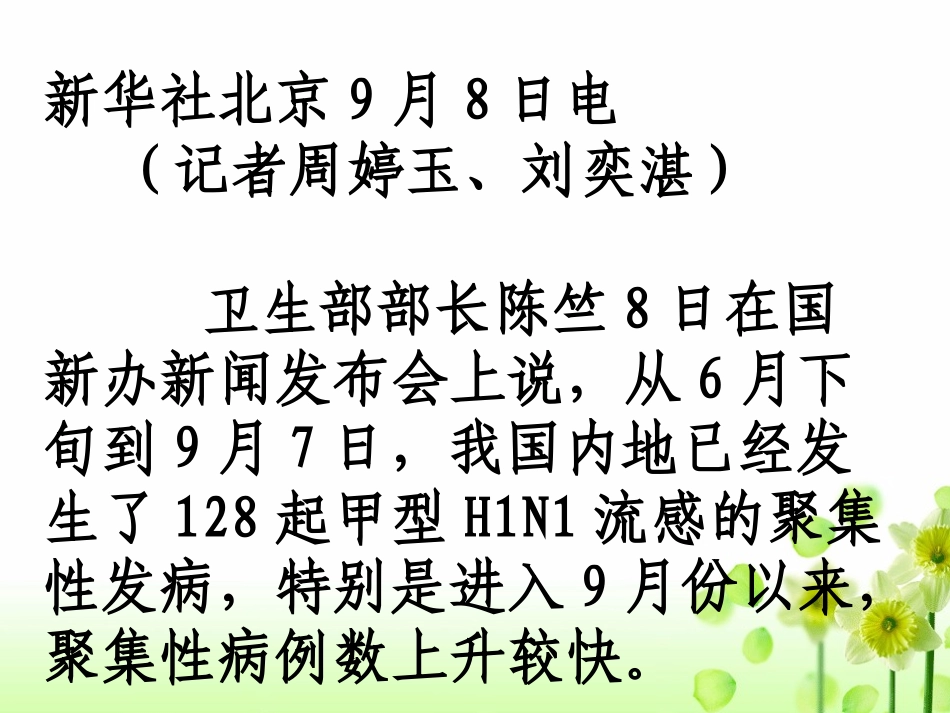
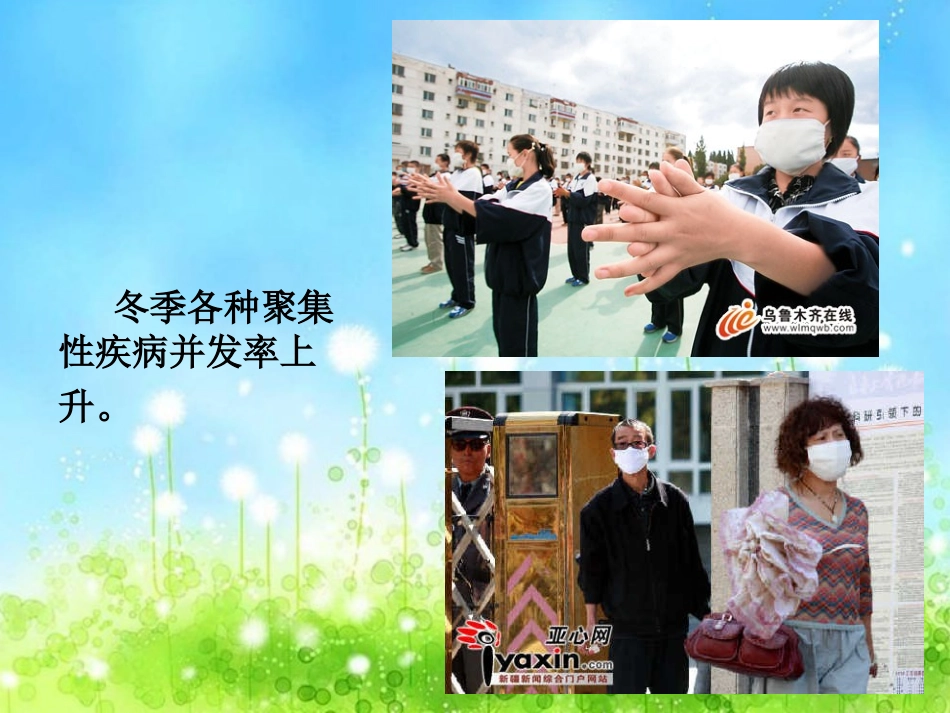
邵原二中王连连新华社北京9月8日电(记者周婷玉、刘奕湛)卫生部部长陈竺8日在国新办新闻发布会上说,从6月下旬到9月7日,我国内地已经发生了128起甲型H1N1流感的聚集性发病,特别是进入9月份以来,聚集性病例数上升较快
冬季各种聚集性疾病并发率上升
H1N1会有什么症状ThesymptomofH1N1
咳嗽发烧嗓子疼haveacoughhaveafeverhaveasorethroatWhat’sthematter
What’sthematter
这是询问病人病情时最常用的问句,意思是“怎么了
当询问某人怎么了,与介词with连用
What’sthematter______you
类似的问句还有:What’sthetroublewithyou
What’swrongwithyou
What’syourtrouble
What’sup
withWhycanweseewiththeeyesWhycanwehearwiththeearsWhycanwespeakwiththemouthWhycanwesmellwiththenoseWhycanwewritewiththehandsWhycanwewalkwiththelegsWhyWhyWhyWillyoutellmewhyGrammarFocus在英语中,表达“疼痛或不舒服”时常用的结构:(1)主语+have/has+病症(2)主语+have/has+a+sore+部位(3)主语+have/has+a+部位-ache常用sore修饰的词:throatlegfooteye常加后缀ache构成的词:headtoothstomachear两者都可用的词:backhaveaheadachehaveatoothachehaveastomachachehaveasorethroatha