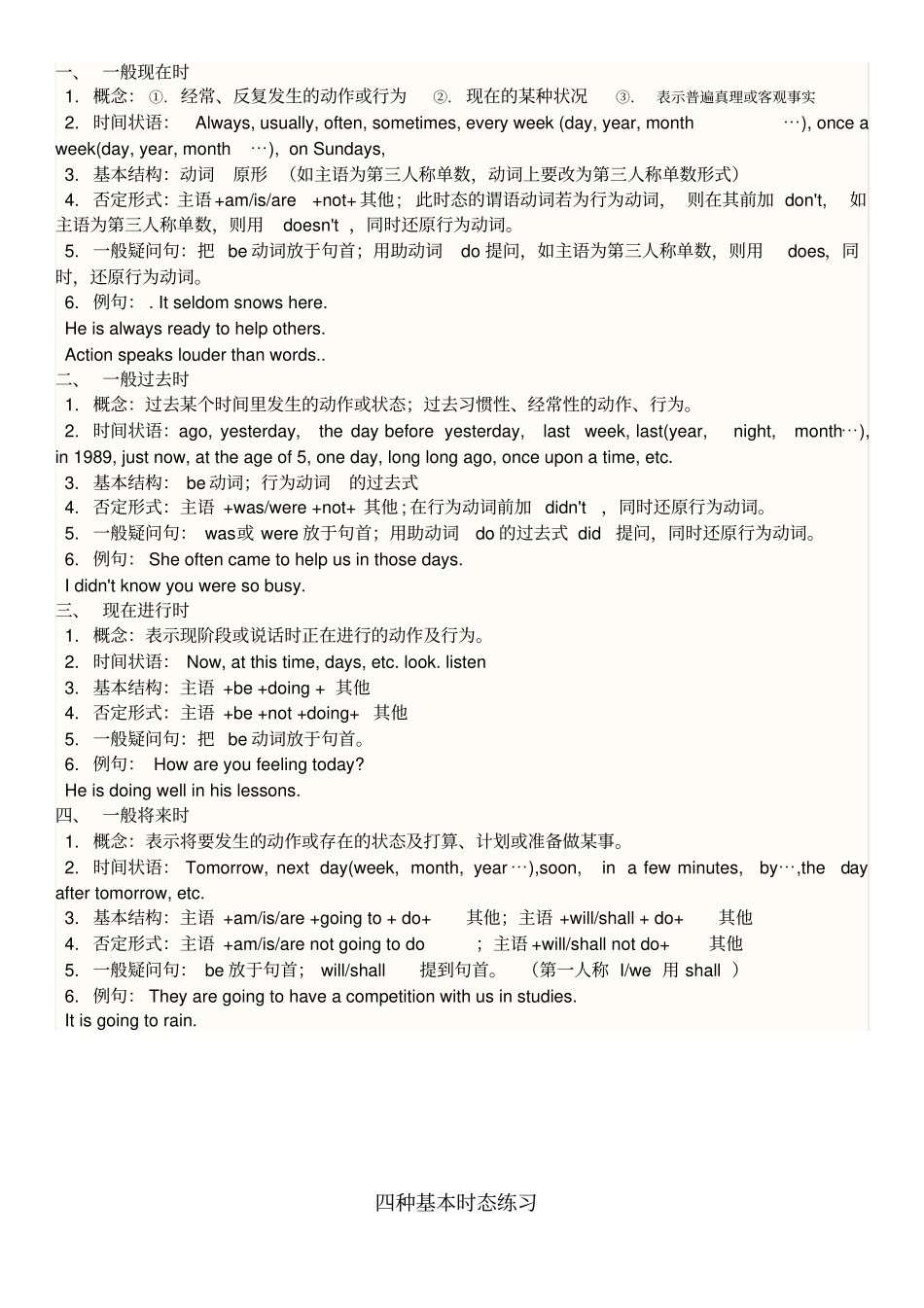
一、 一般现在时 1
概念: ①. 经常、反复发生的动作或行为②. 现在的某种状况③. 表示普遍真理或客观事实 2
时间状语:Always, usually, often, sometimes, every week (day, year, month⋯), once a week(day, year, month⋯), on Sundays, 3
基本结构:动词原形 (如主语为第三人称单数,动词上要改为第三人称单数形式) 4
否定形式:主语 +am/is/are +not+ 其他; 此时态的谓语动词若为行为动词, 则在其前加 don't, 如主语为第三人称单数,则用doesn't ,同时还原行为动词
一般疑问句:把 be 动词放于句首;用助动词do 提问,如主语为第三人称单数,则用does,同时,还原行为动词
It seldom snows here
He is always ready to help others
Action speaks louder than words
二、 一般过去时 1
概念:过去某个时间里发生的动作或状态;过去习惯性、经常性的动作、行为
时间状语:ago, yesterday, the day before yesterday, last week, last(year, night, month⋯), in 1989, just now, at the age of 5, one day, long long ago, once upon a time, etc
基本结构: be 动词;行为动词的过去式 4
否定形式:主语 +was/were +not+ 其他 ; 在行为动词前加 didn't,同时还原行为动词
一般疑问句: was或 w