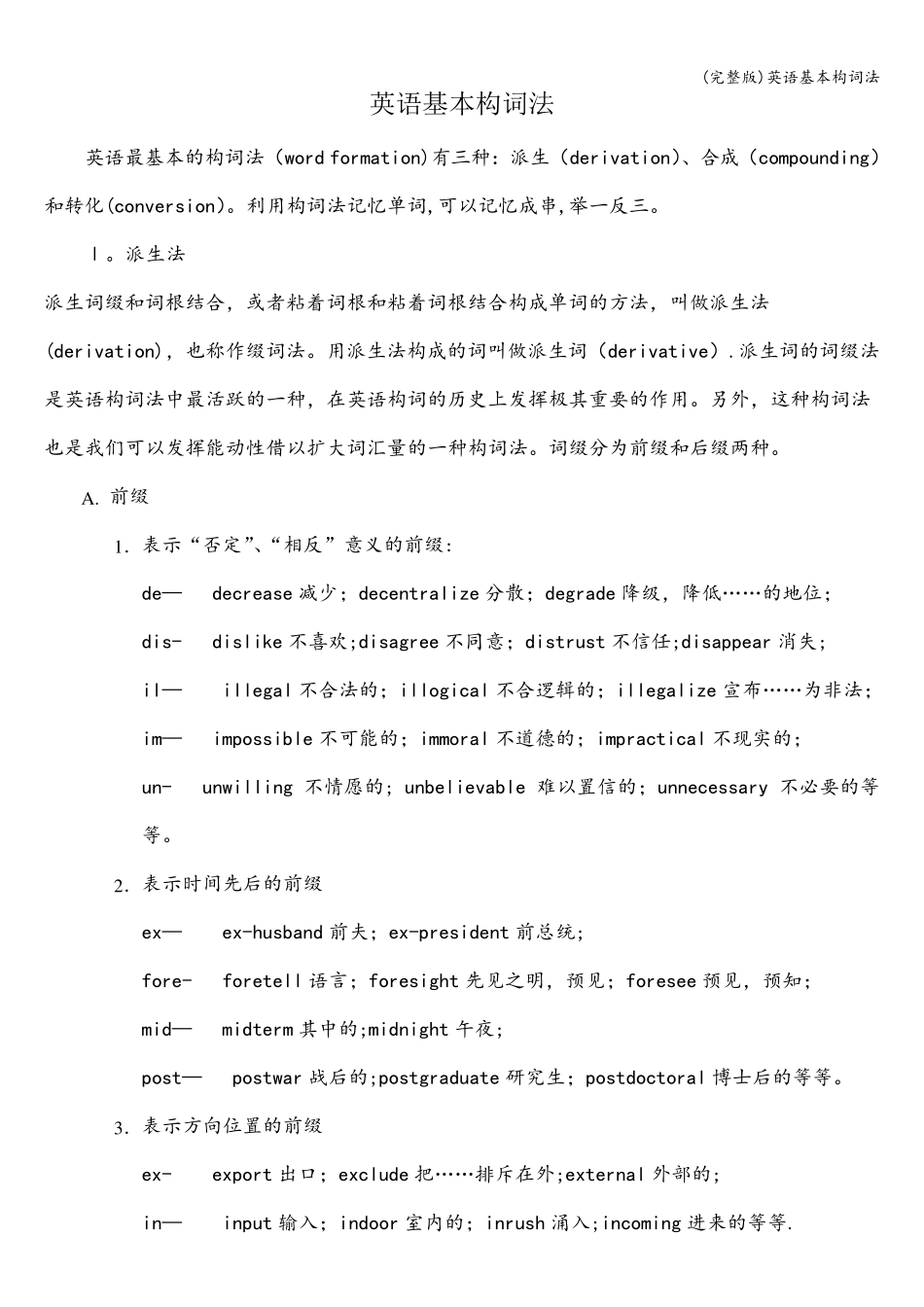
(完整版)英语基本构词法 英语基本构词法 英语最基本的构词法(word formation)有三种:派生(derivation)、合成(compounding)和转化(conversion)
利用构词法记忆单词,可以记忆成串,举一反三
派生法 派生词缀和词根结合,或者粘着词根和粘着词根结合构成单词的方法,叫做派生法(derivation),也称作缀词法
用派生法构成的词叫做派生词(derivative)
派生词的词缀法是英语构词法中最活跃的一种,在英语构词的历史上发挥极其重要的作用
另外,这种构词法也是我们可以发挥能动性借以扩大词汇量的一种构词法
词缀分为前缀和后缀两种
前缀 1.表示“否定”、“相反”意义的前缀: de— decrease 减少;decentralize 分散;degrade 降级,降低……的地位; dis- dislike 不喜欢;disagree 不同意;distrust 不信任;disappear 消失; il— illegal 不合法的;illogical 不合逻辑的;illegalize 宣布……为非法; im— impossible 不可能的;immoral 不道德的;impractical 不现实的; un- unwilling 不情愿的; unbelievable 难以置信的;unnecessary 不必要的等等
2.表示时间先后的前缀 ex— ex-husband 前夫;ex-president 前总统; fore- foretell 语言;foresight 先见之明,预见;foresee 预见,预知; mid— midterm 其中的;midnight 午夜; post— postwar 战后的;postgraduate 研究生;postdoctoral 博士后的等等
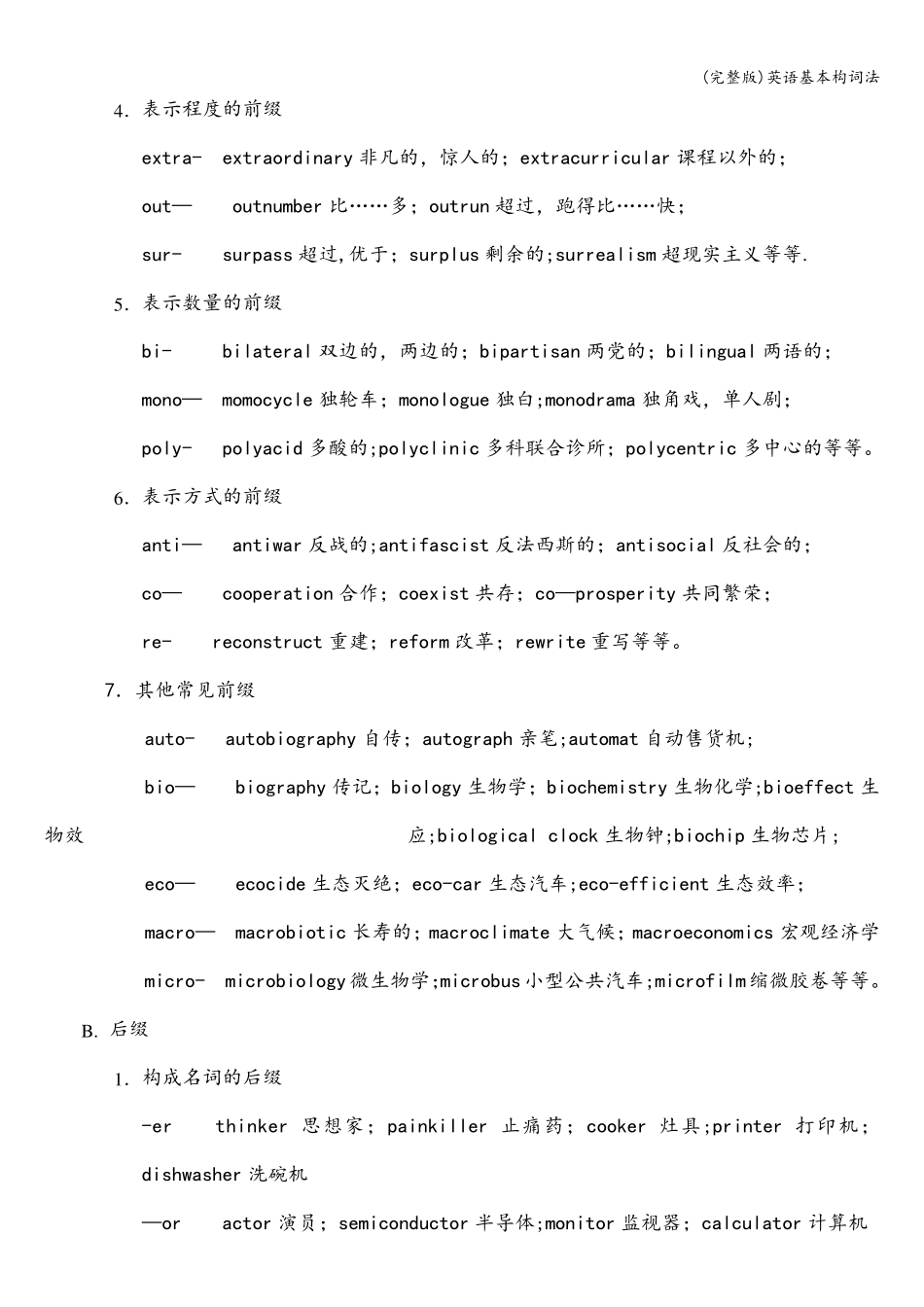
3.表示方向位置的前缀 ex- export 出