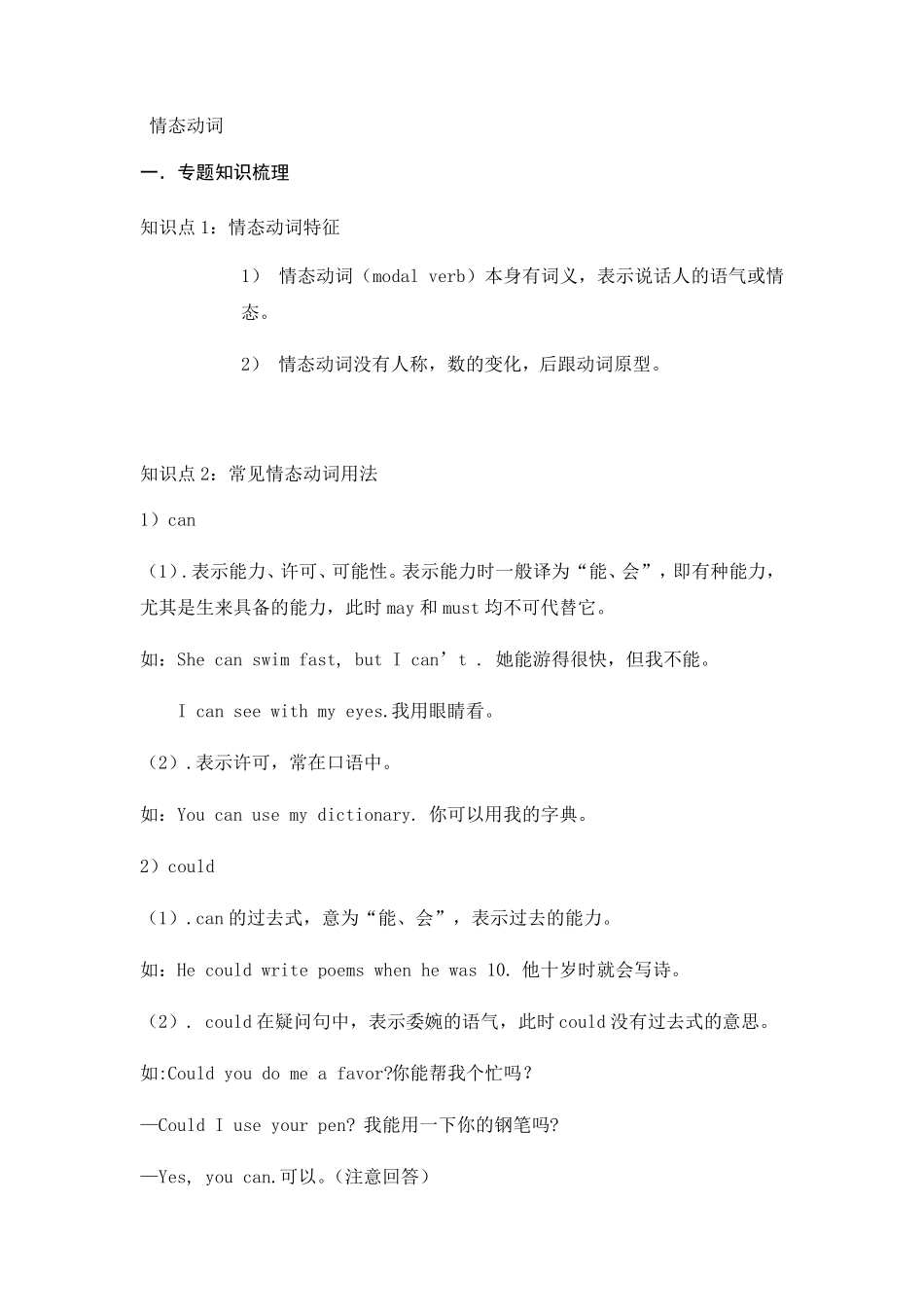
情态动词 一.专题知识梳理 知识点1:情态动词特征 1) 情态动词(modal verb)本身有词义,表示说话人的语气或情态
2) 情态动词没有人称,数的变化,后跟动词原型
知识点2:常见情态动词用法 1)can (1)
表示能力、许可、可能性
表示能力时一般译为“能、会”,即有种能力,尤其是生来具备的能力,此时may 和must 均不可代替它
如:She can swim fast, but I can’t
她能游得很快,但我不能
I can see with my eyes
表示许可,常在口语中
如:You can use my dictionary
你可以用我的字典
2)could (1)
can 的过去式,意为“能、会”,表示过去的能力
如:He could write poems when he was 10
他十岁时就会写诗
could 在疑问句中,表示委婉的语气,此时could 没有过去式的意思
如:Could you do me a favor
你能帮我个忙吗
—Could I use your pen
我能用一下你的钢笔吗
—Yes, you can
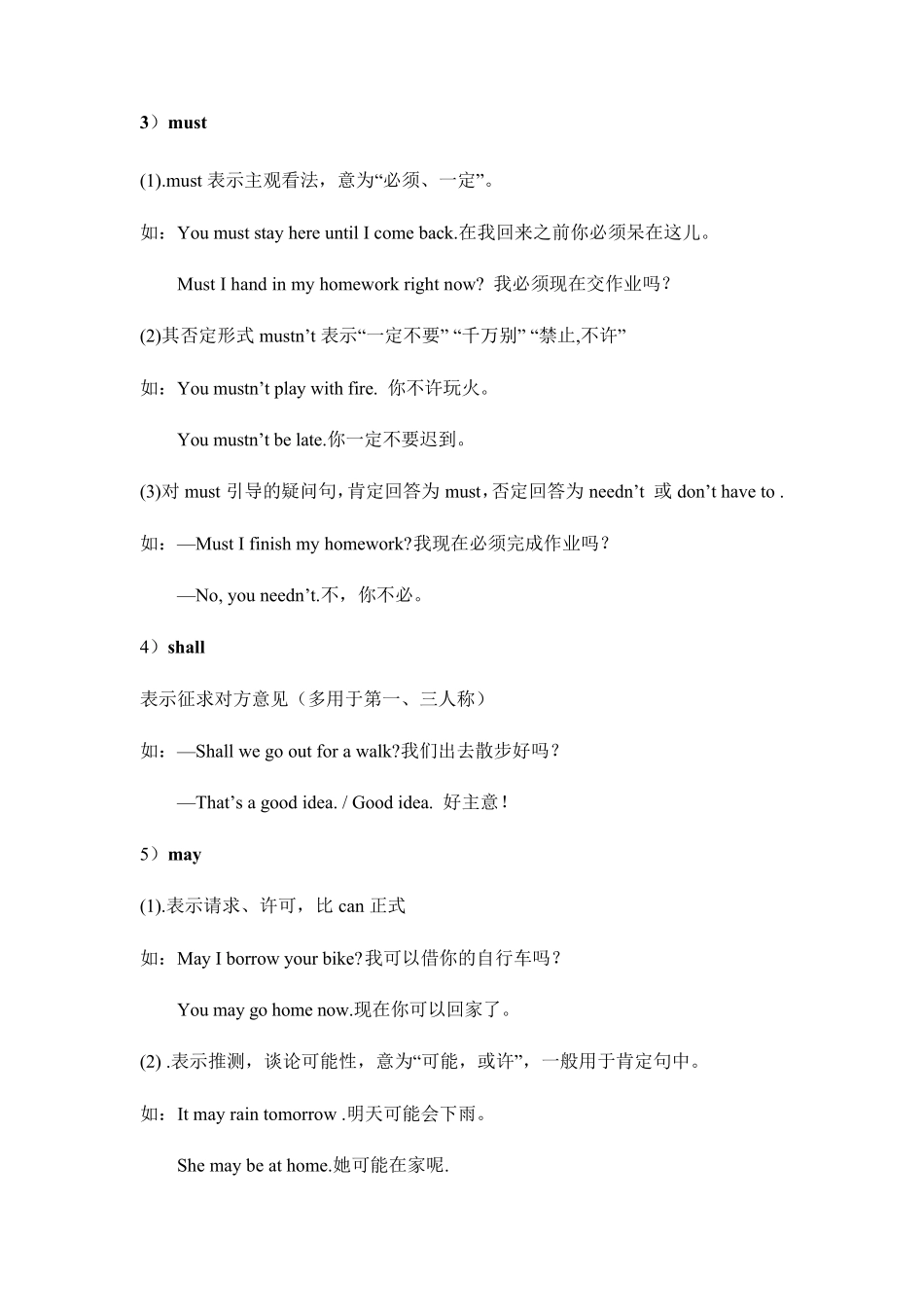
(注意回答) 3)must (1)
must 表示主观看法,意为“必须、一定”
如:You must stay here until I come back
在我回来之前你必须呆在这儿
Must I hand in my homework right now
我必须现在交作业吗
(2)其否定形式 mustn’t 表示“一定不要” “千万别” “禁止,不许” 如:You mustn’t play with fire
You mustn’t be late
你一定不要迟到
(3)对 must 引导的疑问句,肯定回答为